
About John Burr Williams
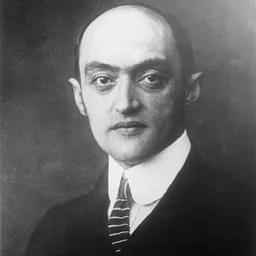
Lived 1900 – 1989 (aged 88). John Burr Williams was an American economist.
John Burr Williams (November 27, 1900 – September 15, 1989) was an American economist, recognized as an important figure in the field of fundamental analysis, and for his analysis of stock prices as reflecting their "intrinsic value".
He is best known for his 1938 text The Theory of Investment Value, based on his PhD thesis, in which he articulated the theory of discounted cash flow (DCF) based valuation, and in particular, dividend based valuation.
Biography Williams studied mathematics and chemistry at Harvard University, and enrolled at Harvard Business School in 1923. After graduating, he worked as a security analyst, where he realised that "how to estimate the fair value was a puzzle indeed... To be a good investment analyst, one needs to be an expert economist also." In 1932 he enrolled at Harvard for a PhD in economics, with the hopes of learning what had caused the Wall Street crash of 1929 and the subsequent economic depression of the 1930s. For his thesis, Joseph Schumpeter suggested the question of the intrinsic value of a common stock, for which Williams' personal experience and background would serve him in good stead. He received his doctorate in 1940.
Williams sent The Theory of Investment Value for publication before he had won faculty approval for his doctorate. The work discusses Williams' general theory, as well as providing over 20 specific mathematical models; it also contains a second section devoted to case studies. Various publishers refused the work since it contained algebraic symbols, and Harvard University Press published The Theory of Investment Value in 1938, only after Williams had agreed to pay part of the printing cost. The work has been influential since its publication; Mark Rubinstein describes it as an "insufficiently appreciated classic".
From 1927 until his death, Williams worked in the management of private investment portfolios and security analysis. He taught economics and investment analysis as a visiting professor at the University of Wisconsin–Madison; he also wrote many articles for economic journals. Today, his privately held investment management company, Burr and Company, LLC. is run by his grandson, John Borden Williams.
Theory Williams was among the first to challenge the "casino" view that economists held of financial markets and asset pricing—where prices are determined largely by expectations and counter-expectations of capital gains (see Keynesian beauty contest). He argued that financial markets are, instead, "markets", properly speaking, and that prices should therefore reflect an asset's intrinsic value. Under conditions of certainty, Through his approach to modelling and forecasting cash flows—which he called "algebraic budgeting"—Williams was also a pioneer of the pro forma modeling of financial statements. Here, Williams (Theory, ch. 7) provides an early discussion of industry lifecycle.
Today, "evaluation by the rule of present worth", applied in conjunction with an asset appropriate discount rate – usually derived using the capital asset pricing model (Harry Markowitz and William F. Sharpe), or the arbitrage pricing theory (Stephen Ross) – is probably the most widely used stock valuation method amongst institutional investors; see List of valuation topics. (Nicholas Molodovsky, the former editor of the Financial Analysts Journal, was the first to substitute "dividends" in Williams' formula for: earnings times the percentage of earnings paid out in dividends. )
Williams also anticipated the Modigliani–Miller theorem. In presenting the "Law of the Conservation of Investment Value" (Theory, pg. 72), he argued that since the value of an enterprise is the "present worth" of all its future distributions – whether interest or dividends – it "in no [way] depends on what the company's capitalization is". Modigliani and Miller show that Williams, however, had not actually proved this law, as he had not made it clear how an arbitrage opportunity would arise if his Law were to fail.
Publications
International trade under flexible exchange rates. 1954 Interest, Growth and Inflation 1964; 1998 reprint, Fraser Publishing.
Don’t just read it —
keep it.
Full-length biographies made to live with: read them, listen on the way to work, watch them tonight.
- E-book
- Audio
- Video
Instant download · yours to keep · every purchase keeps this site free
Important facts
People in John Burr Williams's life
Named in this biography and alive at the same time





Related people
Same field, nearest in time






Contemporaries
People whose lives overlapped John Burr Williams's




Frequently asked questions
Who was John Burr Williams?
American economist (1900-1989)
When was John Burr Williams born?
John Burr Williams was born on 27 November 1900 in United States.
When did John Burr Williams die?
John Burr Williams died on 15 September 1989 in United States.
What was John Burr Williams's occupation?
John Burr Williams was an economist.
What nationality was John Burr Williams?
John Burr Williams was American.
Sources & further reading
· Wikipedia: John Burr Williams
Cite this page
APA: Biography.guide. (2026). John Burr Williams. https://biography.guide/john-burr-williams/
MLA: "John Burr Williams." Biography.guide, https://biography.guide/john-burr-williams/.
Chicago: "John Burr Williams." Biography.guide. https://biography.guide/john-burr-williams/.
Data last updated: 2026-09-20 · Spot an error? Report a correction.
Page generated 2026-09-27 05:11 UTC