
About John Brown Paton
Lived 1830 – 1911 (aged 80–81). John Brown Paton was a writer.
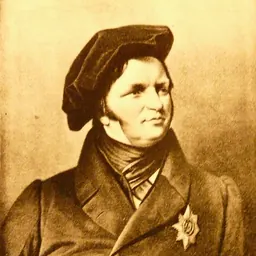
John Brown Paton (1830–1911) was a Scottish Congregationalist minister, college head and author.
Early life Born 17 December 1830 at Galston, East Ayrshire, Paton was the son of Alexander Paton by his wife Mary, daughter of Andrew Brown of Newmilns, both of the United Secession Church; he claimed descent from Covenanters, on his father's side from John Paton (d. 1684), on his mother's from John Brown (1627?–1685). His father ultimately joined the Congregationalists.
From Loudoun parish school, Paton went on in 1838 to the tuition of his maternal uncle Andrew Morton Brown, D.D., Congregational minister, then at Poole, Dorset. In 1844 Paton was at Kilmarnock, where he met Alexander Russel, and came into the orbit of James Morison. Returning in 1844 to his uncle, now at Cheltenham, Paton encountered a decisive influence in Henry Rogers.
Interests In line with the ideas of the Inner Mission, founded in 1848 by Johann Hinrich Wichern of Hamburg, Paton took part in plans for the improvement of social conditions, e.g. home colonisation with small land-holders, the co-operative banks movement, the social purity crusade. With Canon Morse, vicar of St. Mary's, Nottingham, he promoted a series of university lectures which led the way to the establishment of Nottingham University College in 1880. It was at Paton's suggestion that Christopher Wordsworth, the bishop of Lincoln, sent a letter of sympathy in 1872 to the Old Catholics. The Boys' and Girls' League of Honour (1906).
Paton was president of the Licensing Laws Information Bureau (1898–1902), and vice-president of the British Institute for Social Service (1904), and of the British and Foreign Bible Society (1907).
Paton with Robert William Dale edited (1858–61) The Eclectic Review. With Frederick Smeeton Williams, his colleague, he edited the "Home Mission Tract Series" (1865). He was a consulting editor (1882–8) of the Contemporary Review, to which, at his request, Lightfoot contributed (1874–7) his articles on Supernatural Religion. With Percy William Bunting, and Alfred Ernest Garvie, he edited a series of papers Christ and Civilisation (1910), his last work.
Works Paton's publications include The Two-fold Alternative (3rd edition, 1900), The Inner Mission of the Church (new ed., 1900), and two volumes of collected essays. He was a constant contributor to literary reviews.
Family His son, John Lewis Paton (1863–1946), who headed the Cambridge classical tripos in 1886, became High Master of Manchester Grammar School in 1903.
Don’t just read it —
keep it.
Full-length biographies made to live with: read them, listen on the way to work, watch them tonight.
- E-book
- Audio
- Video
Instant download · yours to keep · every purchase keeps this site free
Important facts
People in John Brown Paton's life
Named in this biography and alive at the same time




Related people
Same field, nearest in time
Contemporaries
People whose lives overlapped John Brown Paton's



Frequently asked questions
Who was John Brown Paton?
British theologian
When was John Brown Paton born?
John Brown Paton was born in 1830.
When did John Brown Paton die?
John Brown Paton died in 1911.
What was John Brown Paton's occupation?
John Brown Paton was a writer.
Sources & further reading
Cite this page
APA: Biography.guide. (2026). John Brown Paton. https://biography.guide/john-brown-paton/
MLA: "John Brown Paton." Biography.guide, https://biography.guide/john-brown-paton/.
Chicago: "John Brown Paton." Biography.guide. https://biography.guide/john-brown-paton/.
Data last updated: 2026-09-20 · Spot an error? Report a correction.
Page generated 2026-09-27 05:30 UTC