
John Brooks
Massachusetts doctor, military officer, and governor
About John Brooks
Lived 1752 – 1825 (aged 72). John Brooks was an American politician, physician and military officer.
John Brooks (baptized May 4, 1752 – March 1, 1825) was an American medical doctor, military officer, and politician from Massachusetts. He served as the 11th governor of Massachusetts from 1816 to 1823, and was one of the last Federalist officials elected in the United States.
Trained as a doctor, Brooks was an officer of the Reading, Massachusetts militia when the American Revolutionary War broke out, and led his troops in the Battles of Lexington and Concord. He served under George Washington in the New York and New Jersey campaign of 1776, although he missed the Battle of Trenton due to illness. In 1777 he was part of the relief force for the Siege of Fort Stanwix, and led a successful assault against British positions in the key Second Battle of Saratoga. He played a significant role in the 1783 Newburgh Conspiracy, in which he helped quash ideas of mutiny in the Continental Army.
After the war he returned to medical practice, but continued to be active in the state militia, helping to put down Shays' Rebellion in 1787. He served in the militia during the War of 1812, after which he was elected governor. Brooks was popular and politically moderate, and came to personify the "Era of Good Feelings" that followed the war. He retired in 1823, and died two years later.
Early years John Brooks was born in Medford, the son of Caleb and Ruth Albree Brooks, who were local farmers, and was baptized on May 4, 1752. After education in the local schools, Brooks studied medicine with Dr. Simon Tufts alongside Benjamin Thompson. In his free time he engaged in military drills with other local boys and carefully watched the maneuvers of British Army troops stationed in nearby Boston. When his apprenticeship with Dr. Tufts ended Brooks established a medical practice in Reading, where he was active in the local militia.
Revolutionary War service When Paul Revere gave the alarm that sparked the Battles of Lexington and Concord on April 19, 1775, Brooks, then 22 and a major in the Reading militia, marched with his unit in response. His troops were among the first to reach Concord as the British took the road back to Boston, and are credited with beginning the running battle that took place. Brooks led his company during the Battle of Meriam's Corner. Brooks later described that day as the most difficult of his life. He then joined the Continental Army in May 1775 as a major in Bridge's Regiment, and was among the troops sent to fortify Breed's Hill on the night of June 16–17. He missed the next day's Battle of Bunker Hill, because he was sent by Colonel William Prescott to request reinforcements. He continued to serve in the Siege of Boston, transferring to the 19th Continental Regiment on January 1, 1776. After the British withdrawal from Boston, Brooks' regiment next saw action in the October 1776 Battle of White Plains, and was in General George Washington's retreat across New Jersey afterward. On November 1, 1776 he transferred to the 8th Massachusetts Regiment, where he was promoted to lieutenant colonel.
The 8th Massachusetts was among the forces Benedict Arnold led in relief of the Siege of Fort Stanwix in upstate New York, and was present at the Battles of Saratoga. In the second battle on October 7, 1777, Brooks gained a reputation for fearlessness in the assault and capture of Hessian fortifications on the British right. as he mentions the “poor brave fellows” that were living in tents “bare-footed, bare-legged, bare-breeched”.
Brooks was temporarily named adjutant to General Charles Lee when the army followed the British across New Jersey in 1778, engaging them in the Battle of Monmouth. He was transferred to the 7th Massachusetts in November 1778, and was its lieutenant-colonel commandant until June 12, 1783 when he resigned. His regiment was involved in garrison duty in New England and the New York City area until the end of his service.
In 1783 Brooks played a prominent role in events concerning army pay arrears and pensions that became known as the Newburgh Conspiracy. He was one of three officers who delivered to the Continental Congress a letter drafted by discontented officers, and participated in hearings in which the army delegation outlined serious issues among the officers at Newburgh, New York. He then carried letters back to the army headquarters, and took part in actions orchestrated by Washington supporters to put down any ideas of mutiny. He was accused, apparently falsely, of informing Washington of the conspiracy (Washington was tipped off by Alexander Hamilton to anticipate unrest.) Historian Richard Kohn writes that details are lacking of Brooks' actions and motivations in the critical days of the conspiracy in February and March 1783, but describes his role in the affair as "crucial".
In 1783 Brooks was admitted as an original member of The Society of the Cincinnati in the state of Massachusetts and served as that constituent society's first secretary from 1783 to 1786. In 1810 he was elected president of the Massachusetts Society and in 1811 he was elected vice president of the national society. He served both offices until his death in 1825.
Post-Revolution and War of 1812
After the war Brooks returned to medical practice, taking over the office of Dr. Tufts in Medford. He was the first member elected to the Ancient and Honorable Artillery Company when it was revived after the Revolution in 1786.
In the militia he rose to the position of major general in command of the Middlesex Division. He commanded the division under Major General Benjamin Lincoln when the Massachusetts Militia put down Shays' Rebellion in 1787.
From 1791 to 1796, Brooks was the United States Marshal for the District of Massachusetts. In 1792, Secretary at War Henry Knox offered him a position as brigadier general in the Legion of the United States, a reorganization of the United States Army headed by General Anthony Wayne. Brooks refused the appointment, which went instead to his friend William Hull. He was elected to a second one-year term as captain of the Ancient and Honorable Artillery Company in 1794. and won the election. He won reelection annually until 1823, when he retired from public service. Historian Ronald Formisano writes that Brooks "came to personify the non-partisan Era of Good Feelings in Massachusetts."
The Panic of 1819 and the granting of statehood to Maine (which was until 1820 part of Massachusetts) introduced fractures in the strong Federalist party system in the state. Dissident Federalists such as Josiah Quincy III joined Republicans in calls for a constitutional convention, citing the state constitution's requirement that Maine be allocated representation in the legislature as a reason. Brooks lobbied against the idea, arguing that the legislature could draft proposed amendments, but a convention was held despite his efforts. Nine amendments produced by the convention were eventually approved, but Federalist leaders managed to block most of the substantive reforms that had been sought. One of the consequences of the panic was the rise, particularly in Boston, of a political faction known as the "Middling Interest". This group was composed of primarily working class men who were unhappy with the state party's elitist leadership. Led by Josiah Quincy, the split would eventually lead to the final collapse of Federalism in the state.
Brooks announced in 1822 that he would not seek reelection in 1823. The 1823 election saw the victory of Republican William Eustis over Federalist party leader Harrison Gray Otis. Otis almost did not carry Boston, and lost other Federalist strongholds in the state.
Brooks was a leading member of the Massachusetts Medical Society for many years, serving as its president after his retirement from politics, and was also president of the Bible Society of Massachusetts.
Governor Brooks died in Medford on March 1, 1825,
Family and legacy In 1774 Brooks married Lucy Smith, with whom he had five children; two of them died young. His two sons were both active in the United States military.
The Maine towns of Brooks, established in 1816, and Brooksville, founded in 1817, were named for him.
Don’t just read it —
keep it.
Full-length biographies made to live with: read them, listen on the way to work, watch them tonight.
- E-book
- Audio
- Video
Instant download · yours to keep · every purchase keeps this site free
Important facts
People in John Brooks's life
Named in this biography and alive at the same time


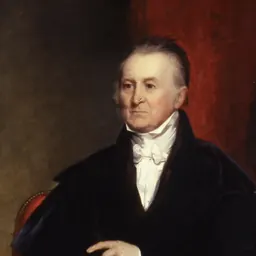

Related people
Same field, nearest in time
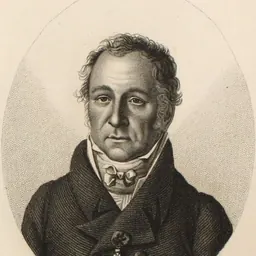

Contemporaries
People whose lives overlapped John Brooks's




Frequently asked questions
Who was John Brooks?
Massachusetts doctor, military officer, and governor (1752-1825)
When was John Brooks born?
John Brooks was born on 4 May 1752 in Medford.
When did John Brooks die?
John Brooks died on 1 March 1825 in Medford.
What was John Brooks's occupation?
John Brooks was a politician, physician and military officer.
What nationality was John Brooks?
John Brooks was American.
Sources & further reading
· DBpedia: John Brooks (governor)
Cite this page
APA: Biography.guide. (2026). John Brooks. https://biography.guide/john-brooks/
MLA: "John Brooks." Biography.guide, https://biography.guide/john-brooks/.
Chicago: "John Brooks." Biography.guide. https://biography.guide/john-brooks/.
Data last updated: 2026-09-20 · Spot an error? Report a correction.
Page generated 2026-09-27 05:25 UTC