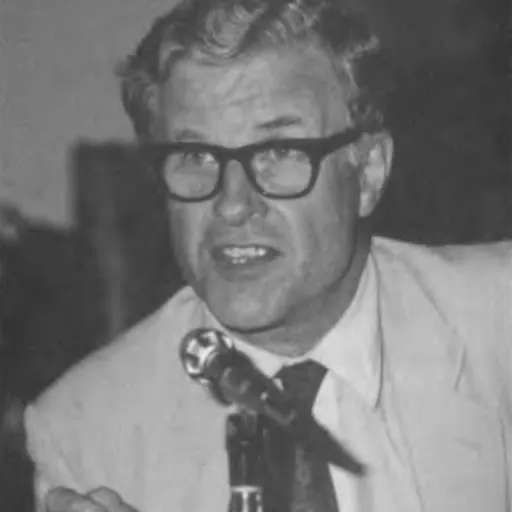
About John Blacking
Lived 1928 – 1990 (aged 61). John Blacking was a British anthropologist and ethnomusicologist.
John Anthony Randoll Blacking (22 October 1928 – 24 January 1990) was a British ethnomusicologist and social anthropologist. Blacking began his career with a ground-breaking, 22-month study of the culture and music making of the Venda people of northern South Africa, from 1956 to 1958. In 1965 Blacking became a professor and head of the social anthropology department at the University of the Witwatersrand in South Africa. In 1970 he was appointed chair of the social anthropology department at Queen's University Belfast, Northern Ireland, where he developed a vibrant program in ethnomusicology, the first in Europe.
He is best known for his 1973 monograph How Musical is Man? in which he argued that the activity of making music is fundamentally important to humans, dependent on society and culture, but separate from the Western musical traditions and standards. He argued that music making was important to developing senses and emotional sensibility and that it is essential for balanced action and effective use of the intellect.
In 1969 Blacking and his then girlfriend and future wife, Dr. Zureena Desai, were arrested by the South African government and charged with violating apartheid's Immorality Act. Blacking was white, Desai was Indian, and the racial purity law forbade relations between different races. The arrest was motivated in part by Blacking's anti-apartheid activism. The trial received worldwide attention and embarrassed the government. The couple were found guilty and given suspended sentences, but Blacking was later banned from South Africa.
Early life John Blacking was born on October 22, 1928, in Guildford, Surrey to William Henry Randoll Blacking, an ecclesiastical architect, and (Josephine) Margaret Newcombe Waymouth. In 1930 the family moved to Salisbury, Wiltshire, where Blacking's father was appointed Architect to the Cathedral in 1931. Blacking's early education was at Salisbury Cathedral choir school from 1934 to 1942 and at Sherborne School from 1942 to 1947. He served as a commissioned officer of the H.M. Coldstream Guards, leading a platoon in a campaign against communist insurgents. noted that while Blacking was fond of anthropology, his active artistic life as pianist and promoter of contemporary music distracted him from it. Fortes suggested that he combine the two and arranged for him to spend the summer of 1952 studying ethnomusicology in the Musée de l'Homme in Paris with André Schaeffner. as a piano accompanist, and writing an article on the musical instruments of Malayan aborigines. He returned to Europe in 1954, arriving in Paris to work with Suzanne Guébel towards becoming a concert pianist. was seeking an assistant and had consulted with Fortes about it. The expedition was one of the first to bring anthropological techniques to musical research in the field.
In 1959 Blacking was appointed a junior Lecturer in Social Anthropology and African Government at the University of the Witwatersrand, and promoted to full Lecturer within a year. In 1967 he published the book Venda Children's Songs: A Study in Ethnomusicological Analysis, one of the first ethnomusicological works to focus directly on the interpenetration of music and culture.
Blacking increasingly spoke out against apartheid, becoming a leader in the opposition to it at Witwatersrand. A popular lecturer, Blacking had a large student following. The government opposed the appointment because the University of Capetown was a white university and Mafeje was black.
Arrested in 1969 In 1967 Blacking began a relationship with Dr. Zureena Desai, a medical doctor. Their alleged specific crime was intercourse between two people of different races, Blacking being white, Desai being Indian. The case made headlines worldwide, and reporting of the trial was extensive. Desai later recounted that after they were arrested for being together, they were held in a jail cell together. He was active with the International Council for Traditional Music, known in Britain today as the British Forum for Ethnomusicology. The programs were broadcast nationally.
Legacy Blacking was a prolific writer, authoring 11 books and pamphlets, 81 articles on a multitude of subjects, and 4 records and videos.
The Callaway Centre in the University of Western Australia holds an archive of his field notes and tapes, the John Blacking Collection.
Personal life In 1955 Blacking married Paula Gebers (christened Brenda Eleanora Gebers) just prior to departing on his 22-month expedition to the Venda in 1956. The couple had five children, but two died in childhood (1956 and 1963).
Blacking often tried to apply anthropology to addressing local problems in Belfast and Northern Ireland. He regularly gave solo piano recitals for lunch time concerts at Queen's University.
Blacking was diagnosed with pancreatic cancer in December 1988. He died on 24 January 1990 in Belfast at age 61.
Books John Blacking, 1964. Black Background. The Childhood of a South African Girl. New York: Abelard-Schuman, 207 pp. , John Blacking, 1995. Venda Children's Songs: A Study in Ethnomusicological Analysis. Chicago: University of Chicago Press, 210 pp. (first published 1967) John Blacking, 1973. How Musical is Man? (The Jessie and John Danz lecture series). Seattle: University of Washington Press, 116 pp. John Blacking, ed., 1977. Anthropology of the Body. Proceedings of a conference of the Association of Social Anthropologists of the Commonwealth. London: Academic Press, 426 pp. John Blacking and Joann W. Kealiinohomoku, eds., 1979. The Performing Arts: Music and Dance. The Hague: Mouton Publishers, 366 pp. John Blacking, 1989. A Commonsense View of All Music: Reflections on Percy Grainger's contribution to ethnomusicology and music education, Cambridge: Cambridge University Press, 216 pp. Reginald Byron, ed., 1995. Music, Culture, and Experience: Selected Papers of John Blacking. Chicago Studies in Ethnomusicology. Chicago: University of Chicago Press, 277 pp.
Don’t just read it —
keep it.
Full-length biographies made to live with: read them, listen on the way to work, watch them tonight.
- E-book
- Audio
- Video
Instant download · yours to keep · every purchase keeps this site free
Important facts
People in John Blacking's life
Named in this biography and alive at the same time

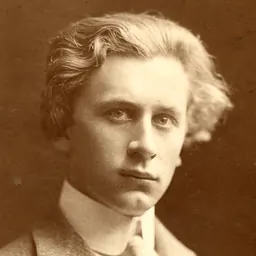




Related people
Same field, nearest in time
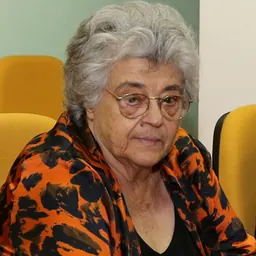

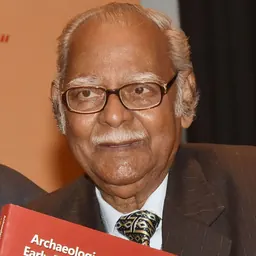

Contemporaries
People whose lives overlapped John Blacking's


Frequently asked questions
Who was John Blacking?
British ethnomusicologist
When was John Blacking born?
John Blacking was born on 22 October 1928.
When did John Blacking die?
John Blacking died on 24 January 1990.
What was John Blacking's occupation?
John Blacking was an anthropologist and ethnomusicologist.
What nationality was John Blacking?
John Blacking was British.
Sources & further reading
Cite this page
APA: Biography.guide. (2026). John Blacking. https://biography.guide/john-blacking/
MLA: "John Blacking." Biography.guide, https://biography.guide/john-blacking/.
Chicago: "John Blacking." Biography.guide. https://biography.guide/john-blacking/.
Data last updated: 2026-09-20 · Spot an error? Report a correction.
Portrait: Wikimedia Commons · author & licence
Page generated 2026-09-27 04:57 UTC