
John Berchmans Creeden
(1871-1948) American Jesuit educator
About John Berchmans Creeden
Lived 1871 – 1948 (aged 76). John Berchmans Creeden was an American catholic priest and academic administrator.
John Berchmans Creeden (September 12, 1871 – February 26, 1948) was an American Catholic priest and Jesuit, who served in many senior positions at Jesuit universities in the United States. Born in Massachusetts, he attended Boston College, and studied for the priesthood in Maryland and Austria. He taught at Fordham University and then at Georgetown University, where he became the dean of Georgetown College in 1909, and simultaneously served as the principal of Georgetown Preparatory School.
Creeden became president of Georgetown University in 1918, in the aftermath of the First World War. During his presidency, the School of Foreign Service was founded, for which he was awarded the Medal of Public Instruction from the president of Venezuela. In order to support the post-war enrollment boom, he expanded the size of the campus and established the university's first endowment. Creeden also significantly reformed the university's organization, including relocating Georgetown Preparatory School to a new campus, installing Jesuit regents to oversee each of the professional schools, and improving the Law School's curriculum and admissions standards.
In 1924, Creeden returned to Boston College as the dean of the Graduate School of Arts & Sciences, before founding Boston College Law School in 1926 and serving as its first regent until 1939 and simultaneously as the regent of Georgetown Law School from 1929 to 1939. In his final years, he was a spiritual counselor at Jesuit schools in Western Massachusetts, and then became the dean of Boston College's Evening Division, which later became the Woods College of Advancing Studies.
Early life John Berchmans Creeden was born on September 12, 1871, in Arlington, Massachusetts, to Irish immigrant parents. He attended Boston College, before entering the novitiate of the Society of Jesus in Frederick, Maryland, on August 14, 1890. Creeden taught at Georgetown University from 1897 to 1902,
He then spent two years teaching at Fordham University in New York City. On February 2, 1910, he was conferred the rank of in the Society of Jesus. Upon being named president of the university, he was succeeded as dean by Edmund A. Walsh. succeeding Alphonsus J. Donlon.
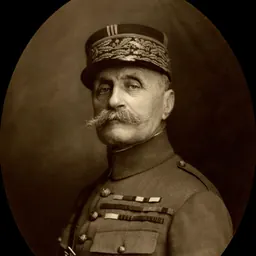
On November 20, 1921, Creeden awarded Ferdinand Foch, a French marshal and the Commander-in-Chief of the Allied Armies, an honorary Doctor of Civil and Canon Laws degree, as well as a golden sword on behalf of the American Jesuits. In the summer of 1923, Creeden developed phlebitis, which severely impacted his ability to discharge the office. By early 1924, he felt that he was no longer able to fulfill his duties, and Charles W. Lyons was named as his successor in late October 1924.
Campus improvements Following the end of the First World War, enrollment in all of Georgetown's schools increased greatly, especially in the Medical, Dental, and Law Schools. This put the capacity of existing facilities under significant strain. Creeden responded by buying up property bounded by 35th, 37th, P, and N Streets, adjacent to the main campus. He also sought to enhance the national reputation of the university by creating a Georgetown Publicity Bureau. Creeden established an endowment association, whose goal was to raise $5 million in two years,
Separation of Georgetown Preparatory School At the commencement ceremony of 1919, Creeden announced that Georgetown Preparatory School would move to a separate campus at the start of the following academic year. Construction of the North Bethesda, Maryland, campus was begun under his predecessor, Donlon. The purpose of this relocation was to remove the younger students from what the Jesuits viewed as the indecent temptations of the city. It was also part of the larger movement among Jesuit institutions in the United States, facing pressure from the Association of American Universities, to create separate four-year high school programs and four-year college programs, instead of combined seven-year programs.
School of Foreign Service established
Following the renaming of Georgetown's School of Foreign Service for Edmund A. Walsh in 1958, Henri J. Wiesel, a Jesuit contemporary and acquaintance of both Creeden and Walsh, wrote to the archivist of Georgetown University; Wiesel stated that although Walsh was instrumental in the creation of the school, the true founder of the School of Foreign Service was Creeden. He said that Creeden envisioned the establishment of such a school and frequently discussed the subject, at a time when Walsh was still studying theology as part of his Jesuit formation. His motivation for creating the school was to bring the Society of Jesus into contact with prominent men in government and finance.
Creeden sought to establish the school at the start of his presidency, but this goal was delayed by the First World War. Another Jesuit contemporary verified that Creeden worked closely with Constantine McGuire, another Jesuit, to present the plan for the School of Foreign Service to the board of regents in June 1918. Opening in 1919, the school quickly became well received in government circles in Washington, and Creeden sought to establish an endowment for it. He recruited Walsh, appointing him as the school's first regent.
Law School reform At this time, Georgetown Law School was located in Judiciary Square in downtown Washington.
The Association of American Law Schools (AALS) gave Georgetown Law School a quality rating of B, prompting Creeden to undertake a major reorganization of the governance of the school. In the spring of 1920, he obtained the consent of the board of regents to effectively terminate the semi-autonomous status of the law school, bringing it under closer control of the university leadership. This involved appointing a Jesuit regent to ensure the school was conforming to the tradition and mission of the university (a reform Creeden and a later president, Coleman Nevils, implemented at all of the university's professional schools), and creating an executive faculty that consisted of the president, the dean of the law school, and six professors chosen by the president.
In order to improve the quality of the school, he also had new bylaws adopted, which significantly raised the standards for admission to the law school. Applicants were required to have at least completed four years of high school.
Later years
After leaving Georgetown, Creeden went to Boston College, where he taught philosophy from 1924 to 1926. In 1926, he was appointed to succeed James F. Mellyn as the second dean of the Graduate School of Arts & Sciences, which had been created the previous year. On September 15, 1926, a variety of Boston College's graduate programs, along with its faculty of education, were placed under the purview of the new school. The Graduate School was open to both men and women, was located on Boston College High School's campus, and educated many religious teachers in the Archdiocese of Boston's schools. Creeden remained dean of the Graduate School until 1930, when he was succeeded by John F. Doherty.
Creeden then founded the Boston College Law School, and served as its first regent from 1926 to 1939. Following his law school deanships, he served as spiritual counselor from 1939 to 1942 at Cranwell Preparatory School in Lenox, Massachusetts, and from 1942 to 1947 at Shadowbrook, He also became the first dean of the Boston College Evening Division, which later became the Woods College of Advancing Studies. On February 26, 1948, Creeden died in Boston.
Don’t just read it —
keep it.
Full-length biographies made to live with: read them, listen on the way to work, watch them tonight.
- E-book
- Audio
- Video
Instant download · yours to keep · every purchase keeps this site free
Important facts
People in John Berchmans Creeden's life
Named in this biography and alive at the same time

Related people
Same field, nearest in time

Contemporaries
People whose lives overlapped John Berchmans Creeden's

Frequently asked questions
Who was John Berchmans Creeden?
(1871-1948) American Jesuit educator
When was John Berchmans Creeden born?
John Berchmans Creeden was born on 12 September 1871 in Arlington.
When did John Berchmans Creeden die?
John Berchmans Creeden died on 26 February 1948 in St. Elizabeth's Medical Center.
What was John Berchmans Creeden's occupation?
John Berchmans Creeden was a catholic priest and academic administrator.
What nationality was John Berchmans Creeden?
John Berchmans Creeden was American.
Sources & further reading
· Wikipedia: John Berchmans Creeden
Cite this page
APA: Biography.guide. (2026). John Berchmans Creeden. https://biography.guide/john-berchmans-creeden/
MLA: "John Berchmans Creeden." Biography.guide, https://biography.guide/john-berchmans-creeden/.
Chicago: "John Berchmans Creeden." Biography.guide. https://biography.guide/john-berchmans-creeden/.
Data last updated: 2026-09-20 · Spot an error? Report a correction.
Page generated 2026-09-27 05:24 UTC