
About John Barrow
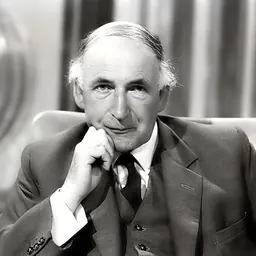
Lived 1952 – 2020 (aged 67). John Barrow was a British physicist, writer, university teacher, mathematician, theoretical physicist and astronomer.
Education Barrow attended Barham Primary School in Wembley until 1964 and Ealing Grammar School for Boys from 1964 to 1971 and obtained his first degree in mathematics and physics from Van Mildert College at the University of Durham in 1974.
Career and research Barrow was a Junior Research Lecturer at Christ Church, Oxford, from 1977 to 1981. He completed two postdoctoral years as a Miller Research Fellow in astronomy at the University of California, Berkeley, as a Commonwealth Lindemann Fellow (1977–8) and Miller Fellow (1980–1).
In 1981 he joined the University of Sussex and rose to become Professor and Director of the Astronomy Centre. In 1999, he became Professor in the Department of Applied Mathematics and Theoretical Physics and a fellow in Clare Hall at Cambridge University. From 2003 to 2007 he was Gresham Professor of Astronomy at Gresham College, London, and he was appointed as Gresham Professor of Geometry from 2008 to 2011; only one person has previously held two different Gresham chairs.
From 1999, he directed the Millennium Mathematics Project (MMP) at the University of Cambridge. This is an outreach and education programme to improve the appreciation, teaching and learning of mathematics and its applications. In 2006 it was awarded the Queen's Anniversary Prize for Educational Achievement by Queen Elizabeth II at Buckingham Palace.
In addition to having published more than 500 journal articles, Barrow co-wrote (with Frank J. Tipler) The Anthropic Cosmological Principle, a work on the history of the ideas, specifically intelligent design and teleology, as well as a treatise on astrophysics. He also published 22 books for general readers, beginning with his 1983 The Left Hand of Creation. His books summarise the state of the affairs of physical questions, often in the form of compendia of a large number of facts assembled from the works of great physicists, such as Paul Dirac and Arthur Eddington.
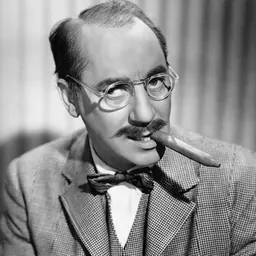
Barrow's approach to philosophical issues posed by physical cosmology made his books accessible to general readers. For example, Barrow introduced a memorable paradox, which he called "the Groucho Marx Effect" (see Russell-like paradoxes). Here, he quotes Groucho Marx: "I wouldn't want to belong to any club that would accept me as a member". Applying this to problems in cosmology, Barrow stated: "A universe simple enough to be understood is too simple to produce a mind capable of understanding it".
At the 2006 'Origins of the Universe' conference in Cambridge, organized by Stephen Hawking, Barrow debated the anthropic principle with Martin Rees. The proceedings were later published in Nature.
Honours Barrow was awarded the 2006 Templeton Prize for "Progress Toward Research or Discoveries about Spiritual Realities" for his "writings about the relationship between life and the universe, and the nature of human understanding [which] have created new perspectives on questions of ultimate concern to science and religion".
TypeDescriptionIManipulation of macroscopic structures, as available to an unaided member of the civilisation.IIManipulation of genes and macromoleculesIIIManipulation of molecules and molecular bonds.IVAccess to nanotechnology and atomically precise manufacturing; manipulation of individual atoms.VAccess to picotechnology and femtotechnology; manipulation of individual nuclei.VIAccess to attotechnology and finer; manipulation of elementary particles.ΩOmega-minus engineering; manipulation of the basic structure of space and time.
Death Barrow died on 26 September 2020 from colon cancer, at the age of 67.
Publications In English: The Left Hand of Creation: The Origin and Evolution of the Expanding Universe, Barrow J., and Joseph Silk, Oxford UP, 1983 Between Inner Space and Outer Space: Essays on the Science, Art, and Philosophy of the Origin of the Universe Impossibility: Limits of Science and the Science of Limits. Material Content of the Universe Pi in the Sky: Counting, Thinking, and Being. Oxford University Press, 1992, Science and Ultimate Reality: Quantum Theory, Cosmology and Complexity
The Artful Universe: The Cosmic Source of Human Creativity. OUP, 1995. Expanded 2005, The Book of Nothing: Vacuums, Voids, and the Latest Ideas about the Origins of the Universe, Pantheon, 2001, The Infinite Book: A Short Guide to the Boundless, Timeless and Endless, Pantheon Books, New York, 2005, The Origin of the Universe: To the Edge of Space and Time The Universe That Discovered Itself The Artful Universe Expanded 2005. The World Within the World Theories of Everything: The Quest for Ultimate Explanation The Constants of Nature: The Numbers that Encode the Deepest Secrets of the Universe. 2003, New Theories of Everything, 2007. Pantheon, Cosmic Imagery: Key Images in the History of Science. The Bodley Head, 2008, 100 Essential Things You Didn't Know You Didn't Know: Math Explains Your World. W. W. Norton, 2008, The Book of Universes: Exploring the Limits of the Cosmos. W. W. Norton, 2011, Mathletics: A Scientist Explains 100 Amazing Things About The World of Sports. W. W. Norton, 2012, 100 Essential Things You Didn't Know You Didn't Know About Maths and the Arts. Bodley Head, 2014,
In other languages: All Barrow's books for general readers have been re-published in Italy. Fitness of the Cosmos for Life: Biochemistry and Fine-Tuning. (eds., with S. Conway Morris, S.J. Freeland, and C.L. Harper), Cambridge UP, 2007. Science and Ultimate Reality: Quantum Theory, Cosmology and Complexity, 90th Birthday Volume for John Archibald Wheeler, (ed., with P.C.W. Davies, & C. Harper), Cambridge UP, 2004. The Physical Universe: The Interface Between Cosmology, Astrophysics and Particle Physics, (ed., with A Henriques, M Lago, Malcolm Longair), Springer-Verlag, 1991.
Don’t just read it —
keep it.
Full-length biographies made to live with: read them, listen on the way to work, watch them tonight.
- E-book
- Audio
- Video
Instant download · yours to keep · every purchase keeps this site free
Important facts
People in John Barrow's life
Named in this biography and alive at the same time






Related people
Same field, nearest in time


Contemporaries
People whose lives overlapped John Barrow's

Frequently asked questions
Who was John Barrow?
British physicist and mathematician (1952-2020)
When was John Barrow born?
John Barrow was born on 29 November 1952 in London.
When did John Barrow die?
John Barrow died on 26 September 2020 in Cambridge.
What was John Barrow's occupation?
John Barrow was a physicist, writer, university teacher, mathematician, theoretical physicist and astronomer.
What nationality was John Barrow?
John Barrow was British.
Sources & further reading
Cite this page
APA: Biography.guide. (2026). John Barrow. https://biography.guide/john-barrow-physicist/
MLA: "John Barrow." Biography.guide, https://biography.guide/john-barrow-physicist/.
Chicago: "John Barrow." Biography.guide. https://biography.guide/john-barrow-physicist/.
Data last updated: 2026-09-20 · Spot an error? Report a correction.
Page generated 2026-09-27 05:25 UTC