
About John Ariss
Lived 1725 – 1799 (aged 73–74). John Ariss was an American architect.
Architect John Ariss (sometimes spelled Ayres) (1725–1799) was born in Westmoreland County, Virginia to a family long settled in the Old Dominion. Several houses now considered National Historic Landmarks have been attributed to him. One of the best documented surviving examples of his work is Traveller's Rest in Kearneysville, West Virginia, which he designed as a farmstead home for American Revolutionary War General Horatio Gates. Ariss is also believed to have designed the Neo-Palladian estate Mount Airy, located in Richmond County, Virginia on Virginia's Northern Neck. In the 1930s, Harewood, a home constructed for Samuel Washington (George Washington's brother, who died in 1781) and also now a National Historic Landmark, was also attributed to Ariss, who lived nearby.
"Harewood," Samuel Washington house, designed by John Ariss in 1770, photographed by Frances Benjamin Johnston, ca. 1930s
Ariss was born in Westmoreland County in 1725, but by 1743 his father was dead and Ariss apparently chose his brother Spencer Ariss as his guardian. Subsequently, Ariss may have been sent to England for schooling because his return from England is noted in 1751. In 1755, Ariss moved to nearby Richmond County, and in 1767 he moved further westward, this time to Fauquier County. By 1770, Ariss had moved even further westward to what late became Berkeley County and part of which in 1801 would become Jefferson County, where he sat on the vestry of Norborne Parish. Ariss was a longtime friend of General George Washington, to whom he rented his home. Some also believe that Ariss had a role in designing the Washington home at Mount Vernon.
The relationship between the two families was of long standing: Ariss was the great-grandson of Col. Nicholas Spencer of Cople Parish, Westmoreland, who had patented the Mount Vernon estate with his friend Lt. Col. John Washington.
A number of Ariss's works are listed on the U.S. National Register of Historic Places (NRHP).
Works Elmwood (built 1774), SW of jct. of Rtes. 640 and U.S. 17 Loretto, VA, NRHP-listed Fairfield, E of jct. of Rtes. 340 and 610 Berryville, VA, NRHP-listed Lamb's Creek Church, VA 607 Sealston, VA, NRHP-listed Little England, E of Gloucester on VA 672 Gloucester, VA, NRHP-listed Little Fork Church, jct. of Rtes. 624 and 726 Rixeyville, VA, NRHP-listed Menokin, NW of jct. of Rtes. 690 and 621 Warsaw, VA, NRHP-listed Mount Airy, W of Warsaw on U.S. 360 Warsaw, VA, NRHP-listed Harewood (West Virginia), designed in 1770 for Samuel Washington, NRHP-listed
Don’t just read it —
keep it.
Full-length biographies made to live with: read them, listen on the way to work, watch them tonight.
- E-book
- Audio
- Video
Instant download · yours to keep · every purchase keeps this site free
Important facts
People in John Ariss's life
Named in this biography and alive at the same time
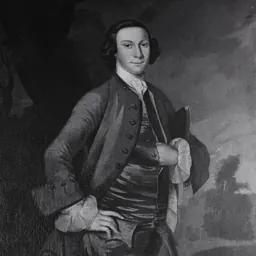


Related people
Same field, nearest in time


Contemporaries
People whose lives overlapped John Ariss's





Frequently asked questions
Who was John Ariss?
American architect
When was John Ariss born?
John Ariss was born in 1725.
When did John Ariss die?
John Ariss died in 1799.
What was John Ariss's occupation?
John Ariss was an architect.
What nationality was John Ariss?
John Ariss was American.
Sources & further reading
Cite this page
APA: Biography.guide. (2026). John Ariss. https://biography.guide/john-ariss/
MLA: "John Ariss." Biography.guide, https://biography.guide/john-ariss/.
Chicago: "John Ariss." Biography.guide. https://biography.guide/john-ariss/.
Data last updated: 2026-09-20 · Spot an error? Report a correction.
Page generated 2026-09-27 05:04 UTC