
About John Alexander Brodie
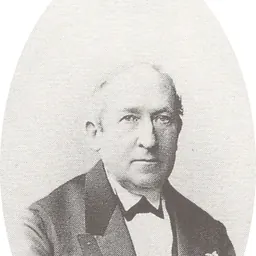
Lived 1858 – 1934 (aged 76). John Alexander Brodie was a British civil engineer and engineer.
John Alexander Brodie (1858 – 1934) was an English civil engineer. He was especially known for his contribution to town planning in Liverpool, notably as one of the engineers who led the design of the Mersey Tunnel under the River Mersey. He is also known for inventing the netting for football goals in 1889.
Early life John Alexander Brodie was born in Bridgnorth on 1 June 1858. His father, James Brodie, was a Scottish man from Kettins. Brodie served his apprenticeship in 1875, working in the Mersey Docks and Harbour Board engineering department under Chief Engineer George Fosbery Lyster. In 1879 he obtained a Whitworth Scholarship and a Canning Scholarship to study mathematics at Owen's College (now part of the University of Manchester). After graduation, he served a three-year traineeship in the office of Sir Joseph Whitworth.
Civil engineering career After a short spell working for the Liverpool City Engineer's Department, he set up a private consultancy and spent some time working in Bilbao, Spain. He returned to Britain in 1884.
Brodie was a keen sportsman and played rugby and golf. In 1889 he invented the goal net for use in football matches, and he said that this was the invention of which he was the most proud.
Brodie returned to Liverpool in 1898 as the city engineer suggesting several improvements for the town such as the UK's first ring road, electric trams and the East Lancashire Road, the UK's first intercity highway. This technique was later used in road building projects in Manchester, for Kingsway and Princess Road.
Brodie was at the forefront of pre-fabricated housing technology, promoting the use of pre-cast reinforced concrete slabs as a means of building houses quickly and cheaply; he presented an example of this technique to the Cheap Cottages Exhibition at Letchworth Garden City. The design attracted attention from across the world and he is known to have influenced Grosvenor Atterbury who used a similar technique to build the houses at Forest Hills Gardens. becoming the first local authority engineer to receive the accolade.
Personal life Brodie married Aimée Freeland, the daughter of Hugh Freeland from Uddingston, in 1897 in Glasgow. They had two sons and two daughters.
Death and legacy
On 16 November 1934, Brodie died at Aigburth Hall in Liverpool's Aigburth suburb at the age of 76. His former Liverpool home where he lived from 1858 to 1934, 28 Ullet Road near Sefton Park, is commemorated with an English Heritage blue plaque. There is also a Stonegate pub called The John Brodie on Allerton Road in the Mossley Hill suburb.
Don’t just read it —
keep it.
Full-length biographies made to live with: read them, listen on the way to work, watch them tonight.
- E-book
- Audio
- Video
Instant download · yours to keep · every purchase keeps this site free
Important facts
People in John Alexander Brodie's life
Named in this biography and alive at the same time






Related people
Same field, nearest in time


Contemporaries
People whose lives overlapped John Alexander Brodie's

Frequently asked questions
Who was John Alexander Brodie?
British civil engineer (1858-1934)
When was John Alexander Brodie born?
John Alexander Brodie was born on 1 June 1858 in Bridgnorth.
When did John Alexander Brodie die?
John Alexander Brodie died on 16 November 1934 in Liverpool.
What was John Alexander Brodie's occupation?
John Alexander Brodie was a civil engineer and engineer.
What nationality was John Alexander Brodie?
John Alexander Brodie was British.
Sources & further reading
· Wikipedia: John Alexander Brodie
· DBpedia: John Alexander Brodie
Cite this page
APA: Biography.guide. (2026). John Alexander Brodie. https://biography.guide/john-alexander-brodie/
MLA: "John Alexander Brodie." Biography.guide, https://biography.guide/john-alexander-brodie/.
Chicago: "John Alexander Brodie." Biography.guide. https://biography.guide/john-alexander-brodie/.
Data last updated: 2026-09-20 · Spot an error? Report a correction.
Page generated 2026-09-27 05:24 UTC