About Grosvenor Atterbury
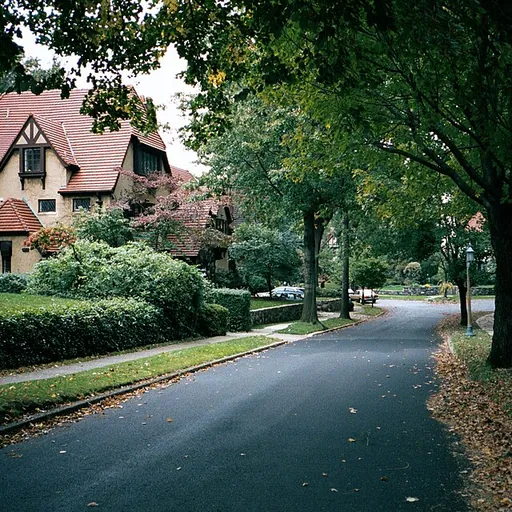
Lived 1869 – 1956 (aged 87). Grosvenor Atterbury was an American architect, known for Aldus Chapin Higgins House, Forest Hills Gardens and Holy Trinity Church (Manhattan).
Grosvenor Atterbury (July 7, 1869, in Detroit, MI – October 18, 1956, in Southampton, NY) was an American architect, urban planner and writer. He studied at Yale University, where he was an editor of campus humor magazine The Yale Record After travelling in Europe, he studied architecture at Columbia University and worked in the offices of McKim, Mead & White.
Much of Atterbury's early work consisted of weekend houses for wealthy industrialists. Atterbury was given the commission for the model housing community of Forest Hills Gardens, along with his associate architect, John Almy Tompkins II, which began in 1909 under the sponsorship of the Russell Sage Foundation.
For Forest Hills, Atterbury developed an innovative construction method: each house was built from approximately 170 standardized precast concrete panels, fabricated off-site and assembled by crane. The system was sophisticated even by modern standards: panels were cast with integral hollow insulation chambers; casting formwork incorporated an internal sleeve, allowing molds to be "broken" before concrete had completely set; and panels were moved to the site in only two operations (formwork to truck and truck to crane).
Atterbury's system influenced the work of mid-1920s European modern architects like Ernst May, who used panelized prefab concrete systems in a number of celebrated experimental housing projects in Frankfurt. In this way Atterbury can be considered a progenitor of the Modern Movement.
Atterbury was elected to the National Academy of Design in 1918 as an Associate member, and became a full member in 1940.
Atterbury worked on various projects with John D. Rockefeller, Jr., in the 1930s, including what today is Stone Barns Food and Agriculture Center, and the Gatehouse and Entrance Wall to Kykuit Estate, as well as the six stucco houses built for estate employees. The six houses were designed as the core of Pocantico Village that Rockefeller was building as Kykuit was being completed, and to complement the style of the Union Church and Pocantico Hills Central School, which he had completed.
Works
Surprise Valley Farm (1916), Arthur Curtiss James property in Newport, Rhode Island, photographed by Frances Benjamin Johnston in 1917. Architect: Grosvenor Atterbury, 1914-1916. These buildings have survived as part of the SVF Foundation founded to preserve endangered breeds of livestock. Parrish Art Museum in Southampton, NY. The building was commissioned by Samuel Longstreth Parrish to fellow Southampton resident, the architect Grosvenor Atterbury. It was constructed in 1897 in downtown Southampton at 25 Jobs Lane. Connecticut Hall restoration, New Haven, Connecticut, 1905 Renaissance Pittsburgh Hotel (formerly Fulton Building), Pittsburgh, Pennsylvania, 1906 Tenney Memorial Chapel, Walnut Grove Cemetery, Methuen, Massachusetts, 1906 The Boulders, 99 Shore Ave. Greenwood Lake, New York, 1911 The Church-in-the-Gardens, New York City, 1915 Surprise Valley Farm, Newport, Rhode Island, 1914-1916 Industrial village (the pottery houses) for Holston Corporation, 1915-1916 House of the Redeemer, New York City, 1916 Wereholme, Islip, New York, 1917 Carriage Paths, Bridges and Gatehouses, Acadia National Park and vicinity Acadia National Park, Maine, 1919 Aldus Chapin Higgins House, Worcester, Massachusetts, 1921 Sage House (formerly Russell Sage Foundation Building), New York City, 1922 to 1926 Holy Trinity Rectory, a four-storey brick rectory at 341 East 87th Street, Manhattan, 1927 (for $50,000). Kykuit Gate House and Entrance Wall, and Administrative Building, Pocantico Hills, New York, 1930 Pond Mansion, Tucson, Arizona, 1930 Stone Barns Center for Food and Agriculture, Pocantico Hills, New York, 1930-33 Six cottages commissioned by John D. Rockefeller, Jr., for estate employees, Kykuit, Pocantico Hills, New York, 1930-33 Rockefeller Hall, Winter Harbor, Maine, 1933, commissioned by John D. Rockefeller, Jr. and built by the National Park Service to house Navy personnel in the French Norman Revival-style. Children's Village of the Hartford Orphan Asylum, 1680 Albany Ave. Hartford, Connecticut Shore Road Historic District, Shore Rd. Cold Spring Harbor, New York
Don’t just read it —
keep it.
Full-length biographies made to live with: read them, listen on the way to work, watch them tonight.
- E-book
- Audio
- Video
Instant download · yours to keep · every purchase keeps this site free
Important facts
People in Grosvenor Atterbury's life
Named in this biography and alive at the same time




Related people
Same field, nearest in time


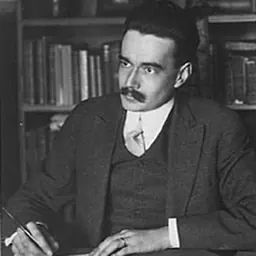
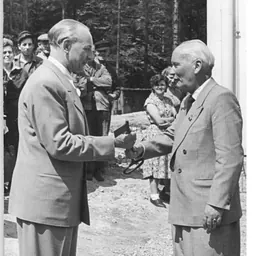
Contemporaries
People whose lives overlapped Grosvenor Atterbury's
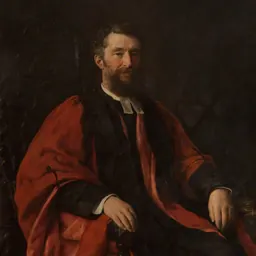

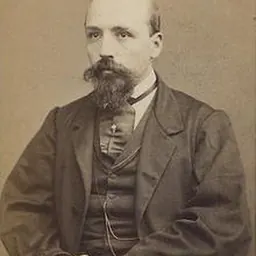

Frequently asked questions
Who was Grosvenor Atterbury?
American architect (1869–1956)
When was Grosvenor Atterbury born?
Grosvenor Atterbury was born on 7 July 1869 in Detroit.
When did Grosvenor Atterbury die?
Grosvenor Atterbury died on 18 October 1956 in Southampton.
What was Grosvenor Atterbury's occupation?
Grosvenor Atterbury was an architect.
What was Grosvenor Atterbury known for?
Grosvenor Atterbury was known for Aldus Chapin Higgins House, Forest Hills Gardens, Holy Trinity Church (Manhattan), House of the Redeemer (New York City) and Wereholme.
What nationality was Grosvenor Atterbury?
Grosvenor Atterbury was American.
Sources & further reading
· Wikipedia: Grosvenor Atterbury
· DBpedia: Grosvenor Atterbury
Cite this page
APA: Biography.guide. (2026). Grosvenor Atterbury. https://biography.guide/grosvenor-atterbury/
MLA: "Grosvenor Atterbury." Biography.guide, https://biography.guide/grosvenor-atterbury/.
Chicago: "Grosvenor Atterbury." Biography.guide. https://biography.guide/grosvenor-atterbury/.
Data last updated: 2026-09-22 · Spot an error? Report a correction.
Page generated 2026-09-27 05:09 UTC