
John Adolphus Dahlgren
United States Navy admiral
About John Adolphus Dahlgren
Lived 1809 – 1870 (aged 60). John Adolphus Dahlgren was an American military officer, inventor, naval officer and admiral.
John Adolphus Bernard Dahlgren (November 13, 1809 – July 12, 1870) was a United States Navy officer who founded his service's Ordnance Department and launched significant advances in gunnery.
Dahlgren devised a smoothbore howitzer, adaptable for many sizes of craft and shore installations. He then introduced a cast-iron muzzle-loading cannon with vastly increased range and accuracy, known as the Dahlgren gun, that became the U.S. Navy's standard armament.
In the Civil War, Dahlgren was made commander of the Washington Navy Yard, where he established the Bureau of Ordnance. In 1863, he took command of the South Atlantic Blockading Squadron at the rank of rear admiral. He helped William Tecumseh Sherman secure Savannah, Georgia.
Early life and education
Dahlgren was born on November 13, 1809, in Philadelphia, Pennsylvania, the son of Bernhard Ulrik Dahlgren, a merchant and Swedish Consul in the city.
Career Dahlgren joined the United States Navy in 1826 as a midshipman and was promoted to the coastal survey in 1834. By 1847, he was an ordnance officer, and at the Washington Navy Yard began to improve and systematize the procurement and supply system for weapons.
Dahlgren gun
His most famous contribution was the Dahlgren gun, a cast-iron muzzle loading cannon. Dahlgren's meticulous research using gauges to measure pressure differences in the cannon barrel as it was fired resulted in a design that utilized slower-detonating gunpowder and merged characteristics of John Ericsson's experimental 12-inch "Orator" (and Robert Stockton's tragically executed imitation, the "Peacemaker") and the shell-guns adapted by French artillery officer Henri-Joseph Paixhans from their origination in the U.S. Army but named after him. Dahlgren wrote:
Paixhans had so far satisfied naval men of the power of shell guns as to obtain their admission on shipboard; but by unduly developing the explosive element, he had sacrificed accuracy and range. ... The difference between the system of Paixhans and my own was simply that Paixhans guns were strictly shell guns, and were not designed for shot, nor for great penetration or accuracy at long ranges. They were, therefore, auxiliary to, or associates of, the shot-guns. This made a mixed armament, was objectionable as such, and never was adopted to any extent in France ... My idea was, to have a gun that should generally throw shells far and accurately, with the capacity to fire solid shot when needed. Also to compose the whole battery entirely of such guns.
The U.S. Navy had equipped several ships with 8-inch Paixhans guns of 63 and 55 cwt. in 1845, and later a 10-inch shell gun of 86 cwt. In 1854, the six Merrimack-class steam frigates were equipped with 9-inch Dahlgren shell guns. By 1852, the Dahlgren gun had become the standard armament of the United States Navy. and took command of the South Atlantic Blockading Squadron. In 1864, he helped William Tecumseh Sherman secure Savannah, Georgia. However, despite Radical Republican associations, John Dahlgren's younger brother Charles G. Dahlgren (1811–1888), a banker and slave owner, became a Confederate brigadier general, commander of the 3rd Brigade, Army of Mississippi, which he personally recruited and funded, until his troops' integration into the regular Confederate army and removal by Jefferson Davis in 1862. After his father's death, he would write and present many technical papers on military weaponry, including the Dahlgren gun. Elizabeth Dahlgren (1840-1858), died of consumption. Ulric Dahlgren (1842–1864) was a soldier in the Union Army and was killed in an unsuccessful mission to liberate Federal prisoners in Libby Prison and Belle Isle. Paul Dahlgren (1846–1876), also in the army, died while serving as consul general in Rome. Ulrica Dahlgren (1866–1925), who married Josiah Pierce, and was the grandmother of Romaine Dahlgren Pierce, wife of David Mountbatten, 3rd Marquess of Milford Haven.
Final years and death
Dahlgren took command of the South Pacific Squadron from Rear Admiral George F. Pearson in 1867.
He is buried at Laurel Hill Cemetery, Section L50 to 54, in Philadelphia, Pennsylvania.
Legacy
The Naval station in Dahlgren, Virginia, Dahlgren Hall at the United States Naval Academy in Annapolis, Maryland, several ships, Dahlgren, Illinois, and Dahlgren Township, Minnesota are all named for him
Selected works
Naval Percussion Locks and Primers
Don’t just read it —
keep it.
Full-length biographies made to live with: read them, listen on the way to work, watch them tonight.
- E-book
- Audio
- Video
Instant download · yours to keep · every purchase keeps this site free
Important facts
People in John Adolphus Dahlgren's life
Named in this biography and alive at the same time
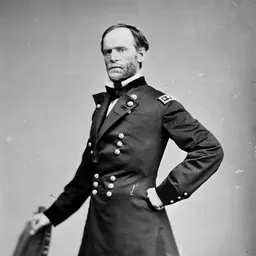

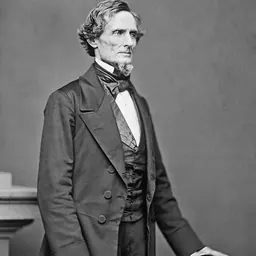
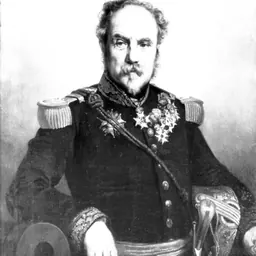
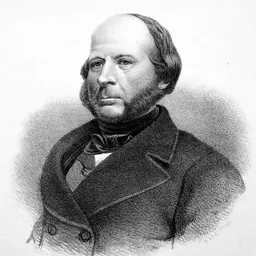


Related people
Same field, nearest in time

Contemporaries
People whose lives overlapped John Adolphus Dahlgren's





Frequently asked questions
Who was John Adolphus Dahlgren?
United States Navy admiral (1809–1870)
When was John Adolphus Dahlgren born?
John Adolphus Dahlgren was born on 13 November 1809 in Philadelphia.
When did John Adolphus Dahlgren die?
John Adolphus Dahlgren died on 12 July 1870 in Washington, D.C..
What was John Adolphus Dahlgren's occupation?
John Adolphus Dahlgren was a military officer, inventor, naval officer and admiral.
What nationality was John Adolphus Dahlgren?
John Adolphus Dahlgren was American.
Sources & further reading
· Wikipedia: John Adolphus Dahlgren
Cite this page
APA: Biography.guide. (2026). John Adolphus Dahlgren. https://biography.guide/john-adolphus-dahlgren/
MLA: "John Adolphus Dahlgren." Biography.guide, https://biography.guide/john-adolphus-dahlgren/.
Chicago: "John Adolphus Dahlgren." Biography.guide. https://biography.guide/john-adolphus-dahlgren/.
Data last updated: 2026-09-25 · Spot an error? Report a correction.
Page generated 2026-09-27 05:10 UTC