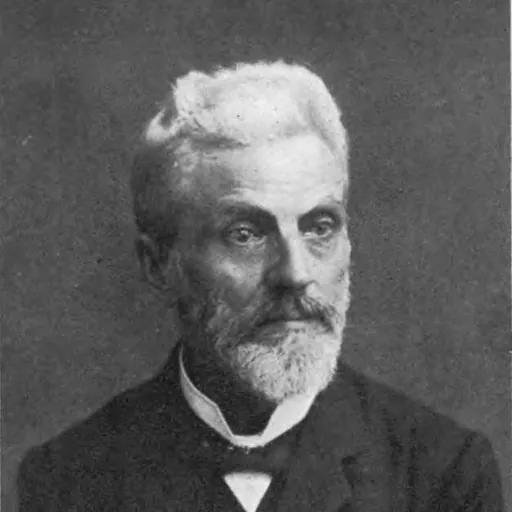
About Johannis de Rijke
Lived 1842 – 1913 (aged 70). Johannis de Rijke was a Dutch civil engineer and engineer.
Early life and background Johannis de Rijke was born in Colijnsplaat on the island of Noord-Beveland, the third of seven children of Pieter de Rijke, a farmer and part-time dike worker, and his wife, Anna Catharina Liefbroer. Lacking the means for formal education, he was mentored by Jacobus Lebret, the district engineer in Bevelanden. for the Oranjesluizen, a lock complex near Amsterdam, designed to separate the IJ lagoon from the Zuiderzee at Schellingwoude, under the supervision of Cornelis Johannes van Doorn.
In 1873, de Rijke set off from Marseille aboard the steamship Iraouaddy to Shanghai, and then to Nagasaki, along with George Escher and Dick Arnst. De Rijke’s lack of a formal higher-level education was reflected in the status he and his companions were afforded on their voyage, with graduate engineer Escher travelling first class, whilst de Rijke and his family were in second class, and the foreman Arnst was in third class. De Rijke was accompanied by his pregnant wife and their two children, Anna Catharina and Johannes Laurens.
Shortly after arriving in Japan, his wife gave birth to their third child, a son whom they named Pieter. The couple had four more children after this: Eleazer, Els, Jacoba, and Adan. Eleazer died at a young age in Japan.
It was during this period that he met Maria Suzanna Heck, a 25-year-old teacher and devout Calvinist, known for her correspondence with Abraham Kuyper. and had five children: Hendrik, Santina Helenus, Stoffelina, and Wilhelmus. As a committed Calvinist who valued “hard work, honesty and simplicity”, de Rijke joined Kuyper's Anti-Revolutionary Party in 1899. In 1900, Maria and the children moved to the Netherlands. In 1891, De Rijke applied for a position in the Orange Free State (Transvaal) but was not accepted due to the absence of a suitable role.
Career Overview of de Rijke's time in Japan During the period of the Meiji Restoration, the Japanese Government employed western experts and advisors, known in Japanese as O-yatoi Gaikokujin (Kyūjitai: , Shinjitai: , 'hired foreigners'), in order to modernise and improve the country's infrastructure. The experience of Dutch civil engineers in hydraulic engineering works was sought in order to improve drainage, sewerage, river, port and harbour works across the country, leading to the appointment of ten Dutch civil engineers in Japan between 1872 and 1903.
Cornelis van Doorn and Isaac Lindo were the first two Dutch civil engineers of the group to arrive in Japan, in 1872. Encouraged by van Doorn, de Rijke travelled to Japan to assist in the redesign of the port of Osaka, undertook numerous flood control and water management projects. They enhanced the ports of Tokyo, Yokohama, Nagasaki, Ujina (Hiroshima), Hakata (Fukuoka),
De Rijke was instrumental in the improvement of the riparian zones of various Japanese rivers. His significant contributions included the separation of the Kiso River, Nagara River, and Ibi River near Nagoya, known as the . The works here included the construction of a polder (known in Japan as a wajū). Elementary schools in Aichi Prefecture conduct a tour of the wajū for students, educating them about its history and the challenges faced in its construction. This programme aims to foster an appreciation of the effort and history behind the creation of the works, and to ensure its legacy is passed on to future generations.
He also supervised works at the Kurobe alluvial fan, located on the Japan Sea coast, and constructed a tunnel from Lake Biwa to Kyoto, where he replaced Escher after the latter returned to the Netherlands. He is credited with establishing the Kanda River sewer network in Tokyo.
As shown in the table below, there were a number of notable Dutch engineers working in Japan between 1872 and 1903, with de Rijke's almost unbroken thirty-year presence in the country (1873 to 1903) being the longest of all. In 2002, Dutch filmmaker Louis van Gasteren released (English: In Japanese Rapids) a documentary about de Rijke and Escher. That same year, van Gasteren edited a book of the same name. In 2005 he published (English: The Eternal Rice with Japanese Tea: Letters from Japan by Dutch Watermen, 1872–1903), a collection of letters by de Rijke and other Dutch engineers engaged on Japanese hydraulic engineering works at the time.
De Rijke's Japanese projects Tone River
De Rijke's inaugural undertaking in Japan involved the enhancement of the Tone River, which was affected by significant navigability issues arising from siltation. Recognising that the project required detailed topographical survey data, which was not readily available in Japan at the time, de Rijke undertook an extensive levelling project in the area, after fellow Dutch engineer Isaac Lindo had established the Tokyo datum for this purpose. The solution initially comprised the construction of fascine mattresses on the mountain slopes, which de Rijke later improved into hedge-like structures.
The main phase of de Rijke's work at the Yodo River took place between 1875 and 1876, and involved deepening the river channel along the 44 km stretch between Osaka and Kyoto. By installing groynes which altered the currents in the river, de Rijke and Escher ensured the maintenance of the riverbed in periods of low water. During periods of high discharge, the river received flows from nearby land drainage, effectively preventing flooding. The methods employed were similar to techniques which had been used on the Rhine and Meuse rivers in the Netherlands.
The riverbank and groyne construction works were based on the methods used in traditional Dutch fascine mattress designs, assembled and installed under Westerwiel's supervision. Similarly, for the embankment works, a Dutch method involving simpler fascines was employed, overseen by another Dutch foreman, Josinus Kalis. In the absence of traditional Dutch fascine materials such as willow wood and rye straw, locally available materials such as bamboo and rice straw were used. A key aspect of de Rijke's approach was addressing multiple objectives through each project, such as curbing soil erosion, preventing disease, and agricultural enhancement, all within an integrated framework that saw the river's catchment area as a cohesive system requiring balanced water distribution.
Mikuni Harbour Project In the latter half of the 19th century, the port of Mikuni, historically a hub of national trade on the Kitamaebune shipping route, faced a decline due to sediment deposits from the Kuzuryū River. In 1875, locals petitioned the Japanese government for improvements, leading to the involvement of Escher and de Rijke in improvement works.
In 1876, Escher designed a curved breakwater to counteract gravel run-off, and a turning basin with an average water depth of three metres. Escher's plans for the project extended to urban development, including the design of an Elementary school in Mikuni. However, financial constraints and contractual issues led to Escher's return to the Netherlands, and the project remained incomplete.
In a bid to assuage these issues and generate revenue, the port was opened for trade in 1880 despite the works being incomplete, and large sections of the breakwater were destroyed in 1881 by wave attack. Nonetheless, construction persevered, and the project was finally completed in 1885. The final cost of the work was 7.5 times Escher's original estimate, but the completion of the port reinstated its status as a key trade hub. A statue of de Rijke is located near the site.
Dam Construction on the Otani River A dam designed and constructed under de Rijke's supervision is situated approximately 1 km upstream from the confluence of the Yoshino and Otani rivers. Construction spanned from 1886 to 1887. The dam is essentially a stepped spillway, and was conceived by de Rijke to prevent erosion. The original dimensions of the dam were 97 metres in length, 12 metres in width, and 3.8 metres in height. Subsequent structural modifications to improve the structural integrity led to a reduction in its length to 60 metres. The Otani River, characteristically dry except during periods of heavy rainfall, transforms into a torrential flow during such events. The dam is one of the few remaining structures in the area that were designed and built under the guidance of de Rijke.
The 'Dutch Dams' A 34 metre wide, 7 metre high dam in Otsu-shi was commenced in 1889 to a design by Japanese engineer Tanabe Gisaburo, supervised by de Rijke. This dam is of similar construction to de Rijke's Otani dam, featuring a stepped spillway comprising twenty tiers. It was constructed using granite blocks, each measuring 120 cm in length, 55 cm in width and 35 cm in height. In recognition of its historical and engineering significance, it was accorded the status of an industrial heritage site by the Japanese Association of Civil Engineers in 2004. A similar dam was constructed in Kaizu-shi by De Rijke in 1891, and together the structures are named locally as Oranda Sekihisage (the Dutch dams).
Spencer's proposal received backing through British diplomatic channels, whereas de Rijke and Rouwenhorst Mulder's received negligible support from the Netherlands government. The fundamental difference between the two designs lay in the construction of the foundations for the breakwaters, with de Rijke opting for fascine mattresses, a decision informed by the soft soils of the port's seabed. In contrast, Palmer's design relied on extensive use of concrete and was found to be problematic in such soft ground conditions.
Chikugo: River improvement works. Hiroshima: Development of a port plan. Katsura: River improvement and management. Kobe: Design of jetties for maritime infrastructure. Kuzuryu: River improvement to enhance flow and water management. Nagasaki: Strategic port plan. Niigata: Harbour construction and development. Sakai: Port development plan. Shinano: River improvement for water resource management. Tokyo: Port planning, improvements in sewerage and water supply systems. Yokkaichi, Yoshino: River improvements, environmental restoration and flood control. Yandani erosion control dam, Nakatsugawa: Erosion control structure.
China
De Rijke was involved in engineering works in China from 1873. In correspondence with the Dutch consul in Shanghai, E. van Heukelsveldt Slaghek, he discussed works at the Wusong Inner Bar, a sandbank on the Wusong (or Woosung) River (Chinese: ) at the mouth of the Huangpu Jiang, approximately 9 miles from Shanghai. As a tributary of the Yangtze, the river played a crucial role in Shanghai's international trade. Silting of the river was extensively reported by the North-China Herald and other local press in the 1870s as causing major problems for shipping, which led to tensions between Shanghai's mercantile community and the city administration, as well as Chinese and international diplomatic authorities.
These events took place during efforts by the Qing dynasty to strengthen and westernise China which became known as the Self-Strengthening Movement, a situation similar to the one de Rijke was familiar with from his experience of the Meiji Restoration in Japan. However, circumstances in China were complicated by the political and economic landscape of the Shanghai International Settlement and Treaty ports system, in which designated Chinese cities were opened to foreign trade and residence. A group of shipping companies and their underwriters, as well as businessmen in the United Kingdom who also acted as honorary consuls in Shanghai, advocated for dredging to solve the Wusong Bar issues. In order to advance their case, this group commissioned a report from de Rijke and George Arnold Escher.
Whilst the shipping companies pressed for action to address the ongoing navigation issues caused by the sandbar, Chinese officials were reluctant to approve the scheme, seeing it as a potential infringement on China’s sovereignty over its internal waterways. They also objected to bearing construction and maintenance costs arising from major civil engineering works that would mainly benefit foreign shipping interests.
Despite the ongoing impasse over the Wusong project, de Rijke remained active in China, and in 1896 he received a commission from the Shanghai Chamber of Commerce, becoming involved in flood control works at the Yellow River.
In 1905, works at Huangpu Jiang were finally commenced, and de Rijke was appointed to spearhead the project by the Chinese Government, assuming the role of chief engineer of the Whangpoo Conservancy Board, working for the contractor (English: Dutch Company for Harbour Works). He arrived in Shanghai in February 1906 with his 16-year-old son Hendrik and daughter Jacoba. His work included a new jetty at Wusong and the creation of a river channel at Gaoqiao. The works improved navigation by increasing low water depth at the river mouth from 15 ft to 21 ft, and in the new Gaoqiao channel from 2–3 ft to 19 ft.
De Rijke supervised a primarily Dutch staff of approximately 80 employees and used two bucket ladder dredgers (the Rhenania and the Colonia, shipped from Emden in 1906) along with a suction dredger (the Cyclop), with the dredging work undertaken by the East Asiatic Dredging Company. His plans culminated in the complete clearance of the Woosung bar. He resigned in November 1910, before the completion of the project, and returned to the Netherlands. The project continued under the leadership of Swedish engineer H.M. von Heidenstam and was completed in 1928.
De Rijke's son Hendrik, who worked in Nantong in 1916 to implement his father's plans for the Yangtze River, died in 1919 at the age of 29 during a cholera epidemic.
Later life and legacy De Rijke was awarded the Order of the Sacred Treasures, 2nd class, by the Japanese Government.
He is commemorated in the naming of a split hopper barge operated by the Dutch dredging company Van Oord. Today, Dutch words such as (English: water level), and (pronounced “kereppu” in Japanese), meaning groyne, are common technical terms in Japanese.
Honours Order of the Sacred Treasures, 1889 (4th class); 1892 (3rd class); 1903 (2nd class) Order of Leopold (Belgium)
Don’t just read it —
keep it.
Full-length biographies made to live with: read them, listen on the way to work, watch them tonight.
- E-book
- Audio
- Video
Instant download · yours to keep · every purchase keeps this site free
Important facts
People in Johannis de Rijke's life
Named in this biography and alive at the same time
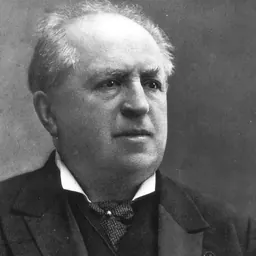


Related people
Same field, nearest in time
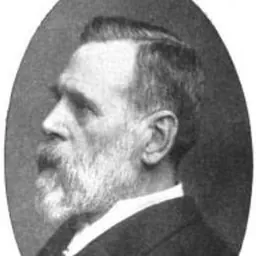
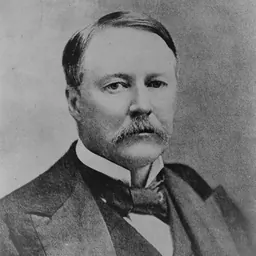


Contemporaries
People whose lives overlapped Johannis de Rijke's
Frequently asked questions
Who was Johannis de Rijke?
civil engineer from the Netherlands
When was Johannis de Rijke born?
Johannis de Rijke was born on 5 December 1842 in Colijnsplaat.
When did Johannis de Rijke die?
Johannis de Rijke died on 20 January 1913 in Amsterdam.
What was Johannis de Rijke's occupation?
Johannis de Rijke was a civil engineer and engineer.
What nationality was Johannis de Rijke?
Johannis de Rijke was Dutch.
Sources & further reading
· Wikipedia: Johannis de Rijke
Cite this page
APA: Biography.guide. (2026). Johannis de Rijke. https://biography.guide/johannis-de-rijke/
MLA: "Johannis de Rijke." Biography.guide, https://biography.guide/johannis-de-rijke/.
Chicago: "Johannis de Rijke." Biography.guide. https://biography.guide/johannis-de-rijke/.
Data last updated: 2026-09-22 · Spot an error? Report a correction.
Portrait: Wikimedia Commons · author & licence
Page generated 2026-09-27 04:58 UTC