
Johannes Stelling
German politician and journalist
About Johannes Stelling
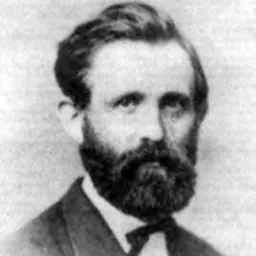
Lived 1877 – 1933 (aged 56). Johannes Stelling was a German politician, journalist, merchant's assistant and head of government.
Johannes Stelling (12 May 1877 – 21/22 June 1933) was a German political activist who became a leading SPD politician during the Weimar years. He served between 1921 and 1924 as First Minister (Ministerpräsident) of Mecklenburg-Schwerin.
Johannes Stelling was murdered by Nazi quasi-militaries on 21/22 June 1933.
Life
Provenance and early years Stelling was born in the dynamic port city of Hamburg.
The Weimar assembly turned out to be the precursor to the Reichstag of the new German republic. Stelling was elected a member in the June 1920 general election and continued to be re-elected thereafter, sitting continuously as an SPD Reichstag member until 1933, apart from a seven-month absence between May and December 1924.
Regional politics During the early 1920s Stelling was also prominent in the regional politics of Mecklenburg-Schwerin, By the later 1920s the Stelling family had relocated, like many upwardly mobile working-class families, to one of the fashionable houses in the new residential developments behind the railway station in the rapidly expanding Berlin quarter of Köpenick. along with several other who shared his political views. One fellow party member arrested at the same time, along with his son, was Heinrich Reinefeld, a lawyer who was an eye witness to some of what happened next, and who survived to give his account of it. Stelling was one of a group of detainees taken to an ad hoc detention centre in the Gaststätte Seidler ("Seidler restaurant") in the nearby Uhlenhorstin district. Here they were assaulted and tortured by more than 150 SA members. Fifteen years later the Soviet administration in the Soviet occupation zone, and their successors after 1949 in charge of the Soviet sponsored German Democratic Republic (East Germany), were keen to play up atrocities committed by the Nazi regime. In both cases, the "Köpenicker Blutwoche" may not have been the greatest of the Nazi atrocities, but it was one of the first on such a scale, and it has attracted the attention of later writers because of this. Johannes Stelling and the businessman Georg Eppenstein were probably its most prominent victims.
Don’t just read it —
keep it.
Full-length biographies made to live with: read them, listen on the way to work, watch them tonight.
- E-book
- Audio
- Video
Instant download · yours to keep · every purchase keeps this site free
Important facts
Related people
Same field, nearest in time





Contemporaries
People whose lives overlapped Johannes Stelling's



Frequently asked questions
Who was Johannes Stelling?
German politician and journalist (1877-1933)
When was Johannes Stelling born?
Johannes Stelling was born on 12 May 1877 in Hamburg.
When did Johannes Stelling die?
Johannes Stelling died on 22 June 1933 in Berlin.
What was Johannes Stelling's occupation?
Johannes Stelling was a politician, journalist, merchant's assistant and head of government.
What nationality was Johannes Stelling?
Johannes Stelling was German.
Sources & further reading
· Wikipedia: Johannes Stelling
Cite this page
APA: Biography.guide. (2026). Johannes Stelling. https://biography.guide/johannes-stelling/
MLA: "Johannes Stelling." Biography.guide, https://biography.guide/johannes-stelling/.
Chicago: "Johannes Stelling." Biography.guide. https://biography.guide/johannes-stelling/.
Data last updated: 2026-09-27 · Spot an error? Report a correction.
Page generated 2026-09-27 05:17 UTC