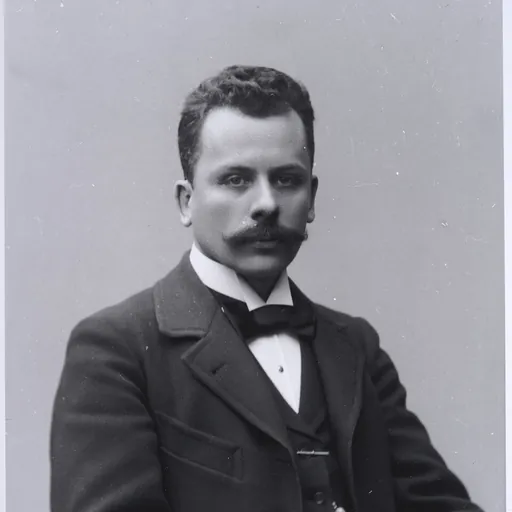
About Johannes Öhquist
Lived 1861 – 1949 (aged 87). Johannes Öhquist was a Finnish chess player, writer and jurist.
Johannes Wilhelm Öhquist (December 6, 1861 in Venjoki, Saint Petersburg Governorate, Russian Empire - October 15, 1949 in Wolfach, Baden, West Germany) was a Finnish civil servant, language teacher, art historian and politically active writer. He promoted cultural relations between Germany and Finland and disseminated information about Finland in German. He later sought to spread the idea of Nazism to Finland. Johannes Öhquist was the father of Lieutenant General Harald Öhquist.
Career The parents of Johannes Öhquist were Provost Kristoffer Öhqvist and Olga Maria Avenarius, who had served as priest of Venjoki and later as pastor of St. Mary's Parish in St. Petersburg. His mother was of German descent, and German was also the mother tongue of Johannes Öhquist. He also attended school in German and also learned Swedish and Russian as well as moderate Finnish. Öhquist enrolled as a student at St. Petrischule in St. Petersburg in 1881 and studied law at the Saint Petersburg State University, 1884–1886 in Moscow, and then at the University of Helsinki in 1887. He served as the archivist of the Chancellery of the General-Governor of Finland in 1888–1910 and as a lecturer in German at the University of Helsinki 1895–1916. In addition, in the 1890s he taught German at several schools in Helsinki, including the Svenska normallyceum 1893–1894 and the Nya svenska läroverket 1895–1897. Öhquist published several textbooks and readers in the German language that remained in use for decades.
Öhquist knew several artists and cultural figures. As a literary and art critic, he took part in a debate on symbolism in Finland at the beginning of the 20th century. His work History of Finnish Art, published in 1912, was the first extensive presentation on its subject. Öhquist also tried his wings as a novelist and poet, but was only published three novels and a few poems in his lifetime. He was awarded the title of Professor in 1925. He had particularly extensive contacts with German and Austrian newspapers, publishers and celebrities. By 1918, he had published, edited, or translated about 20 German-language books on the Finnish question, some of them under the pseudonyms Wilhelm Habermann, Wilho Suomalainen, and Richard Schreiber. In addition, Öhquist published hundreds of articles on the subject and participated in the publication of Finnländische Rundschau between 1901 and 1902. As archivist at the Office of the Governor-General, Öhquist was also able to read secret police reports and was able to warn in advance those threatened with arrests or house searches. He was never discovered, and refused all the promotions offered to him in order to continue his activities. In 1910, he finally agreed to resign after receiving a big pension.
Johannes Öhquist was married three times. He had two children from his first marriage, one of whom was Lieutenant General Harald Öhquist. He did not have time to become a chess champion, as the title was established with the Finnish championship only in 1922. He was awarded the title of national puzzle champion in 1936 for making chess puzzles.
Öhquist's chess hegemony was sometimes broken in the 1890s by a young man named Anatol Tschepurnoff. In 1893, Öhquist still won the match against Tschepurnoff with 7 wins, 2 draws and 3 losses. There is no exact information on when Tschepurnoff became Finland's leading player. Anatol Tschepurnoff was then Finland's top player for more than three decades.
Works
Das Strafgesetz für das Großfürstentum Finnland (1891) Tysk elementarbok (1893) Tysk elementargrammatik (1893) Alfabetisk ordlista till Deutsche Prosa und Dichtung (1894) Tysk öfningsbok (1897) Der Pilger (1908) Albert Edelfelt (1910) Finnland und die öffentliche Meinung Europas (1910) Suonien taiteen historia (1910–1912) Das politische Leben Finnlands (1916) Finnland (1919) Leijonalippu (1922) Der kristallene Turm. Roman (1928) Samtida konst i Finland (1929) Schachprobleme (1932) Das dritte Reich (1938) Ein König und sein Günstling (1940) Das nordische Dreigestirn (1941) Das kämpfende Finnland (1944) Tysk språklära(1895) Kortfattad tysk grammatik. (1899)
Don’t just read it —
keep it.
Full-length biographies made to live with: read them, listen on the way to work, watch them tonight.
- E-book
- Audio
- Video
Instant download · yours to keep · every purchase keeps this site free
Important facts
People in Johannes Öhquist's life
Named in this biography and alive at the same time
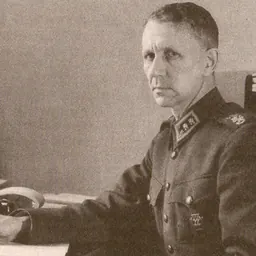

Related people
Same field, nearest in time


Contemporaries
People whose lives overlapped Johannes Öhquist's



Frequently asked questions
Who was Johannes Öhquist?
Finnish chess player
When was Johannes Öhquist born?
Johannes Öhquist was born on 6 December 1861 in Venjoki parish.
When did Johannes Öhquist die?
Johannes Öhquist died on 15 October 1949 in Wolfach.
What was Johannes Öhquist's occupation?
Johannes Öhquist was a chess player, writer and jurist.
What nationality was Johannes Öhquist?
Johannes Öhquist was Finnish.
Sources & further reading
Cite this page
APA: Biography.guide. (2026). Johannes Öhquist. https://biography.guide/johannes-ohquist/
MLA: "Johannes Öhquist." Biography.guide, https://biography.guide/johannes-ohquist/.
Chicago: "Johannes Öhquist." Biography.guide. https://biography.guide/johannes-ohquist/.
Data last updated: 2026-09-21 · Spot an error? Report a correction.
Portrait: Wikimedia Commons · author & licence
Page generated 2026-09-27 05:01 UTC