
Johann Schweighäuser
French classical scholar
About Johann Schweighäuser
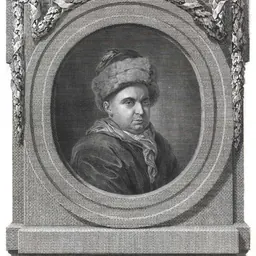
Lived 1742 – 1830 (aged 87). Johann Schweighäuser was a French librarian, classical philologist, university teacher, philosopher and orientalist.
Johann Schweighäuser (; ; June 25, 1742 – January 19, 1830) was a French classical scholar.
Biography He was born at Strasbourg, the son of a pastor of the church of Saint Thomas. From an early age his favourite subjects were philosophy (especially Scottish moral philosophy as represented by John Hutchinson and Adam Ferguson) and Oriental languages; Greek and Latin he took up later, and although he owes his reputation to his editions of Greek authors, he was always diffident as to his classical attainments. After visiting Paris, London and the principal cities of Germany, he became assistant professor of philosophy (1770) at University of Strasbourg.
When the French Revolution broke out, he was banished; in 1794 he returned, and after the reorganization of the Academy in 1809 was appointed professor of Greek. He resigned his post in 1824, making way for his son. In 1826 he was decorated by the Royal Society of London.
Works Schweighäuser's first important work was his edition of Appian (1785), with Latin translation and commentary, and an account of the MSS. On Brunck's recommendation, he had collated an Augsburg MS. of Appian for Samuel Musgrave, who was preparing an edition of that author, and after Musgrave's death he felt it a duty to complete it. His Polybius, with translation, notes and special lexicon, appeared between 1789 and 1795. But his chief work is his edition of Athenaeus (1801–1807), in fourteen volumes, one of the Bipont editions. According to Paul Louis Courier, this edition is a great progress on the one of Isaac Casaubon, which was two centuries old at the time. His Herodotus (1816; lexicon, 1824) is less successful; he depends too much on earlier editions and inferior MSS., and lacks the finer scholarship necessary in dealing with such an author. Mention may also be made of his Enchiridion of Epictetus and Tabula of Cebes (1798), which appeared at the time when the doctrines of the Stoics were fashionable; the letters of Seneca to Lucilius (1809); corrections and notes to Suidas (1789); and some moral philosophy essays. His minor works are collected in his Opuscula academica (1806).
Family His son, Johann Gottfried, was also a distinguished scholar and archaeologist.
Don’t just read it —
keep it.
Full-length biographies made to live with: read them, listen on the way to work, watch them tonight.
- E-book
- Audio
- Video
Instant download · yours to keep · every purchase keeps this site free
Important facts
People in Johann Schweighäuser's life
Named in this biography and alive at the same time
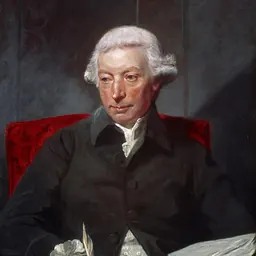



Related people
Same field, nearest in time
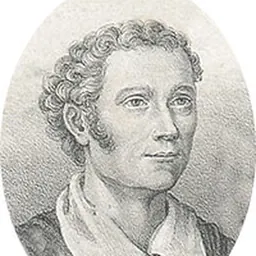

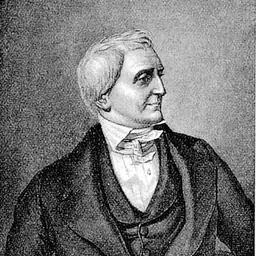

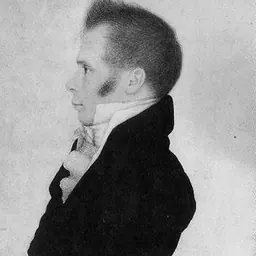
Contemporaries
People whose lives overlapped Johann Schweighäuser's




Frequently asked questions
Who was Johann Schweighäuser?
French classical scholar (1742 – 1830)
When was Johann Schweighäuser born?
Johann Schweighäuser was born on 26 June 1742 in Strasbourg.
When did Johann Schweighäuser die?
Johann Schweighäuser died on 19 January 1830 in Strasbourg.
What was Johann Schweighäuser's occupation?
Johann Schweighäuser was a librarian, classical philologist, university teacher, philosopher and orientalist.
What nationality was Johann Schweighäuser?
Johann Schweighäuser was French.
Sources & further reading
· Wikipedia: Johann Schweighäuser
· DBpedia: Johann Schweighäuser
Cite this page
APA: Biography.guide. (2026). Johann Schweighäuser. https://biography.guide/johann-schweighauser/
MLA: "Johann Schweighäuser." Biography.guide, https://biography.guide/johann-schweighauser/.
Chicago: "Johann Schweighäuser." Biography.guide. https://biography.guide/johann-schweighauser/.
Data last updated: 2026-09-20 · Spot an error? Report a correction.
Page generated 2026-09-27 05:20 UTC