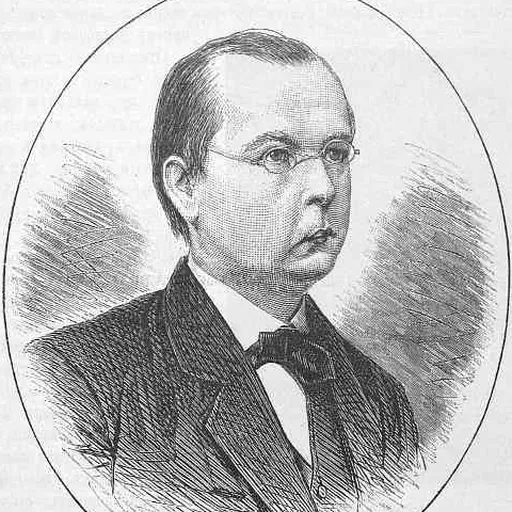
About Johann Karl Friedrich Zöllner
Lived 1834 – 1882 (aged 47). Johann Karl Friedrich Zöllner was a German astronomer, astrophysicist, physicist, university teacher and parapsychologist.
Johann Karl Friedrich Zöllner (8 November 183425 April 1882) was a German astrophysicist who studied optical illusions. He was also an early psychical investigator. He discovered the Zöllner illusion where lines that are parallel appear diagonal. Zöllner illusion, parallel line pattern that creates the optical illusion that the longer lines are not parallel.
In astronomy, he proved Doppler effect in stars and made the first measurement of the apparent magnitude of the Sun.
He is also known for his scientific experiments about spiritualism, studying the work of the medium Henry Slade.
Biography Johann Karl Friedrich Zöllner was born in Berlin in 1834. His advisor was Gustav Heinrich Wiedemann.
Astrophysics He also successfully proved Christian Doppler's theory on the effect of motion of the color of stars, and the resulting shift of absorption lines, via the invention of a very sensitive spectroscope which he named "Reversionspectroscope". He had shown also that the red-shift was in addition caused by variation in the stars' lights intensities with the help of his "Astrophotometer".
In 1867 he made the first measurement of the Sun's apparent magnitude, using a particular "telescope / photometer" he designed. The instrument was able to superimpose two images, one from a small telescope and the second from a reference lamp. During daytime he dimmed the image of the Sun (using polarizers and diaphragms) and compared it to the lamp. During nighttime, the lamp was dimmed and compared to bright stars. He estimated the visual magnitude of the Sun to be -26.66, an extraordinary result for the time. Today's accepted value is -26.74. This measure is very difficult, since the flux difference between the Sun and Capella (one of the bright stars he used) is roughly 50 billion times.
This work was pivotal for astrophysics - leading to the discovery that star's brightness varies wildly among different stars, and also that the Sun is brighter than the vast majority of nearby stars.
Experiments on spiritualism
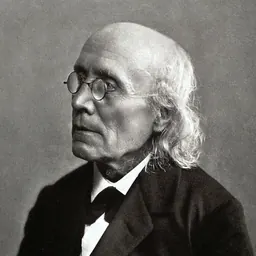
Zöllner first became interested in spiritualism in 1875 when he visited the scientist William Crookes in England. Zöllner wanted a physical scientific explanation for the phenomena and came to the conclusion that physics of a four-dimensional space may explain spiritualism. Zöllner attempted to demonstrate that spirits are four-dimensional and set up his own séance experiments with the medium Henry Slade which involved slate-writing, tying knots on string, recovering coins from sealed boxes and the interlinking of two wooden rings. These experiments occurred in November and December 1877 at Zöllner's home in Leipzig. He invited the scientists Wilhelm Eduard Weber, Gustav Fechner, and Wilhelm Wundt to some of the sittings.
The experiments were recorded by Zöllner in a book titled Transcendental Physics in 1878. According to Zöllner some of the experiments were a success. However, critics have suggested that the medium Henry Slade was a fraud who performed trickery in the experiments. Wilhelm Wundt who attended one of the séances, claimed that the conditions and controls were unsatisfactory. He also found the German grammatical errors on the slates suspicious as Slade was an English speaker.
In 1879, Hermann Ulrici brought Zollner's experiments to the attention of scientists in Germany by describing them in an academic journal. This caused a heated controversy. Wundt published a rejoinder to Ulrici, denouncing the experiments and spiritualism as non-scientific. Enraged, Zöllner attacked Wundt and threatened him with a lawsuit. Zöllner went as far as claiming that Wundt was possessed by evil spirits.
George Stuart Fullerton, the secretary of the Seybert Commission, claimed that Zöllner had an "unsound mind" at the time of the experiments.
Carl Willmann, an inventor of magical apparatus, strongly suspected that Slade had cheated. In the case of sealed slates, he suggested they could have easily been opened by a thin wire.
Psychical researcher Hereward Carrington in his book The Physical Phenomena of Spiritualism (1907) revealed fraudulent methods (with diagrams of the rope tricks) that Slade may have utilized in the experiments. Psychologist Ray Hyman has noted:
In the case of Zöllner's investigations of Slade, not only do we know that Slade was exposed before and after his sessions with Zöllner, but also there is ample reason to raise questions about the adequacy of the investigation. Carrington (1907), Podmore (1963), and Mrs. Sidgwick (1886-87) are among a number of critics who have uncovered flaws and loopholes in Zöllner's sittings with Slade.
Science writer Martin Gardner also exposed the tricks of Slade with diagrams and commented that "Zöllner did some good work in spectrum analysis, but he was supremely ignorant of conjuring methods. As a consequence he was badly taken in, I'm afraid, by Henry Slade."
Honors The lunar crater Zöllner is named in his honor.
In 1934, botanist Josef Velenovský published a genus of fungi named Zoellneria (in the family Sclerotiniaceae) and named in Zöllner's honour. Also several other plant species, have been named in his honour including; Alstroemeria zoellneri, Baccharis zoellneri, Chenopodium zoellneri and Pseudolucia zoellneri.
Publications
Transcendental Physics (English edition, translated by Charles Massey, 1880)
Don’t just read it —
keep it.
Full-length biographies made to live with: read them, listen on the way to work, watch them tonight.
- E-book
- Audio
- Video
Instant download · yours to keep · every purchase keeps this site free
Important facts
People in Johann Karl Friedrich Zöllner's life
Named in this biography and alive at the same time
Related people
Same field, nearest in time

Contemporaries
People whose lives overlapped Johann Karl Friedrich Zöllner's
Frequently asked questions
Who was Johann Karl Friedrich Zöllner?
German astrophysicist (1834–1882)
When was Johann Karl Friedrich Zöllner born?
Johann Karl Friedrich Zöllner was born on 8 November 1834 in Berlin.
When did Johann Karl Friedrich Zöllner die?
Johann Karl Friedrich Zöllner died on 25 April 1882 in Leipzig.
What was Johann Karl Friedrich Zöllner's occupation?
Johann Karl Friedrich Zöllner was an astronomer, astrophysicist, physicist, university teacher and parapsychologist.
What nationality was Johann Karl Friedrich Zöllner?
Johann Karl Friedrich Zöllner was German.
Sources & further reading
· Wikipedia: Johann Karl Friedrich Zöllner
· DBpedia: Johann Karl Friedrich Zöllner
Cite this page
APA: Biography.guide. (2026). Johann Karl Friedrich Zöllner. https://biography.guide/johann-karl-friedrich-zollner/
MLA: "Johann Karl Friedrich Zöllner." Biography.guide, https://biography.guide/johann-karl-friedrich-zollner/.
Chicago: "Johann Karl Friedrich Zöllner." Biography.guide. https://biography.guide/johann-karl-friedrich-zollner/.
Data last updated: 2026-09-26 · Spot an error? Report a correction.
Portrait: Wikimedia Commons · author & licence
Page generated 2026-10-04 10:39 UTC