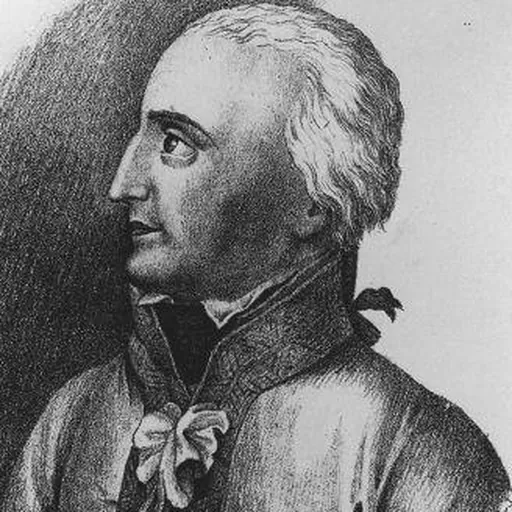
About Johann Heinrich von Schmitt
Lived 1744 – 1805 (aged 60–61). Johann Heinrich von Schmitt was a military personnel and military officer.
Johann Heinrich von Schmitt (1743 – 11 November 1805) was an officer in the Army of the Holy Roman Empire. He was arguably one of the most successful chiefs of staff; he rose to the rank of Feldmarshalleutnant during the French Revolutionary and Napoleonic wars. However, he was criticized as a tactician on a battlefield.
He developed a sound military reputation as a surveyor, map-maker, and strategist during Austria's wars with the Ottoman Empire. He served on the Quartermaster's staff during the War of the First Coalition. He was the mastermind behind the Rhine Campaign of 1796. As a major general, he was one of Archduke Charles' trusted advisers during the War of the Second Coalition campaign in southwestern Germany.
In 1799, his reputation was tarnished by the assassination of the French delegates to the Congress of Rastatt, but his complicity was not proven. In a letter to Emperor Francis II of 18 May 1799, Archduke Charles, Duke of Teschen, tried to blame him to some extent for issuing an injudicious order to seize the diplomats' papers and their relationship soured. He retired the following year due to conflicts with the new commander in chief of the Habsburg army, Paul Kray. When war broke out again in 1805, he was recalled from retirement and assigned to the combined Russian-Austrian forces on the Danube. On 11 November, Schmitt was killed by friendly fire at the Battle of Dürenstein, where his disposition of the Allied troops led to an indecisive outcome, despite Allied numerical superiority. Schmitt's disposition for this battle ignored moral categories, was excessively complex and did not take into account such considerations as possible disruptions in the advance of columns, the poor quality of roads, the difficulty in the absence of modern means of communication, and the control of scattered units. Mikhail Kutuzov was more of a strategist than a tactician, so he decided to rely on Schmitt's intelligence, who knew the area.
Family and education
Johann Heinrich von Schmitt was born in 1743, the son of Johann Sebastian von Schmitt, a Rittmeister (cavalry captain) in the Imperial Cuirassier Regiment Graf Cordova. Schmitt may have been born in Pest (Budapest) in Hungary, or, as other sources claim, in Bavaria. In 1742–1743, during the War of Austrian Succession, his father's regiment participated in the Battle of Sahay (Zahájí in Bohemia), and then in the siege of Prague, followed by duty in Bavaria and the Rhineland in 1743. His father died in 1752—it is unclear where—and on 25 June 1758, at the age of 14 years, Schmitt enrolled in the Imperial School of Engineering in Gumpendorf. There he received a thorough technical training in engineering, plus the education provided for officers on all other major subjects, particularly those pertaining to war and science.
After three years, on 15 November 1761, Schmitt received a commission as a Fähnrich (ensign) in Infanterie-Regiment Nr. 15 Pallavicini. During his assignment with this regiment, he saw service in the last years of the Seven Years' War (1756–1763) in the Bohemian theatre. On 1 February 1769, after proving himself capable in this assignment, he was promoted to Oberleutnant (lieutenant) and transferred to the reorganized General-Quartermaster staff.
Military career
From 1769 to 1778, Schmitt was assigned to the military frontier, the border region of the Habsburg and Ottoman empires, and was especially active in Temesvar, in the Banat, bordering the Ottoman Empire. In 1778, he was promoted to captain and mobilized against Prussia during the short War of the Bavarian Succession, after which he transferred back to the Balkan border areas where he stayed until 1782. His thorough knowledge of the countryside guaranteed him map-making and intelligence assignments in Turkish-occupied Bosnia to gather information in preparation for an upcoming campaign. In particular, he developed material on the Ottoman military situation. His work developing intelligence of Turkish strength in Osijek and Alt Gradiska satisfied his superiors and when the war actually broke out in 1787, he was assigned to the General Staff of the Slavonion Corps. He participated in the storming of the fortress at Šabac, in Serbia, on 24 April 1788. Emperor Joseph II promoted him personally to major on 14 May 1788. In 1789, Schmitt fought at the siege of Belgrade, and on 23 February 1790, he was promoted to lieutenant colonel. In March 1790, he transferred to Bohemia, under command of Field Marshal Ernst Gideon von Laudon, for anticipated action against the Kingdom of Prussia. When this war came to naught, he was transferred to the Austrian Netherlands in 1791, to help contain a local uprising.
Promotions
Death at Dürenstein alt=A lithograph showing several men, obviously soldiers because they are wearing uniforms and bearing weapons, on a battlefield in the moonlight. In the background stands a castle on a tall peak; between the castle and the men are steep valleys, smoke from cannons, and other indications of violence. The full moon shines on the battlefield. In the dark and confusion at the end of the battle, Schmitt was shot by Russian musketry. In this image, Marshal Mortier directs cannon fire on the Austrian and Russian lines. Édouard Mortier had marched from Passau and Linz toward Vienna, traveling on the north bank of the Danube. His newly created VIII Corps, known as Corps Mortier, consisted of three divisions, which were stretched apart along the river between Marbach and Dürenstein. This over-extension left his corps' northern flank unprotected, against Napoleon's specific instructions. Schmitt's plan capitalized on this mistake. On 11 November 1805, Kutuzov's column trapped one of Mortier's divisions, under command of Honoré Théodore Maxime Gazan de la Peyrière. The Russians used a ruse to entice Gazan into an attack on a small force, and then trapped him between two columns. The French were surrounded at the front and rear by the Russians, caught on the flood plain at Dürenstein. They could neither move forward nor backward. A second French division arrived in mid-afternoon and attacked the Russians in the flank, but were themselves surprised when Schmitt led an additional Russian column out of the mountains. Gazan's division lost over 40 percent of its men, as well as its colours, and several guns. The battle lasted well into the night. In its waning moments, the French were evacuating across the Danube in a flotilla of boats. In the confusion, Schmitt was shot, probably by Russian musketeers, in a field between the Waldstein and Heudürrgraben. Wilhelm von Kotzebue, a German in Russian service, later reported that the column came through the forest road and entered the main road on the river's edge; they immediately entered the cross-fire between Pierre Dupont's French forward posts of Dragoons and the Russian troops of Dmitry Dokhturov. He fell by Wadstein, and was buried on the battlefield with the dead of his Russian column. Although his burial site has never been found, a monument for him was erected in a park in nearby Krems in 1811.
Assessment and legacy
When Napoleon's armies threatened Vienna in 1805, the Emperor called Schmitt out of retirement for the specific task of organizing the challenging Austro-Russian retreat. As Chief of the Quartermaster General Staff of the Army, of the Lower Rhine, the Rhine, and the Army of Germany, he had organised a variety of manoeuvres and battle plans, frequently hampered by difficult terrain. After Schmitt's death, Weyrother, the architect of the Austrian defeat at Hohenlinden, developed the general battle plan of the Allied action at Austerlitz. The military historian Digby Smith hypothesizes that Schmitt, an experienced officer and sound tactician, would have been more effective at the Battle of Austerlitz, at least more so than his replacement, Franz von Weyrother, as Chief of the Quartermaster General Staff of the Allied Army. In the long run, it was unlikely that Schmitt's plan would have changed the overall outcome—Austerlitz was arguably one of Napoleon's finest battles—but his battle plan would no doubt have been an improvement over the one the Allies used.
War and Peace Schmitt is mentioned in Leo Tolstoy's novel War and Peace, Volume I, where several Austrian court officials and generals express grief at the news of his death at Dürenstein. Tolstoy has one of his characters, the diplomat Bilibin, call him "a general we all loved".
Don’t just read it —
keep it.
Full-length biographies made to live with: read them, listen on the way to work, watch them tonight.
- E-book
- Audio
- Video
Instant download · yours to keep · every purchase keeps this site free
Important facts
People in Johann Heinrich von Schmitt's life
Named in this biography and alive at the same time
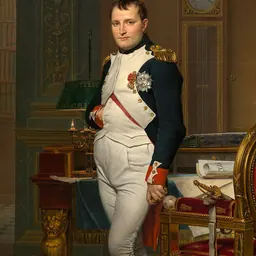
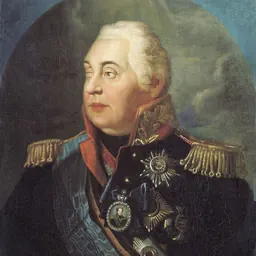
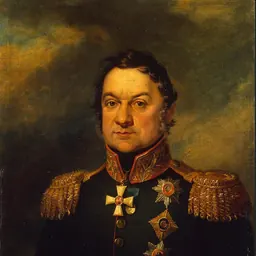
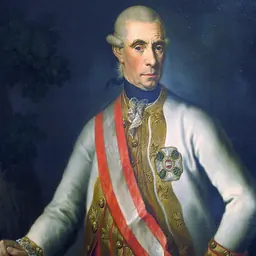
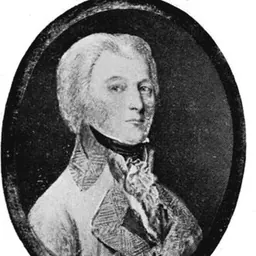

Related people
Same field, nearest in time
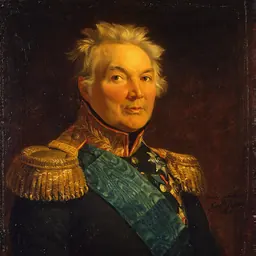
Contemporaries
People whose lives overlapped Johann Heinrich von Schmitt's




Frequently asked questions
Who was Johann Heinrich von Schmitt?
Austrian army commander
When was Johann Heinrich von Schmitt born?
Johann Heinrich von Schmitt was born in 1744 in Pest.
When did Johann Heinrich von Schmitt die?
Johann Heinrich von Schmitt died on 11 November 1805 in Dürnstein.
What was Johann Heinrich von Schmitt's occupation?
Johann Heinrich von Schmitt was a military personnel and military officer.
Sources & further reading
· Wikipedia: Johann Heinrich von Schmitt
· DBpedia: Johann Heinrich von Schmitt
Cite this page
APA: Biography.guide. (2026). Johann Heinrich von Schmitt. https://biography.guide/johann-heinrich-von-schmitt/
MLA: "Johann Heinrich von Schmitt." Biography.guide, https://biography.guide/johann-heinrich-von-schmitt/.
Chicago: "Johann Heinrich von Schmitt." Biography.guide. https://biography.guide/johann-heinrich-von-schmitt/.
Data last updated: 2026-09-25 · Spot an error? Report a correction.
Portrait: Wikimedia Commons · author & licence
Page generated 2026-10-04 09:58 UTC