
Johann Georg Albrechtsberger
Austrian music educator, composer and organist
About Johann Georg Albrechtsberger
Lived 1736 – 1809 (aged 73). Johann Georg Albrechtsberger was an Austrian composer, musicologist, musician, pedagogue, music theorist and music educator.
Johann Georg Albrechtsberger (3 February 1736 – 7 March 1809) was an Austrian composer, organist, and music theorist, widely regarded as one of the leading figures in counterpoint and composition theory during the Classical period. He was a prolific composer of church music, orchestral works, and keyboard pieces, though he is best remembered for his influence as a teacher.
Albrechtsberger was a mentor to several important composers, most notably Ludwig van Beethoven, whom he instructed in counterpoint and fugue. His theoretical writings and pedagogical methods had a lasting impact on 19th-century composition, and his treatises on harmony and counterpoint remain highly regarded. He was also a friend of Haydn and Mozart.
In addition to his teaching contributions, Albrechtsberger held several prestigious positions, including Kapellmeister of St. Stephen's Cathedral in Vienna. He was a composer though his works are little performed today.
Biography Albrechtsberger was born at Klosterneuburg, near Vienna. He originally studied music at Melk Abbey and philosophy at a Benedictine seminary in Vienna, and became one of the most learned and skillful contrapuntists of his age. Albrechtsberger's earliest classmates included Michael Haydn and Franz Joseph Aumann. After being employed as organist at Raab, Hungary in 1755 and Maria Taferl, Austria in 1757, he was appointed Thurnermeister back at Melk Abbey. In 1772 he was appointed organist to the court of Vienna, and in 1792 Kapellmeister of St. Stephen's Cathedral, Vienna.
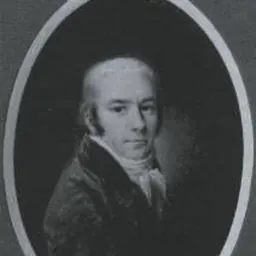
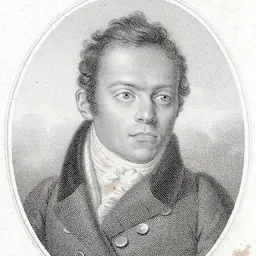
His fame as a theorist attracted to him in the Austrian capital a large number of pupils, some of whom afterwards became eminent musicians. Among these were Johann Nepomuk Hummel, Ignaz Moscheles, Josef Weigl, Ludwig-Wilhelm Tepper de Ferguson, Antonio Casimir Cartellieri, Ludwig van Beethoven, Anton Reicha and Franz Xaver Wolfgang Mozart. Beethoven had arrived in Vienna in 1792 to study with Joseph Haydn, but quickly became infuriated when his work was not being given attention or corrected. Haydn recommended his friend Albrechtsberger, with whom Beethoven then studied harmony and counterpoint. On completion of his studies, the young student noted, "Patience, diligence, persistence, and sincerity will lead to success", which reflects upon Albrechtsberger's own compositional philosophy.
Albrechtsberger died in Vienna; his grave is in St. Marx cemetery.
Compositions
His published compositions consist of preludes, fugues and sonatas for the piano and organ, string quartets, etc.; but the greater proportion of his works, vocal and instrumental, exists only in manuscript. They are in the library of the Vienna Gesellschaft der Musikfreunde.
One of his most notable works is his Concerto for Alto Trombone and Orchestra in B Major (1759). As the trombone has few works dating back to the classical period, his concerto is often highlighted by the trombone community. He also wrote a Concerto for the Mandola, Op. 27, discussed positively in the 1914 book The Guitar and Mandolin.
Possibly the most valuable service he rendered to music was in his theoretical works. In 1790 he published at Leipzig a treatise on composition, of which a third edition appeared in 1821. A collection of his writings on harmony, in three volumes, was published under the care of his pupil Ignaz von Seyfried (1776–1841) in 1826. An English version of this was published by Novello in 1855.
A continuous thread can be traced from his teaching through that of his pupil Anton Reicha, who went on to become the first Professor of Counterpoint and Fugue at the Paris Conservatoire from 1818 until his death in 1836, and who in turn reached a wide audience through both his own teaching and his theoretical writings, which were standard reference at the Conservatoire for most of the 19th century, and translated into German by Carl Czerny.
Don’t just read it —
keep it.
Full-length biographies made to live with: read them, listen on the way to work, watch them tonight.
- E-book
- Audio
- Video
Instant download · yours to keep · every purchase keeps this site free
Important facts
People in Johann Georg Albrechtsberger's life
Named in this biography and alive at the same time
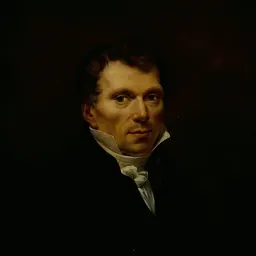

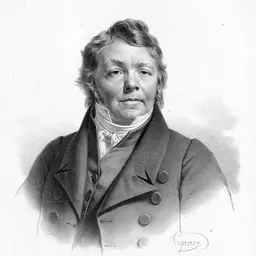
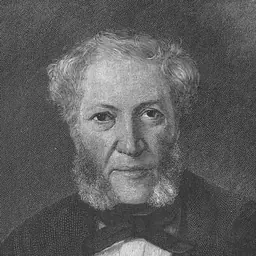
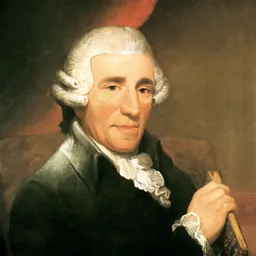

Related people
Same field, nearest in time
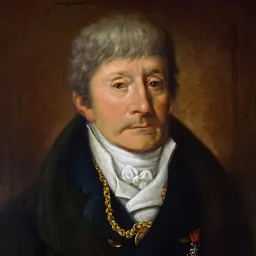
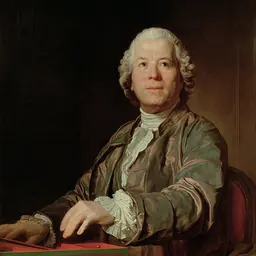
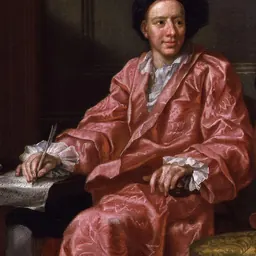
Contemporaries
People whose lives overlapped Johann Georg Albrechtsberger's


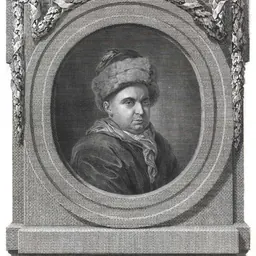



Frequently asked questions
Who was Johann Georg Albrechtsberger?
Austrian music educator, composer and organist
When was Johann Georg Albrechtsberger born?
Johann Georg Albrechtsberger was born on 3 February 1736 in Klosterneuburg.
When did Johann Georg Albrechtsberger die?
Johann Georg Albrechtsberger died on 7 March 1809 in Vienna.
What was Johann Georg Albrechtsberger's occupation?
Johann Georg Albrechtsberger was a composer, musicologist, musician, pedagogue, music theorist and music educator.
What nationality was Johann Georg Albrechtsberger?
Johann Georg Albrechtsberger was Austrian.
Sources & further reading
· Wikipedia: Johann Georg Albrechtsberger
· DBpedia: Johann Georg Albrechtsberger
Cite this page
APA: Biography.guide. (2026). Johann Georg Albrechtsberger. https://biography.guide/johann-georg-albrechtsberger/
MLA: "Johann Georg Albrechtsberger." Biography.guide, https://biography.guide/johann-georg-albrechtsberger/.
Chicago: "Johann Georg Albrechtsberger." Biography.guide. https://biography.guide/johann-georg-albrechtsberger/.
Data last updated: 2026-09-20 · Spot an error? Report a correction.
Page generated 2026-09-27 05:29 UTC