
About Johann Friedrich Agricola
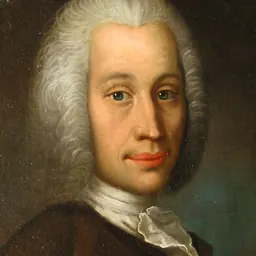
Lived 1720 – 1774 (aged 54). Johann Friedrich Agricola was a composer, organist, musicologist, singer, conductor and music theorist.
Johann Friedrich Agricola (4 January 1720 – 2 December 1774) was a German composer, organist, singer, pedagogue, and writer on music. He sometimes wrote under the pseudonym Flavio Anicio Olibrio.
Biography Agricola was born in Dobitschen, Thuringia.
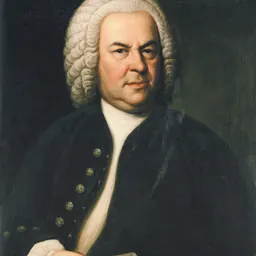
Leipzig While a student of law at Leipzig (1738–41) he studied music under Johann Sebastian Bach.
Berlin In 1741 Agricola went to Berlin, where he studied musical composition under Johann Joachim Quantz. He was soon generally recognized as one of the most skillful organists of his time. The success of his comic opera, Il filosofo convinto in amore, performed at Potsdam in 1750, led to an appointment as court composer to Frederick the Great. In 1759, on the death of Carl Heinrich Graun, he was appointed conductor of the royal orchestra. He married the noted court operatic soprano Benedetta Emilia Molteni, despite the king's prohibition of court employees marrying each other. Because of this trespass, the king reduced Molteni's and Agricola's combined salaries to a single annual salary of 1,000 Thalers (Agricola's annual salary alone had been 1,500 Thalers). Agricola died in Berlin at age 54.
Legacy Agricola wrote a number of Italian operas, as well as Lieder, chorale preludes, various other keyboard pieces and church music, especially oratorios and cantatas. His reputation chiefly rests, however, on his theoretical and critical writings on musical subjects.
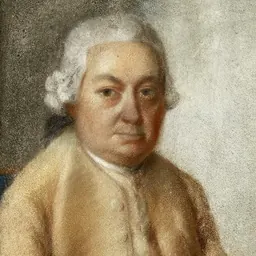
Author In 1754 he co-authored, with Carl Philipp Emanuel Bach, J. S. Bach's obituary. His 1757 Anleitung zur Singekunst (Introduction to the Art of Singing) is a translation of Pier Francesco Tosi's 1723 treatise Opinioni de' cantori antichi e moderni with Agricola's own extensive comments. He edited and added extensive commentary to the 1768 (posthumous) edition of Jakob Adlung's Musica mechanica organoedi (English translation). His annotations are considered an important source of information on J. S. Bach's views on the fortepiano designs of Gottfried Silbermann, on the lute-harpsichord, and on organ building.
Copyist Agricola is also noted in Bach studies as one of the copyists for both books of the Well-Tempered Clavier and the St. Matthew Passion.
Composer Keyboard Ach, was soll ich Sünder machen Jauchzet, ihr Erlösten dem Herren Harpsichord Sonata in F major
Organ Jesu, meine Freude Ein feste Burg ist unser Gott Auf meinen lieben Gott Erbarm dich mein, o Herre Gott Es ist das Heil uns kommen her Jauchzt, ihr Erlösten, dem Herren O Ewigkeit, du Donnerwort Herr, ich habe mißgehandelt Herr Jesu Christ, ich weiß gar wohl Wer nur den lieben Gott läßt walten Ach, was soll ich Sünder machen O Traurigkeit, o Herzeleid Keinen hat Gott verlassen Herzliebster Jesu, was hast du verbrochen Freu dich sehr, o meine Seele Ich hab mein Sach Gott heimgestellt
Chamber works Flute Sonata in A major
Vocal works A la mignonne de fortune (song) L'accorto nocchiero (aria) Canzonetta, Les Rois d'Égypte 6 Canzonettes Cleofide Torna aprile e l'aure scherzano (aria)
Choral works Die Hirten bei der Krippe, cantata for 4 voices, chorus & orchestra Kündlich gross ist das gottselige Geheimnis, cantata for 4 voices, chorus & orchestra Uns ist ein Kind geboren, cantata for 4 voices, chorus & orchestra Die Hirten bey der Krippe zu Bethlehem, sacred cantata Der König jauchzt, sacred cantata Il tempio d'amore, serenata Magnificat in D major
Opera Alessandro nell'Indie (1754) Achille in Sciro, (1765) L'Ippocondriaco
Don’t just read it —
keep it.
Full-length biographies made to live with: read them, listen on the way to work, watch them tonight.
- E-book
- Audio
- Video
Instant download · yours to keep · every purchase keeps this site free
Important facts
People in Johann Friedrich Agricola's life
Named in this biography and alive at the same time




Related people
Same field, nearest in time

Contemporaries
People whose lives overlapped Johann Friedrich Agricola's


Frequently asked questions
Who was Johann Friedrich Agricola?
German composer
When was Johann Friedrich Agricola born?
Johann Friedrich Agricola was born on 4 January 1720 in Dobitschen.
When did Johann Friedrich Agricola die?
Johann Friedrich Agricola died on 2 December 1774 in Berlin.
What was Johann Friedrich Agricola's occupation?
Johann Friedrich Agricola was a composer, organist, musicologist, singer, conductor and music theorist.
What nationality was Johann Friedrich Agricola?
Johann Friedrich Agricola's recorded nationality: Duchy of Saxe-Gotha-Altenburg.
Sources & further reading
· Wikipedia: Johann Friedrich Agricola
· DBpedia: Johann Friedrich Agricola
Cite this page
APA: Biography.guide. (2026). Johann Friedrich Agricola. https://biography.guide/johann-friedrich-agricola/
MLA: "Johann Friedrich Agricola." Biography.guide, https://biography.guide/johann-friedrich-agricola/.
Chicago: "Johann Friedrich Agricola." Biography.guide. https://biography.guide/johann-friedrich-agricola/.
Data last updated: 2026-09-20 · Spot an error? Report a correction.
Page generated 2026-09-27 05:29 UTC