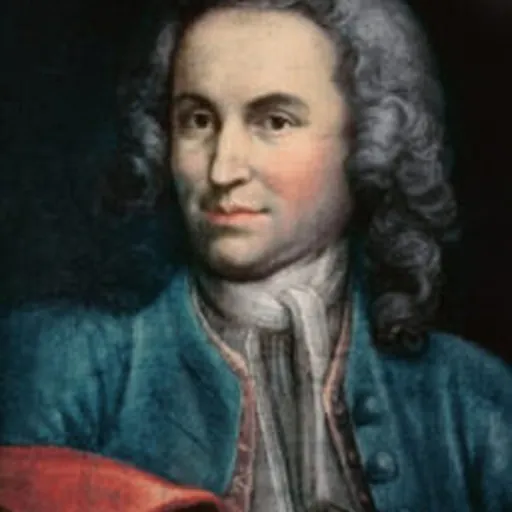
About Johann Ernst Bach
Lived 1722 – 1777 (aged 55). Johann Ernst Bach was an organist, composer, chapelmaster and jurist.
Johann Ernst Bach (28 January 1722 – 1 September 1777) was a German composer of the Classical Period. He was the son of Johann Bernhard Bach.
Life Johann Ernst Bach, the son of Johann Bernhard Bach, was born in Eisenach and baptized on 30 January 1722. In his early life, Bach studied at the Lateinschule in Eisenach from 1732 to 1735. On 16 January 1737 he entered the Thomasschule in Leipzig, where he then became a pupil of his uncle Johann Sebastian Bach. Being a student of J.S Bach, he assisted his uncle in copying his music. During the years of 1740 to 1741, he studied law at the Universität Eisenach. He returned to Eisenach in 1741 or 1742 and filled in for his ailing father as a choirmaster and organist. In 1748, he became his father's official assistant, and in 1749 he was his successor. He continued to practice law as well. In 1756, he was appointed Hofkapellmeister "in view of his well known skill and musical knowledge". Due to the fusion of the courts, he frequently travelled between Weimar, Gotha, and Eisenach; during this time, he worked with Georg Benda on the reorganization of the Hofkapelle. When it was dissolved in 1758, after the death of Duke Ernst August, he retained his title and took over duties in the administration of the ducal finances. He died on 1 September 1777.
Style Page from Sonata per il clavicembalo col violino, 18th century, by BachAs a composer, Johann Ernst was abreast of the stylistic innovations of his time, although he did not exclude contrapuntal writings. His works are often highly dramatic and full of effects. His songs depend on the past tradition of Görner, Gräfe, and Mizler; he often wrote galant melodies filled with lively basses and elaborate accompaniments. A picture of his perceptions of music can be deduced from the introduction he wrote to Jacob Adlung's Anleitung zu der musikalischen Gelahrtheit (1758). In it he generally criticizes the declining trend of the religious music of his time and promotes the works of Johann Sebastian Bach, Georg Philipp Telemann and Gottfried Heinrich Stelzel. His distaste for secular music can be seen through his surviving compositions, most of which are sacred. It has been widely accepted that Bach had private lessons with his uncle, which likely had an influence on his own composition.
Works
Vocal O Seele, deren Sehnen (Passion oratorio), 1764 2 Passions, lost
Sacred cantatas Ach Herr, strafe mich nicht Alles was Odem hat Auf und säumt euch nicht, ihr Frommen Der Herr ist nahe bei denen, for the funeral of Duke Ernst August Constantin Der Meer ist nahe Die Liebe Gottes ist ausgegossen Ein feste Burg ist unser Gott Herzlich lieb hab ich dich, o Herr, on Schalling's hymn Kein Stündlein geht dahin Kommt herzu, lasset uns frohlocken Magnificat Mass on Es wolle Gott uns gnädig sein Mein Odem ist schwach, BWV 222, choral movements also as motet, Unser Wandel ist im Himmel, BWV Anh. 165 Meine Seele erhebet den Herrn (i) Meine Seele erhebet den Herrn (ii) Meine Seele erhebet den Herrn (iii) Nach dir, Herr, verlanget mich Sei willkommen, mächtiger Herrscher Singet dem Herrn ein neues Lied So gehst du nun, mein Jesu, hin Straf mich nicht in deinem Zorn, on the hymn by Albinus Wenn Donnerwolken über dir sich türmen (Das Vertrauen der Christen auf Gott) Wünschet Jerusalem Glück Wie der Hirsch schreiet, lost Lobe den Herrn, meine Seele, lost several other lost cantatas (for the annual cycle 1766)
Other sacred works Aus der Tiefen, motet, SATB Mein Odem ist schwach, motet, SATB Unser Wandel ist im Himmel (= bwv Anh. 165), motet, SATB 11 motets, ARk [? by C. P. E. Bach, H865]
Secular cantatas Gesegneten Auftritt, for birthday of Duke Friedrich of Saxe-Gotha, 1756, lost Wer sagt mir doch, was für Entzücken, lost Sammlung auserlesener Fabeln. part 1, Nuremberg, 1749 part 2, unpublished Lächerliche Mammonshüter (An die Geizigen), 1770
Instrumental Sinfonia in B Other lost sinfonias 3 Sonaten (Kbd/Vn), part 1, Eisenach, 1770 3 Sonaten (Kbd/Vn), part 2, Eisenach, 1772 Sonata in A (Fl/Vn/Bc)
Keyboard works Sonata in G, harpsichord Sonata in F, harpsichord Sonata in G, harpsichord Sonata in A, harpsichord Fantasia and fugue in D Fantasia and fugue in A Fantasia and fugue in F Chorale Valet will ich dir geben
Don’t just read it —
keep it.
Full-length biographies made to live with: read them, listen on the way to work, watch them tonight.
- E-book
- Audio
- Video
Instant download · yours to keep · every purchase keeps this site free
Important facts
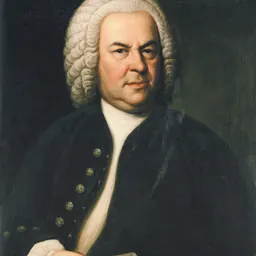
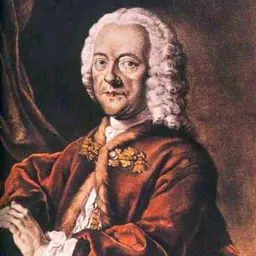
People in Johann Ernst Bach's life
Named in this biography and alive at the same time
Related people
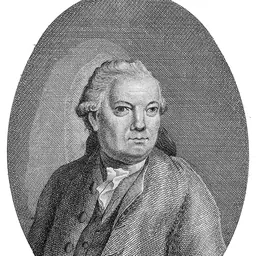
Same field, nearest in time


Contemporaries
People whose lives overlapped Johann Ernst Bach's




Frequently asked questions
Who was Johann Ernst Bach?
German composer (1722-1777)
When was Johann Ernst Bach born?
Johann Ernst Bach was born on 28 January 1722 in Eisenach.
When did Johann Ernst Bach die?
Johann Ernst Bach died on 1 September 1777 in Eisenach.
What was Johann Ernst Bach's occupation?
Johann Ernst Bach was an organist, composer, chapelmaster and jurist.
What nationality was Johann Ernst Bach?
Johann Ernst Bach's recorded nationality: Duchy of Saxe-Weimar-Eisenach.
Sources & further reading
· Wikipedia: Johann Ernst Bach
· DBpedia: Johann Ernst Bach II
Cite this page
APA: Biography.guide. (2026). Johann Ernst Bach. https://biography.guide/johann-ernst-bach/
MLA: "Johann Ernst Bach." Biography.guide, https://biography.guide/johann-ernst-bach/.
Chicago: "Johann Ernst Bach." Biography.guide. https://biography.guide/johann-ernst-bach/.
Data last updated: 2026-09-22 · Spot an error? Report a correction.
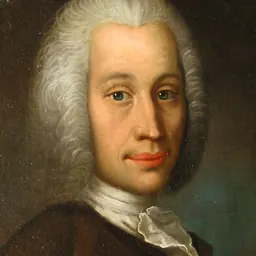
Portrait: Wikimedia Commons · author & licence
Page generated 2026-09-27 05:04 UTC