
About Johann Erasmus Kindermann
Lived 1616 – 1655 (aged 39). Johann Erasmus Kindermann was a German composer.
Johann Erasmus Kindermann (born 29 March 1616, Nuremberg; d. 14 April 1655, Nuremberg) was a German organist and composer. Kindermann became part of what is called 'the Nuremberg school' of composition under the aegis of its effective founderand Kindermann's teacherJohann Staden (1581–1634). Other musicians associated with this 'school' include: Hans Leo Hassler, Jakob Hassler, Kasper Hassler, Johann Pachelbel, Sigmund Theophil Staden, Georg Caspar Wecker.
Biography Kindermann was the child of a comb-maker named Hans Kindermann and his wife Ursula, née Gebel. No records survive concerning Kindermann's general schooling. In later life Kindermann mentions in letters that he had music lessons with Johann Staden.
1634 was the year that the municipality agreed to pay for Kindermann to travel to Italy in order to learn about the music there. Then, in January 1636 he was appointed to the post of second organist at the Frauenkirche, a position he held until early 1640. In that year the Nuremberg council appointed him organist at St. Egidien, a position he retained until his death in 1655. However, letters and manuscript scores for large-scale concerted works reveal Kindermann's interest in establishing himself outside Nuremberg. In these sources we find evidence of applications for posts in Augsburg and Frankfurt am Main following the Thirty Years' War, but he was unsuccessful in these attempts.
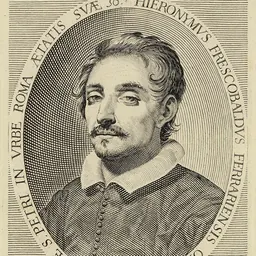
Kindermann became an influential teacher, and his pupils include: Johann Agricola, Augustin Pfleger, Heinrich Schwemmer and Georg Caspar Wecker. Kindermann was also instrumental in spreading new music in Nuremberg and south Germany, publishing not only several collections of his own music, but also works by Giacomo Carissimi, Girolamo Frescobaldi and Tarquinio Merula.
Works Instrumental music n.d. [lost] Wer ist, der so vom Himmel kommt, 5vv, insts 1640–43. Deliciae studiosorum (4 pts), a 3–5, bc 1643 [lost] Musicalische Felder- und Wälderfreund, lv, bc [lost] Musicalische Herzentrost-Blümlein, lv, 2 b viols, bc 1645. [lost] Frühlings und Sommer freud, lv, bc 1652. Neu-verstimmte Violen Lust, 3 viols, bc (Frankfurt) 1653. Canzoni, sonatae (2 pts), 1–3 vn, vc, bc
Keyboard music n.d. 30 suite movts, kbd, D-B, ed. in HM, lxi (pub. 1950) 1645. Harmonia organica, in tabulaturam germanicam (5 pts)'
Vocal music n.d. Ach bleib bey uns Herr Jesu, 2vv [attrib. ‘J.E.K.’], in Das Jahr ist fortgelauffen (n.p., n.d.) Befihl dem Herren, S, S, B, 2 vn, bc, D-Ngm Herr Gott, dich loben wir, 6vv, insts, D-B Ich will singen, 5vv, insts? PL-WRu; Lasset uns loben, 5vv, insts, D-F; Nun wohlauf ihr meine Sinnen, inst acc. to song by G. Neumark, in Fortgepflanzter musicalisch-poetischer Lustwald (Jena, 1957) Turbabor sed non perturbabor, 3vv, insts, Kl, S-Uu; Wachet auf, 4vv, insts? RUS-KA; Wer ist, der so vom Himmel kommt, 5vv, insts 1639 Cantiones [pathētikai], hoc est Ad memoriam passionis ... Jesu Christi (motets), 3, 4vv, bc Sunt hostes, Momique, bonis crebraeque, T, T, 2 va, bc [wedding music] 1640 Friedens Clag (3 motets), 3vv, bc Göttliche Liebesflamme, das ist Christliche Andachten, Gebet und Seufftzer (Dilherr), S, bc (text only; 2/1651) 1642 Concentus Salomonis, das ist Geistliche Concerten auss dem Hohen Lied dess hebraïschen Königes Salomonis (Opitz), 2vv, 2 vn, bc Dialogus, Mosis Plag, Sünders Klag, Christi Abtrag, 1–6vv, bc Musicalische Friedens Seufftzer, 3, 4vv, bc Opitianischer Orpheus, das ist Musicalischer Ergetzligkeiten (2 pts) (Opitz), 1, 2vv, 2 vn, vle/bn, bc 1643 1 song in Intermedium musico-politicum Dess Erlösers Christi, und sündigen Menschens heylsames Gespräch (dialogue, J.M. Dilherr), 7vv, bc Musica catechetica, das ist Musicalischer Catechismus (12 motets), 5vv, bc 1647 Dum tot carminibus te lugent undique cives (L. Röselius) T ‘in stylo recitativo’ , Was ist unser Lebensstand? (J.G. Schwingshärle), C or T, bc [both on the death of M. Lunssdörffer] Lobgesang über den Frewdenreichen Geburtstag ... Jesu Christi, 4vv, sampt 1 Sinfonia, a 4 (1647) 1650 Eines Christglaubigen Bekenners Hertzens Seuffzere, 2vv, 3 viols, bc (1648)* Musicalische Friedens Freud (14 strophic songs), 1, 2vv, 3 viols, bc Von Gottes milder Vatters-Hand, 2vv [wedding-song] 1651 Fahr hin, Gottfried, du Friedens Sohn, 4vv [on the death of G. Polycarp] Ich hab ein guten Kampff gekämpfft, 6vv [on the death of T. Peller] 1652. Erster Teil J.M. Dilherrns Evangelische Schlussreimen (3 pts), 1–3vv, bc 1654. Ich hab ein guten Kampff gekämpfft, 1v, 4 viols, bc [on the death of A.C. von Rägnitz]
Don’t just read it —
keep it.
Full-length biographies made to live with: read them, listen on the way to work, watch them tonight.
- E-book
- Audio
- Video
Instant download · yours to keep · every purchase keeps this site free
Important facts
People in Johann Erasmus Kindermann's life
Named in this biography and alive at the same time





Related people
Same field, nearest in time



Contemporaries
People whose lives overlapped Johann Erasmus Kindermann's




Frequently asked questions
Who was Johann Erasmus Kindermann?
German composer and organist
When was Johann Erasmus Kindermann born?
Johann Erasmus Kindermann was born on 29 March 1616 in Nuremberg.
When did Johann Erasmus Kindermann die?
Johann Erasmus Kindermann died on 14 April 1655 in Nuremberg.
What was Johann Erasmus Kindermann's occupation?
Johann Erasmus Kindermann was a composer.
What nationality was Johann Erasmus Kindermann?
Johann Erasmus Kindermann was German.
Sources & further reading
· Wikipedia: Johann Erasmus Kindermann
· DBpedia: Johann Erasmus Kindermann
Cite this page
APA: Biography.guide. (2026). Johann Erasmus Kindermann. https://biography.guide/johann-erasmus-kindermann/
MLA: "Johann Erasmus Kindermann." Biography.guide, https://biography.guide/johann-erasmus-kindermann/.
Chicago: "Johann Erasmus Kindermann." Biography.guide. https://biography.guide/johann-erasmus-kindermann/.
Data last updated: 2026-09-20 · Spot an error? Report a correction.
Page generated 2026-09-27 05:19 UTC