
About Johann Dzierzon
Lived 1811 – 1906 (aged 95). Johann Dzierzon was a German beekeeper, entomologist, naturalist, scholar, catholic priest and catholic theologian, known for Bee, Beehive (beekeeping) and Parthenogenesis.
Johann Dzierzon, or Jan Dzierżon or Dzierżoń , also John Dzierzon (16 January 1811 – 26 October 1906), was a Polish apiarist who discovered the phenomenon of parthenogenesis in bees.
Dzierzon came from a Polish family in Silesia. Trained in theology, he combined his theoretical and practical work in apiculture with his duties as a Roman Catholic priest, before being compulsorily retired by the Church and eventually excommunicated over the question of papal infallibility. In 1905, he was reconciled with the Catholic Church.
His discoveries and innovations made him world-famous in scientific and beekeeping circles, and he has been described as the "father of modern apiculture".
Nationality/ethnicity
Dzierzon came from Upper Silesia. Born into a family of ethnic Polish background which did not speak German but a Silesian ethnolect, he has been variously described as having been of Polish, German, or Silesian nationality. Dzierzon himself wrote: "As for my nationality, I am, as my name indicates, a Pole by birth, as Polish is spoken in Upper Silesia. But as I came to Breslau as a 10-year-old and pursued my studies there, I became German by education. But science knows no borders or nationality."
It was at gymnasium and at the theological faculty that he became acquainted with German scientific and literary language, which he subsequently used in his scientific writings, rather than his native Polish-Silesian dialect. Dzierzon considered himself a member of the Polish nation.
Dzierzon's manuscripts, letters, diplomas and original copies of his works were given to a Polish museum by his nephew, Franciszek Dzierżoń. Following the 1939 German invasion of Poland, many objects connected with Dzierzon were destroyed by German gendarmes on 1 December 1939 in an effort to conceal his Polish roots. The Nazis made strenuous efforts to enforce a view of Dzierżoń as a German.
Life
Dzierzon was born on 16 January 1811 in the village of Lowkowitz (Polish: Łowkowice), near Kreuzburg (Kluczbork), where his parents owned a farm. He completed Polish elementary school before he was sent to a Protestant school located a mile from his village. In 1822, he moved to Breslau (Wrocław), where he attended middle school (gymnasium). In 1838 he devised a movable-comb beehive, which allowed manipulation of individual honeycombs without destroying the structure of the hive. The correct distance between combs had been described as from the center of one top bar to the center of the next one. In 1848 Dzierzon introduced grooves into the hive's side walls, replacing the strips of wood for moving top bars. The grooves were – the exact average between , which is the range called the "bee space." Such designs quickly gained popularity in Europe and North America. On the basis of the aforementioned measurements, (May 1852) in Thuringia and L.L. Langstroth (October 1852) in the United States designed their own movable-frame hives.
In 1835 Dzierzon discovered that drones are produced from unfertilized eggs. Dzierzon's paper, published in 1845, proposed that while queen bees and female worker bees were products of fertilization, drones were not, and that the diets of immature bees contributed to their subsequent roles. His results caused a revolution in bee crossbreeding and may have influenced Gregor Mendel's pioneering genetic research. The theory remained controversial until 1906, the year of Dzierzon's death, when it was finally accepted by scientists at a conference in Marburg. In 1854 he discovered the mechanism of secretion of royal jelly and its role in the development of queen bees.
With his discoveries and innovations, Dzierzon became world-famous in his lifetime. This disagreement, along with his public engagement in local politics, led to his 1873 excommunication. In 1884 he moved back to Lowkowitz, settling in the hamlet An der Grenze, Of his new home, he wrote:In every direction, one has a broad and pleasant view, and I am pretty happy here, despite the isolation, as I am always close to my beloved bees – which, if one's soul be receptive to the works of the Almighty and the wonders of nature, can transform even a desert into a paradise. Most modern beehives derive from his design. Due to language barriers, Dzierzon was unaware of the achievements of his contemporary, L.L. Langstroth, though Langstroth had access to translations of Dzierzon's works.
Dzierzon's manuscripts, letters, diplomas and original copies of his works were given to a Polish museum by his nephew, Franciszek Dzierżoń. At the time, the Nazi government was changing many Slavic-derived place names such as Lowkowitz. After the region came under Polish control following World War II, the village would be renamed Łowkowice.
Following the 1939 German invasion of Poland, many objects connected with Dzierzon were destroyed by German gendarmes on 1 December 1939 in an effort to conceal his Polish roots.
In 1962 a Jan Dzierżon Museum of Apiculture was established at Kluczbork.
In 1966 a Polish-language plate was added to his German-language tombstone.
Inscriptions English translation Hier ruht in Gott der hochverehrte Altmeister der Bienenzucht Pfarrer Dr. Johann Dzierzon Ritter p.p. 16. Januar 1811 † 26. Oktober 1906 Ruhe sanft! Wahrheit, Wahrheit über alles! Here rests in God the revered old master of beekeeping Pastor Dr. Johann Dzierzon knight etc. 16 January 1811 † 26 October 1906 Rest in peace! Truth, truth above all! Tu spoczywa wielki uczony twórca nowoczesnego pszczelarstwa żarliwy patriota i obrońca polskiego ludu na Śląsku, Ks. Dr Jan Dzierżoń Płytę ta ufundowało w 60 ta rocznice śmierci Społeczeństwo Ziemi Kluczborskiej 26 X 1966 Here lies the great scientist, founder of modern beekeeping, ardent patriot and defender of the Polish people in Silesia, Father Dr. Jan Dzierżoń. This tablet placed on the 60th anniversary of his death by the people of the Kluczbork Lands, 26 Oct 1966
Selected works Dzierzon's works include over 800 articles, 1848–1852: Theorie und Praxis des neuen Bienenfreundes. ("Theory and Practice of the Modern Bee-friend") 1851 and 1859: Nowe udoskonalone pszczelnictwo księdza plebana Dzierżona w Katowicach na Śląsku – 2006 reprint 1852: Nachtrag zur Theorie und Praxis des neuen Bienenfreundes (Appendix to "Theory and Practice"), C. H. Beck'sche Buchhandlung, Nördlingen, 1853: Najnowsze pszczelnictwo. Lwów
Magazines published by Dzierzon: 1854–1856: Der Bienenfreund aus Schlesien ("The Bee-friend from Silesia") 1861–1878: Rationelle Bienenzucht ("Rational apiculture")
Articles published by Dzierzon since 1844 in Frauendörfer Blätter, herausgegeben von der prakt. Gartenbau-Gesellschaft in Bayern, redigirt von Eugen Fürst ("Frauendorf News" of the Bavarian Gardeners Society) were collected by Rentmeister Bruckisch from Grottkau (Grodków) and re-published under the titles: Neue verbesserte Bienen-Zucht des Johann Dzierzon ("New improved bee-breeding, of John Dzierzon"), Brieg 1855 Neue verbesserte Bienen-Zucht des Pfarrers Dzierzon zu Carlsmarkt in Schlesien ("New improved bee-breeding, of priest Dzierzon at Carlsmarkt in Silesia"), Ernst'sche Buchhandlung, 1861 Lebensbeschreibung von ihm selbst, vom 4. August 1885 (abgedruckt im Heimatkalender des Kreises Kreuzburg/OS 1931, S. 32–28), 1885 (Dziergon's own biography, reprinted in 1931) Der Zwillingsstock ("Semi-detached beehive"), E. Thielmann, 1890
English translations: Dzierzon's rational bee-keeping; or The theory and practice of dr. Dzierzon of Carlsmarkt, Translated by H. Dieck and S. Stutterd, ed. and revised by C. N. Abbott, Published by Houlston & sons, 1882
Don’t just read it —
keep it.
Full-length biographies made to live with: read them, listen on the way to work, watch them tonight.
- E-book
- Audio
- Video
Instant download · yours to keep · every purchase keeps this site free
Important facts
People in Johann Dzierzon's life
Named in this biography and alive at the same time

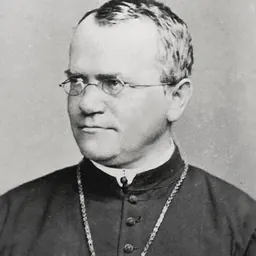
Related people
Same field, nearest in time



Contemporaries
People whose lives overlapped Johann Dzierzon's






Frequently asked questions
Who was Johann Dzierzon?
pioneering apiarist (1811–1906)
When was Johann Dzierzon born?
Johann Dzierzon was born on 16 January 1811 in Łowkowice.
When did Johann Dzierzon die?
Johann Dzierzon died on 26 October 1906 in Łowkowice.
What was Johann Dzierzon's occupation?
Johann Dzierzon was a beekeeper, entomologist, naturalist, scholar, catholic priest and catholic theologian.
What was Johann Dzierzon known for?
Johann Dzierzon was known for Bee, Beehive (beekeeping) and Parthenogenesis.
What nationality was Johann Dzierzon?
Johann Dzierzon was German.
Sources & further reading
Cite this page
APA: Biography.guide. (2026). Johann Dzierzon. https://biography.guide/johann-dzierzon/
MLA: "Johann Dzierzon." Biography.guide, https://biography.guide/johann-dzierzon/.
Chicago: "Johann Dzierzon." Biography.guide. https://biography.guide/johann-dzierzon/.
Data last updated: 2026-09-26 · Spot an error? Report a correction.
Page generated 2026-09-27 05:14 UTC