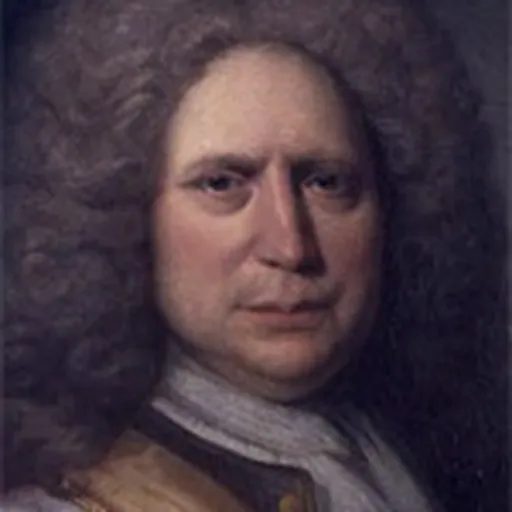
About Johann Conrad Barchusen
Lived 1666 – 1723 (aged 57). Johann Conrad Barchusen was a German chemist, university teacher, pharmacist and physician.
Johann Conrad Barchusen, originally Barkhausen, sometimes Barchausen (16 March 1666 Horn, Principality of Lippe - 2 October 1723, Utrecht) was a pharmacist, chemist, physician and professor. At Universiteit Utrecht, he was the first person to teach chemistry as a specific subject (not just as part of medicine). He published four textbooks on chemistry and two on medicine.
Life Barchusen was the eldest son of the burgher Conrad Barkhausen and his wife Catharina Hedwig Barkhausen (born Eichhof). After the death of his parents, Johann Conrad Barchusen lived with his uncle Franz Caspar Barkhausen (1636-1715). Franz Caspar Barkhausen was a jurist, archivist and librarian who lived in Detmold. While living with him, Johann Barchusen learned Latin and Greek. He served an apprenticeship as a pharmacist in Berlin, Mainz and Vienna.
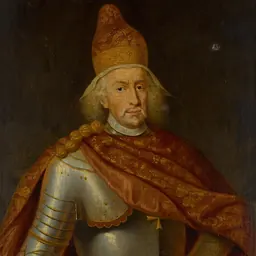
In 1690, his first book, Pharmacopoeus synopticus, appeared. The pharmaceutical textbook had two further editions during his lifetime. In 1693 he returned to Horn, but found no prospects there as a pharmacist. He traveled to Hungary and became a physician of the Venetian Doge and naval commander Francesco Morosini. Barchusen accompanied Morosini on a military expedition to Morea but the 75-year-old Morosini died January 1694 in Nafplion.
On 16 September 1694 the city council of Utrecht granted Barchusen the right to teach private chemistry courses which could be attended by students of the university. Because he did not have a medical degree, he could not be formally appointed as a professor at the university: his type of specialist was not yet recognized by the university. In May 1698 the council voted to increase Barchusen's salary, but continued to debate the issue of an appropriate appointment. (variously Pylsweert, d. 1717), daughter of a wealthy Utrecht family. Their only son Conrad was born the following year, but he died as a child. Barchusen divided chemistry into three parts: docimastica (metallurgy and assay), medica or iatro-chemia (medicinal chemistry), and alchemistica or hermetica (transformation of metals) which he stated was "knowledge based in fables". Barchusen classified instruments as "passive" (allowing existing events to occur) and "active" (changing the course of events which occurred).
Barchusen was also interested in botany. The Pippau plant or Crepis setosa was also called Barkhausia.
Barchusen left 165 botanical and scientific works from his personal collection to the University Library of Utrecht, along with a portrait of himself which is in the Universiteitsmuseum of Utrecht. His chemical laboratory in Utrecht was excavated by archaeologists as of 2000-2001 and items from it can be viewed at the Museum Sonnenborgh.
Works
His works appear under a number of variations of his name including Johannis Conradi Barchusen. Also, the title of the first edition sometimes differs from the title of later printings of the work.
Chemistry Pharmacopoeus synopticus, seu synopsis pharmaceutica, plerasque medicaminum, compositiones, ac formulas, eorumque... conficiendi methodum exhibens (Frankfurt, 1690; 2nd ed., Utrecht, 1696), 3rd ed. entitled Synopsis pharmaciae (Leiden, 1712) Pyrosophia, succincte atque breviter iatrochemiam, rem metallicam et chrysopoeiam pervestigans. Opus medicis, phvsicis, chemicis, pharmacopoeis, metallicis ec. noninutile (Leiden, 1698), 2nd ed., rev., entitled Elementa chemiæ, quibus subjuncta est confectura lapidis philosophici imaginibus repraesentata (Leiden, 1718) Acroamata, in quibus complura ad iatro-chemiam atque physicam spectantia. jocunda rerum varietate, explicantur (Utrecht, 1703) Compendium ratiocinii chemici more geometrarum concinnatum (Leiden, 1712) Medicine Historia medicinae (Amsterdam, 1710), 2nd ed., rev., entitled De medicinae origine et progressu dissertationes (Utrecht, 1723) Collecta medicinae practicae generalis. Quibus subjunctus est Dialogus de optima medicorum secta (Amsterdam, 1715)
Don’t just read it —
keep it.
Full-length biographies made to live with: read them, listen on the way to work, watch them tonight.
- E-book
- Audio
- Video
Instant download · yours to keep · every purchase keeps this site free
Important facts
People in Johann Conrad Barchusen's life
Named in this biography and alive at the same time
Related people
Same field, nearest in time

Contemporaries
People whose lives overlapped Johann Conrad Barchusen's




Frequently asked questions
Who was Johann Conrad Barchusen?
German chemist
When was Johann Conrad Barchusen born?
Johann Conrad Barchusen was born on 16 March 1666 in Horn-Bad Meinberg, Horn.
When did Johann Conrad Barchusen die?
Johann Conrad Barchusen died on 2 October 1723 in Utrecht.
What was Johann Conrad Barchusen's occupation?
Johann Conrad Barchusen was a chemist, university teacher, pharmacist and physician.
What nationality was Johann Conrad Barchusen?
Johann Conrad Barchusen was German.
Sources & further reading
· Wikipedia: Johann Conrad Barchusen
· DBpedia: Johann Conrad Barchusen
Cite this page
APA: Biography.guide. (2026). Johann Conrad Barchusen. https://biography.guide/johann-conrad-barchusen/
MLA: "Johann Conrad Barchusen." Biography.guide, https://biography.guide/johann-conrad-barchusen/.
Chicago: "Johann Conrad Barchusen." Biography.guide. https://biography.guide/johann-conrad-barchusen/.
Data last updated: 2026-09-24 · Spot an error? Report a correction.
Portrait: Wikimedia Commons · author & licence
Page generated 2026-09-27 05:08 UTC