
About Johann Abraham Peter Schulz
Lived 1747 – 1800 (aged 53). Johann Abraham Peter Schulz was a German and Danish composer, conductor, musicologist, music theorist, writer and independent publisher.
Johann Abraham Peter Schulz (31 March 1747 – 10 June 1800) was a German musician. He is best known as the composer of the melody for Matthias Claudius's poems "Der Mond ist aufgegangen" and "Wir pflügen und wir streuen", and the Christmas carol "Ihr Kinderlein kommet".
Life Schulz was born in Lüneburg, where he attended St. Michaelis school from 1757 to 1759 and then the Johanneum from 1759 to 1764. In 1765, he was the student in Berlin of composer Johann Kirnberger (who was a pupil of Bach), and then taught in Berlin himself. In 1768 Kirnberger recommended Schulz for the position of music teacher and accompanist to the Polish Princess Sapieha Woiwodin von Smolensk. Schulz traveled with her for 3 years throughout Europe, where he came into contact with many new musical ideas. He served as the conductor of the French Theatre in Berlin from 1776 to 1780 and from 1780 to 1787 he was the Kapellmeister of Prince Henry in Rheinsberg. Schulz then went on to serve as Court Kapellmeister in Copenhagen from 1787 to 1795 before returning to Berlin. He died in Schwedt.
Schulz wrote operas, stage music, oratorios, and cantatas, as well as piano pieces and folk songs; he also wrote articles on music theory for Johann Georg Sulzer's (1720–1779) Allgemeine Theorie der schönen Künste in four volumes.
Selected works For piano
Sechs Klavierstücke, Op. 1, 1778 Sonata, Op. 2, 1778
Lieder Gesänge im Volkston, 1779 Lieder im Volkston, 1782, 1785, 1790. Chansons Italiennes, 1782
Operas Clarissa, operetta, Berlin 1775 La fée Urgèle, comédie avec ariettes, 1782 Aline, reine de Golconde, Rheinsberg 1787 Høstgildet, Syngespil, Copenhagen 1790 Indtoget, Syngespil, Copenhagen 1793 Peters bryllup, Syngespil, Copenhagen 1793
Incidental music Music for Athalie by Jean Racine, Rheinsberg 1785
Church music Maria und Johannes, 1788 Kristi død, 1792 Des Erlösers letzte Stunde, 1794 4 Hymns, 1791–1794
Further media
Don’t just read it —
keep it.
Full-length biographies made to live with: read them, listen on the way to work, watch them tonight.
- E-book
- Audio
- Video
Instant download · yours to keep · every purchase keeps this site free
Important facts
People in Johann Abraham Peter Schulz's life
Named in this biography and alive at the same time
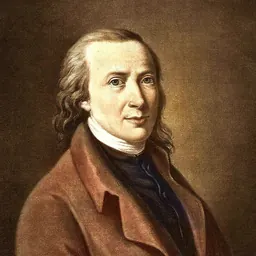

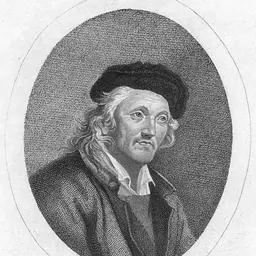
Related people
Same field, nearest in time
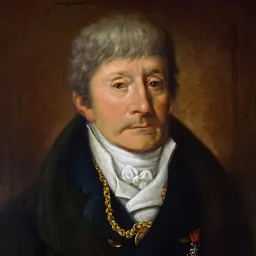
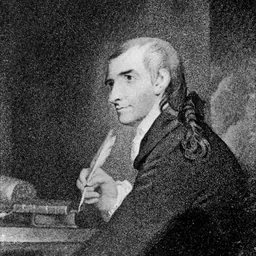
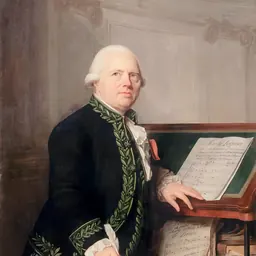

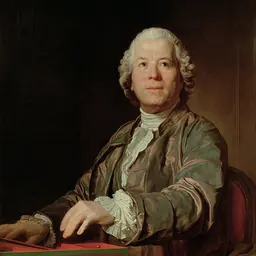

Contemporaries
People whose lives overlapped Johann Abraham Peter Schulz's
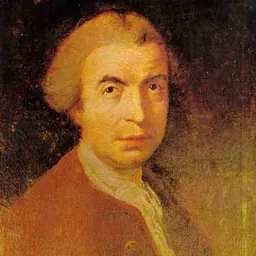



Frequently asked questions
Who was Johann Abraham Peter Schulz?
German musician and composer (1747-1800)
When was Johann Abraham Peter Schulz born?
Johann Abraham Peter Schulz was born on 31 March 1747 in Lüneburg.
When did Johann Abraham Peter Schulz die?
Johann Abraham Peter Schulz died on 10 June 1800 in Schwedt/Oder.
What was Johann Abraham Peter Schulz's occupation?
Johann Abraham Peter Schulz was a composer, conductor, musicologist, music theorist, writer and independent publisher.
What nationality was Johann Abraham Peter Schulz?
Johann Abraham Peter Schulz was German and Danish.
Sources & further reading
· Wikipedia: Johann Abraham Peter Schulz
· DBpedia: Johann Abraham Peter Schulz
Cite this page
APA: Biography.guide. (2026). Johann Abraham Peter Schulz. https://biography.guide/johann-abraham-peter-schulz/
MLA: "Johann Abraham Peter Schulz." Biography.guide, https://biography.guide/johann-abraham-peter-schulz/.
Chicago: "Johann Abraham Peter Schulz." Biography.guide. https://biography.guide/johann-abraham-peter-schulz/.
Data last updated: 2026-09-20 · Spot an error? Report a correction.
Page generated 2026-09-27 05:24 UTC