
About Johan Sebastiaan Ploem
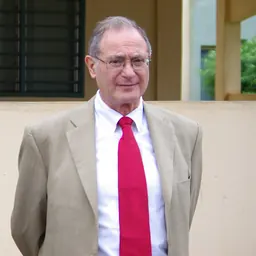
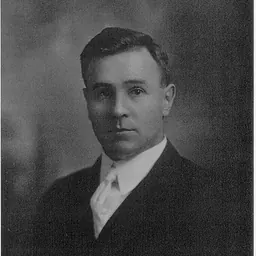
Born 1927. Johan Sebastiaan Ploem is a Dutch artist and university teacher.
Johan Sebastiaan Ploem (born 25 August 1927) is a Dutch microscopist and digital artist. He made significant contribution to the field of fluorescence microscopy, and invented reflection interference contrast microscopy.
Early life and education Ploem was born on 25 August 1927 in Sawahlunto in West Sumatra, then part of the Dutch East Indies. At 2 years old his family moved to the Netherlands, where he remained the rest of his youth.
Scientific career Ploem has been employed by a number of academic institutions, including the University of Miami, Harvard University, the University of Amsterdam and the University of Leiden. At Leiden he served as a professor at the Faculty of Medicine in the Department of Cytochemistry and Cytometry from 1980 to 1992, after which he became a Professor Emeritus there. Ploem has also served as visiting lecturer or professor at various universities, including University of Dundee, University of Florida, Monash University, University of Beijing and Free University of Brussels.
Around 1962 Ploem started work in collaboration with Schott on the development of dichroic beam splitters for reflection of blue and green light for fluorescence microscopy using epi illumination. At the time of his first publication on fluorescence microscopy using epi illumination with narrow-band blue and green light, he was not aware of the development of a dichroic beam splitter for UV excitation with incident light by Brumberg and Krylova.
Ploem's prototype fluorescence epi-illuminators and microscopes form a part of the permanent exposition of the Dutch National Museum for the history of Science and Medicine.
Reflection contrast microscopy
In 1973, at the Second Conference on Mononuclear Phagocytes held in Leiden, Ploem introduced an improvement to Interference Reflection Microscopy (IRM), which he called Reflection Contrast Microscopy (RCM). He also wrote a book chapter in the associated conference proceeding edited by Ralph van Furth. The improvement is the addition of crossed polarizers and a so-called "anti-flex objective", the combination of which further reduces stray light in an IRM microscope, allowing even better interference contrast. RCM is more commonly known as Reflection Contrast Interference Microscopy (RICM) today.
Honors and awards Various awards and honors have been bestowed on Ploem: Honorary fellow of the New York Microscopical Society Honorary fellow of the Polish Society of Surgery Honorary fellow of the German Society of Surgery In 1994, the European Society for Analytical Cellular Pathology established a Conference Keynote "Ploem" Lecture for invited scientists at its future general meetings The International Society of Analytical Cytology invited Professor Ploem to present its inaugural "Robert Hooke" lecture. In 1995, he was invited by the Royal Microscopical Society to give the inaugural CYTO lecture.
Digital painting
Ploem started painting as a small boy and was educated in drawing and painting in Maastricht, the Netherlands. While still at secondary school he attended an evening course in drawing and painting at the Kunstnijverheidsschool Maastricht. Ploem's presence in Paris was important for his knowledge and interest in art since he could regularly visit his cousins in Paris, the painter Frits Klein and his son Yves Klein. He visited the Kleins when Yves was making his first monochromes.
In the last years of his activities at the faculty of medicine at Leiden University, he concentrated on research in image analysis. He was asked to participate in a European project with the aim of automating cancer cell recognition using computer analysis. It concerned a collaborative project with the German optical company Leitz/Leica Microsystems, and the Institute for Mathematical Morphology in Fontainebleau, France. Together with a team, Professor Jean Serra at this institute had developed an image analysis method, now internationally known as mathematical morphology. With his experience as an analogue painter, Ploem saw the possibility of also applying the methods of mathematical morphology to the creation of digital art.
At the International Symposium on Mathematical Morphology in Amsterdam (1998), Ploem presented a paper on the creation of computer graphics with Mathematical Morphology, using for the first time, the transforming algorithms from the Fontainebleau group for the creation of digital art. He wrote about it in the chapter of a book published on that occasion.
His first digital graphics of nature scenes were shown in his exposition at a regional art centre in the Pyrenees (Ossega, June 1997).
He was invited for a symposium on Art et Science at the University of Caen, France (April 2001). At the art exposition connected with this symposium, he presented 6 digital graphics that were dominated by chaotic transformations of rock art themes. A similar invitation was made by the University of Basel in Switzerland (April 2002).
Don’t just read it —
keep it.
Full-length biographies made to live with: read them, listen on the way to work, watch them tonight.
- E-book
- Audio
- Video
Instant download · yours to keep · every purchase keeps this site free
Important facts
People in Johan Sebastiaan Ploem's life
Named in this biography and alive at the same time

Related people
Same field, nearest in time






Contemporaries
People whose lives overlapped Johan Sebastiaan Ploem's


Frequently asked questions
Who is Johan Sebastiaan Ploem?
Dutch microscopist and artist
When was Johan Sebastiaan Ploem born?
Johan Sebastiaan Ploem was born on 25 August 1927 in Sumatra.
What is Johan Sebastiaan Ploem's occupation?
Johan Sebastiaan Ploem is an artist and university teacher.
What nationality is Johan Sebastiaan Ploem?
Johan Sebastiaan Ploem is Dutch.
Sources & further reading
· Wikipedia: Johan Sebastiaan Ploem
· DBpedia: Johan Sebastiaan Ploem
Cite this page
APA: Biography.guide. (2026). Johan Sebastiaan Ploem. https://biography.guide/johan-sebastiaan-ploem/
MLA: "Johan Sebastiaan Ploem." Biography.guide, https://biography.guide/johan-sebastiaan-ploem/.
Chicago: "Johan Sebastiaan Ploem." Biography.guide. https://biography.guide/johan-sebastiaan-ploem/.
Data last updated: 2026-09-20 · Spot an error? Report a correction.
Page generated 2026-09-27 05:04 UTC