
Johan Galtung
Norwegian sociologist and peace scholar
About Johan Galtung
Lived 1930 – 2024 (aged 93). Johan Galtung was a Norwegian and German mathematician, political scientist, sociologist, university teacher and writer, known for Peace and conflict studies.
Johan Vincent Galtung (24 October 1930 – 17 February 2024) was a Norwegian sociologist and the principal founder of the discipline of peace and conflict studies. He was the main founder of the Peace Research Institute Oslo (PRIO) in 1959 and was its first director until 1970. He also established the Journal of Peace Research in 1964.
In 1969, he was appointed to the world's first chair in peace and conflict studies, at the University of Oslo. He resigned his Oslo professorship in 1977 and thereafter held professorships at several other universities; from 1993 to 2000 he taught as Distinguished Professor of Peace Studies at the University of Hawaiʻi. He was the Tun Mahathir Professor of Global Peace at the International Islamic University Malaysia until 2015.
Background Galtung speaking at the Monterrey Institute of Technology and Higher Education, Mexico City in September 2012. Galtung was born in Oslo. He earned the cand. real. degree in mathematics at the University of Oslo in 1956, and a year later completed the mag. art. (PhD) Galtung received the first of thirteen honorary doctorates in 1975.
Galtung's father and paternal grandfather were both physicians. The Galtung name has its origins in Hordaland, where his paternal grandfather was born. Nevertheless, his mother, Helga Holmboe, was born in central Norway, in Trøndelag, while his father was born in Østfold, in the south. Galtung was married twice, and had two children by his first wife Ingrid Eide, Harald Galtung and Andreas Galtung, and two by his second wife Fumiko Nishimura, Irene Galtung and Fredrik Galtung.
Galtung experienced World War II in German-occupied Norway, and as a 12-year-old saw his father arrested by the Nazis. By 1951, he was already a committed peace mediator, and elected to do 18 months of social service in place of his obligatory military service. After 12 months, Galtung insisted that the remainder of his social service be spent in activities relevant to peace.
Galtung died in Stabekk Helsehus og Hospice, Baerum, Norway, on 17 February 2024, at the age of 93.
Career Upon receiving his mag. art. degree, Galtung moved to Columbia University, in New York City, where he taught for five semesters as an assistant professor in the department of sociology. In 1959, Galtung returned to Oslo, where he founded the Peace Research Institute Oslo (PRIO). He was the institute's director until 1969.
In 1964, Galtung led PRIO to establish the first academic journal devoted to Peace Studies: the Journal of Peace Research. In 1969, he left PRIO for a position as professor of peace and conflict research at the University of Oslo, a position he held until 1978. He has held visiting positions at other universities, including Santiago, Chile, the United Nations University in Geneva, Witten/Herdecke University in Germany, and at Columbia University, Princeton University and the University of Hawaiʻi in the United States. In 2014, he was appointed the first Tun Mahathir Professor of Global Peace at the International Islamic University Malaysia.
Economist and fellow peace researcher Kenneth Boulding has said of Galtung that his "output is so large and so varied that it is hard to believe that it comes from a human". He was a member of the Norwegian Academy of Science and Letters.
In 1993, he co-founded TRANSCEND: A Peace Development Environment Network. In 1987, he was given the Right Livelihood Award. In the Spring of 1999, Galtung was a Fellow at the Swedish Collegium for Advanced Study in Uppsala, Sweden.
Work and views
Violence Triangle In Galtung's 1969 paper, "Violence, Peace and Peace Research", he presents his theory of the Conflict Triangle, a framework used in the study of peace and conflict, with the purpose of defining the three key elements of violence that form this "triangle." The theory is based on the principle that peace must be defined by widely accepted social goals, and that any state of peace is characterized by the absence of violence. When a conflict has features of all three areas of violence, the result is a more consolidated, static state of violence in a social system, which may include a conflict or a nation-state, whereas the absence of these three typologies of violence results in peace.
Structural Violence Galtung's concept of structural violence refers to the indirect forms of violence originating from social, economic, and political structures and manifesting primarily as oppression and exploitation. These indirect forms of violence result in injustices in the distribution of political power and economic benefits. that structural violence has been the key influence in the nature and distribution of extreme suffering in India, driven by the Indian state in its alleged corruption, overly bureaucratic standards of governance used to exclude the middle and working classes from the political system through a system of politicized poverty.
Jacklyn Cock's 1989 paper in the Review of African Political Economy applied Galtung's theory of structural violence, analysing the role of militarized society under the apartheid regime of South Africa in the development of patriarchal values that is a form of structural violence against women. Cock found that tacit misdirection of women in society by its leadership focused their energies toward the direct and indirect incorporation of the patriarchal regime in order to maintain the status quo.
Mats Utas claimed that even those youth in Liberia indirectly unaffected by direct violence in the civil war of 1989-1996 suffered from structural violence in the form of association with different blocs, leading to poverty, joblessness and marginalisation effects.
Cultural Violence Galtung defines cultural violence as ideas, consciousness, language, art, or science that can be used to legitimize or enable direct violence or structural violence. also published in the Journal of Peace Research. This concept has been applied in a limited number of cases, with most occurring after Galtung's follow up paper in 1990, that resistance to the Western medical sphere driven by previous atrocities committed against the Aboriginal community has led to a fierce resistance effort against modern medicine, addiction treatment and perhaps fuels a desire to seek out drugs and illicit substances as a starting point of addiction. Wide scale suspicion against medical practitioners and government representatives has become engendered in the Aboriginal community.
In Enduring Violence: Ladina Women's Lives in Guatemala, the 2011 book by Cecilia Menjívar, it is argued that the preexisting cultural conditions of mediania, or half and half, agriculture led to women facing large scale cultural violence due to high rents, low returns and high required investment with additionally harsh conditions due to the conflict in Guatemala. Given the patriarchal culture of Guatemala, any earnings would go to the partner of the working woman, leaving a large poverty gap enshrined in the demographic diversity of the country.
The Austrian peace researcher Franz Jedlicka has tried to measure the level of cultural violence in a "Culture of Violence Scale" in 2023.
Direct Violence Direct Violence is characterised as having an actor that commits the violence, and is thus able to be traced back to persons as actors. Direct violence shows less stability, given it is subject to the preference sets of individuals, and thus is more easily recognised. Direct violence is the most visible, occurring physically or verbally, and the victim and the offender can be clearly identified. Direct violence is highly interdependent with structural and cultural violence: cultural and structural violence causes direct violence which on the other hand reinforces the former ones. This concept has been applied in a large number of cases, some of which are listed below.
A 2011 paper by the International Center for Research on Women (ICRW) demonstrated the widespread nature of child marriage in South Asia. The ICRW highlighted marriage before the age of 18 as a fundamental human rights violation, one that leads to early childbearing, with significantly higher maternal mortality and morbidity rates as well as higher infant mortality rates amongst women. The paper most directly presented evidence to show that child brides are at heightened risk of violence in the home.
In Matthew Chandler's 2009 paper on so-called "non-violent" techniques utilised by Hezbollah still include forms of Direct Violence, most notably the threat of violence toward Fouad Siniora's allies after his 2008 order to dismantle the Hezbollah telecommunications network in 2008, which led to the freezing of the order. Further, Hezbollah are argued to have used their operation of social services, in lieu of government operations, as a ransom for support as well as rewarding their fighters with guaranteed healthcare and support for their families. Chandler argues this is due to opposition within the group to harming Lebanese civilians, who they view as "their own", or exacerbating conflict through civil war.
In 2005, Steven Wright made the case for Peacekeeping efforts to be regarded as violence due to increasing use of techniques such as pre-interrogation treatment, and the use of non-lethal weapons such as tear gas for crowd dispersal and plastic bullets, which he terms "torture-lite", being increasingly common in peacekeeping manuals across a number of nation-states and supranational organisations.
Applications of the triangle
Galtung's violence triangle has often been used to analyse interstate, territorial and ethnic conflicts. For example, Taleh Ziyadov applied the model to the Nagorno-Karabakh conflict, examining how direct violence was connected to structural disputes over territory and political status and to cultural narratives that legitimised hostility between Armenians and Azerbaijanis. After Galtung's death in 2024, the University of Pisa journal Scienza e Pace dedicated a special issue to his life, work and intellectual legacy. In a contribution to this issue, Tiziano Peccia used the triangle in a less conventional context by applying it to a conflict within the Ascione Camorra clan, a local non-state criminal organisation. Peccia interpreted physical assaults and threats as direct violence, the clan's patriarchal hierarchy and unequal treatment of women as structural violence, and beliefs concerning honour, fidelity, motherhood and female obedience as cultural violence that helped legitimise this inequality. within peace and conflict studies. However, they are not without criticism. Galtung uses very broad definitions of violence, conflict and peace, and applies the terms of mean both direct and indirect, negative and positive, and violence in which one cannot distinguish actors or victims, which serves to limit the direct application of the model itself.
Galtung uses a positivist approach, in that he assumes that every rational tenet of the theory can be verified, serving to reject social processes beyond relationships and actions. This approach enforces a paradigm of clear-cut, currently testable propositions as the ‘whole’ of the system, and thus is often deemed reductionist. Galtung also wields an explicit normative orientation in the paper, in which there is a weighting toward evaluative statements that may show bias or simply opinion, or indeed a trend toward the institutions and concepts of peace in the West, which may serve to limit the applicability of the model more widely.
Peacebuilding Galtung proposes resolving conflicts through peacekeeping, peacemaking, and peacebuilding. Galtung has held several significant positions in international research councils and has been an advisor to several international organisations. Since 2004, he has been a member of the Advisory Council of the Committee for a Democratic UN.
Galtung is strongly associated with the following concepts: Structural violence – widely defined as the systematic ways in which a regime prevents individuals from achieving their full potential. Institutionalized racism and sexism are examples of this. Negative vs. positive peace – popularized the concept that peace may be more than just the absence of overt violent conflict (negative peace), and will likely include a range of relationships up to a state where nations (or any groupings in conflict) might have collaborative and supportive relationships (positive peace). Though he did not cite them, these terms were, in fact, previously defined and discussed in a series of lectures starting in 1899 by Jane Addams (in her 1907 book she switched to calling it 'newer ideals of peace' but continued to contrast them to the term negative peace), and in 1963 in the letter from a Birmingham jail by Martin Luther King Jr.
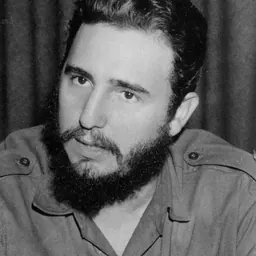
Criticism of the United States In 1973, Galtung criticised the "structural fascism" of the US and other Western countries that make war to secure materials and markets, stating: "Such an economic system is called capitalism, and when it's spread in this way to other countries it's called imperialism", and praised Fidel Castro's Cuba in 1972 for "break[ing] free of imperialism's iron grip". Galtung stated that the US is a "killer country" guilty of "neo-fascist state terrorism" and compared the US to Nazi Germany for bombing Kosovo during the 1999 NATO bombing of Yugoslavia.
Following the election of Donald Trump in 2016, Galtung revised forward his theory of American global power decline, citing Trump's deportation policy and critical views of NATO would accelerate it.
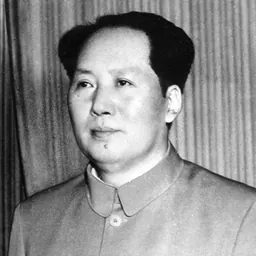
Views on Communist regimes During his career, Galtung statements and views have drawn criticism including his criticism of Western countries during and after the Cold War and what his critics perceived as a positive attitude to the Soviet Union, Cuba and Communist China. A 2007 article by Bruce Bawer published by the City Journal magazine criticised Galtung's opinion of China during the rule of Mao Zedong. China, according to Galtung, was "repressive in a certain liberal sense", but he insisted "the whole theory about what an 'open society' is must be rewritten, probably also the theory of 'democracy'—and it will take a long time before the West will be willing to view China as a master teacher in such subjects."
Views on Jews and Israel Galtung recommended that people should read The Protocols of the Elders of Zion, a fabricated antisemitic text purporting to describe a Jewish plan for global domination. In defending his claims that Jews control American media companies, Galtung cited an article published by National Vanguard, a neo-Nazi website. As a result of such statements, TRANSCEND International, an organisation co-founded by Galtung, released a statement in May 2012 attempting to clarify his opinions. On 8 August 2012, the World Peace Academy in Basel, Switzerland announced it was suspending Galtung from its organization, citing what it posited were his "reckless and offensive statements to questions that are specifically sensitive for Jews." Galtung said the claims were "smearing and libel".
Selected awards and recognitions
Dr honoris causa, University of Tampere, 1975, peace studies Dr honoris causa, University of Cluj, 1976, future studies Dr honoris causa, Uppsala University, 1987, Faculty of Social Sciences Dr honoris causa, Soka University, Tokyo, 1990, peace/Buddhism Dr honoris causa, University of Osnabrück, 1995, peace studies Dr honoris causa, University of Torino, 1998, sociology of law Dr honoris causa, FernUniversität Hagen, 2000, philosophy Dr honoris causa, University of Alicante, 2002, sociology Dr honoris causa, Benemérita Universidad Autónoma de Puebla, 2006, law Dr honoris causa, Complutense University, Madrid, 2017, politics and sociology Honorary professor, University of Alicante, Alicante, 1981 Honorary professor, Free University of Berlin, 1984–1993 Honorary professor, Sichuan University, Chengdu, 1986 Honorary professor, Witten/Herdecke University, Witten, 1993 Distinguished professor of peace studies, University of Hawaiʻi, 1993- John Perkins University Distinguished Visiting Professor, 2005- Right Livelihood Award, 1987 First recipient of the Humanist Prize of the Norwegian Humanist Association, 1988 Jamnalal Bajaj International Award for Promoting Gandhian Values, 1993 Brage Prize, 2000 First Morton Deutsch Conflict Resolution Award, 2001 Honorary Prize of the Norwegian Sociological Association, 2001 Premio Hidalgo, Madrid, 2005 Augsburg Golden Book of Peace, 2006 Member of the Norwegian Academy of Science and Letters Honorary member of the Green Party, 2009 Erik Bye Memorial Prize, 2011
Selected works Galtung has published more than a thousand articles and over a hundred books.
Statistisk hypotesepröving (Statistical hypothesis testing, 1953) Gandhis politiske etikk (Gandhi's political ethics, 1955, with philosopher Arne Næss) Theory and Methods of Social Research (1967) Violence, Peace and Peace Research (1969) Members of Two Worlds (1971) Fred, vold og imperialisme (Peace, violence and imperialism, 1974) Peace: Research – Education – Action (1975) Learning from China? (1977, with Fumiko Nishimura) Europe in the Making (1989) Global Glasnost: Toward a New World Information and Communication Order? (1992, with Richard C. Vincent) Global Projections of Deep-Rooted U.S Pathologies (1996) Peace By Peaceful Means: Peace and Conflict, Development and Civilization (1996) Johan uten land. På fredsveien gjennom verden (Johan without land. On the Peace Path Through the World, 2000, autobiography for which he won the Brage Prize) 50 Years: 100 Peace and Conflict Perspectives (2008) Democracy – Peace – Development (2008, with Paul D. Scott) 50 Years: 25 Intellectual Landscapes Explored (2008) Globalizing God: Religion, Spirituality and Peace (2008, with Graeme MacQueen)
Don’t just read it —
keep it.
Full-length biographies made to live with: read them, listen on the way to work, watch them tonight.
- E-book
- Audio
- Video
Instant download · yours to keep · every purchase keeps this site free
Important facts
People in Johan Galtung's life
Named in this biography and alive at the same time






Related people
Same field, nearest in time



Contemporaries
People whose lives overlapped Johan Galtung's


Frequently asked questions
Who was Johan Galtung?
Norwegian sociologist and peace scholar
When was Johan Galtung born?
Johan Galtung was born on 24 October 1930 in Oslo, Oslo Municipality.
When did Johan Galtung die?
Johan Galtung died on 17 February 2024 in Bærum Municipality.
What was Johan Galtung's occupation?
Johan Galtung was a mathematician, political scientist, sociologist, university teacher and writer.
What was Johan Galtung known for?
Johan Galtung was known for Peace and conflict studies.
What nationality was Johan Galtung?
Johan Galtung was Norwegian and German.
Sources & further reading
Cite this page
APA: Biography.guide. (2026). Johan Galtung. https://biography.guide/johan-galtung/
MLA: "Johan Galtung." Biography.guide, https://biography.guide/johan-galtung/.
Chicago: "Johan Galtung." Biography.guide. https://biography.guide/johan-galtung/.
Data last updated: 2026-09-20 · Spot an error? Report a correction.
Page generated 2026-09-27 05:27 UTC