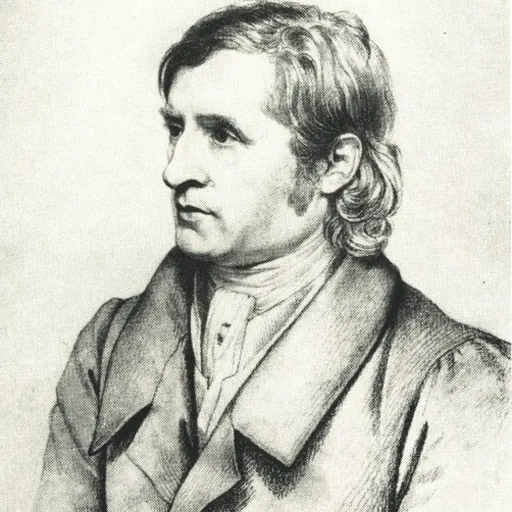
About Johan Christian Dahl
Lived 1788 – 1857 (aged 69). Johan Christian Dahl was a Norwegian painter, professor and landscape painter.
Johan Christian Claussen Dahl (24 February 178814 October 1857), often known as or , was a Norwegian artist who is considered the first great romantic painter in Norway, the founder of the "golden age" of Norwegian painting. He is often described as "the father of Norwegian landscape painting" and is regarded as the first Norwegian painter to reach a level of artistic accomplishment comparable to that attained by the greatest European artists of his day. He was also the first to acquire genuine fame and cultural renown abroad. As one critic has put it, "J.C. Dahl occupies a central position in Norwegian artistic life of the first half of the 19th century.
Although Dahl spent much of his life outside of Norway, his love for his country is clear in the motifs he chose for his paintings and in his extraordinary efforts on behalf of Norwegian culture generally. He was, for example, a key figure in the founding of the Norwegian National Gallery and of several other major art institutions in Norway, as well as in the preservation of Norwegian stave churches and the restoration of the Nidaros Cathedral in Trondheim and Bergenhus Fortress in Bergen.
Life
Early life
Dahl came from a simple background – his father was a modest fisherman in Bergen, Norway – and he would later look back at his youth with bitterness. He regretted that he never had a "real teacher" in his childhood and, despite all his spectacular success, he believed that if he had been more fortunate in his birth, he would have achieved even more than he had.
Time at Bergen
(c 1815) As a boy, Dahl was educated by a sympathetic mentor at the Bergen Cathedral who at first thought that this bright student would make a good priest, but then, recognizing his remarkably precocious artistic ability, arranged for him to be trained as an artist. From 1803 to 1809 Dahl studied with the painter , whose workshop was the most important one in Bergen at the time. Still, Dahl looked back on his teacher as having kept him in ignorance in order to exploit him, putting him to work painting theatrical sets, portraits, and views of Bergen and its surroundings. Another mentor, Lyder Sagen, showed the aspiring artist books about art and awakened his interest in historical and patriotic subjects. It was also Sagen who took up a collection that made it possible for Dahl to go to Copenhagen in 1811 to complete his education at the academy there.
As important as Dahl's studies at the academy in Copenhagen were his experiences in the surrounding countryside and in the city's art collections. In 1812 he wrote to Sagen that the landscape artists he most wished to emulate were Ruisdahl and Everdingen, and for that reason he was studying "nature above all," Dahl's artistic program was, then, already in place: he would become a part of the great landscape tradition, but he would also be as faithful as possible to nature itself.
Dahl held that a landscape painting should not just depict a specific view, but should also say something about the land's nature and character – the greatness of its past and the life and work of its current inhabitants. The mood was often idyllic, often melancholy. When he added snow to a landscape he painted in the summer, it was not to show the light and colors of snow; it was to use snow as a symbol of death. As one critic has put it, "Unlike the radically Romantic works also appearing at the time, Dahl softens his landscape, introducing elements of genre painting by imbuing it with anecdotal materials: In the background a wisp of smoke rises from a cabin, perhaps the home of the hunter on the snow-covered field." Thanks to Sagen's recommendations and to his own personal charm, Dahl soon gained access to the leading social circles in Copenhagen.
Dahl took part in annual art exhibitions in Copenhagen beginning in 1812, but his real breakthrough came in 1815, when he exhibited no fewer than 13 paintings. Prince Christian Frederik of Denmark, who developed an early interest in Dahl's artistic genius and saw to it that his works were purchased for the royal collection, became a lifelong friend and patron of the artist.
Friedrich was fourteen years Dahl's elder and an established artist, but the two found in each other a shared love for nature and a shared enthusiasm for a way of depicting nature that was based on the study of nature itself rather than on the academic cliches that they both profoundly despised. One writer has put it this way: "A warm and sociable character, he soon met and became friendly with the more introverted and reclusive Friedrich, recording how they once walked together in the park of the Grösser Garten among 'many lovely trees of different kinds, and the moon looked beautiful behind the dark fir trees.'"
J.C. Dahl occupies a central position in Norwegian artistic life of the first half of the 19th century. His Romantic yet naturalistic interpretations of Norwegian scenery were greatly admired in Norway as well as on the European continent, particularly in Denmark and Germany.
Honors Dahl had both the Order of Vasa and Order of St. Olav bestowed on him by the King of Sweden and Norway. He also received the Order of Dannebrog from Denmark. The three honors testify to his extraordinary cultural impact throughout Scandinavia. The Bergen Kunstmuseum in Bergen, Norway, contains several of his more prominent works, including Måbødalen (1851), Fra Stedje i Sogn (1836), Hjelle i Valdres (1850), Lysekloster (1827), Stedje i Sogn (1836) and Bjerk i storm (1849).
The National Museum of Art, Architecture and Design - The National Gallery, Oslo has a large collection of his works, including Vinter ved Sognefjorden (1827), Castellammare (1828), Skibbrudd ved den norske kyst (1832), Hellefoss (1838), Fra Stalheim (1842), Fra Fortundalen (1842) and Stugunøset på Filefjell (1851). Significant works (with their titles in Norwegian) include the following: Frederiksborg Castle (1817) Vesuv i utbrudd (1826) Vinter ved Sognefjorden (1827) Castellammare (1828) Skibbrudd ved den norske kyst (1832) Fra Stedje i Sogn (1836) Hellefoss (1838) Stalheim (1842) Fra Fortundalen (1842) Bjerk i storm (1849) Hjelle i Valdres (1850) Stugunøset på Filefjell (1851) Måbødalen (1851)
Gallery
Don’t just read it —
keep it.
Full-length biographies made to live with: read them, listen on the way to work, watch them tonight.
- E-book
- Audio
- Video
Instant download · yours to keep · every purchase keeps this site free
Important facts
more
joh. christ. clausen dahl, Professor Dahl, Johann Chr. Cl. Dahl, J. C. G. Dahl, christian dahl, Johann Chr. Clausen Dahl, monogrammiert JD, Johann Christian Cl. Dahl, J. C. C. Dahl, johann christian claussen dahl, J. C. Clausen Dahl, Joh. Christ. Claussen Dahl, J. C. Claussen Dahl, Johann Christ. Cl. Dahl, Joh. Chr. Cl. Dahl, JoPeople in Johan Christian Dahl's life
Named in this biography and alive at the same time

Related people
Same field, nearest in time



Contemporaries
People whose lives overlapped Johan Christian Dahl's


Frequently asked questions
Who was Johan Christian Dahl?
Norwegian painter (1788–1857)
When was Johan Christian Dahl born?
Johan Christian Dahl was born on 24 February 1788 in Bergen.
When did Johan Christian Dahl die?
Johan Christian Dahl died on 14 October 1857 in Dresden.
What was Johan Christian Dahl's occupation?
Johan Christian Dahl was a painter, professor and landscape painter.
What nationality was Johan Christian Dahl?
Johan Christian Dahl was Norwegian.
Sources & further reading
· Wikipedia: Johan Christian Dahl
· DBpedia: Johan Christian Dahl
Cite this page
APA: Biography.guide. (2026). Johan Christian Dahl. https://biography.guide/johan-christian-dahl/
MLA: "Johan Christian Dahl." Biography.guide, https://biography.guide/johan-christian-dahl/.
Chicago: "Johan Christian Dahl." Biography.guide. https://biography.guide/johan-christian-dahl/.
Data last updated: 2026-09-23 · Spot an error? Report a correction.
Portrait: Wikimedia Commons · author & licence
Page generated 2026-09-27 05:05 UTC