
About Jocko Thompson
Lived 1917 – 1988 (aged 71). Jocko Thompson was an American baseball player.
John Samuel "Jocko" Thompson (January 17, 1917 – February 3, 1988) was an American professional baseball pitcher. He played all or part of four seasons for the Philadelphia Phillies of Major League Baseball from 1948 to 1951. He also served in the Army of the United States as a first lieutenant in the European theater during World War II. Thompson played in Major League Baseball during the Whiz Kids era during a career which spanned 12 seasons (1940–1941, 1946–1955). After attending Northeastern University, Thompson appeared as a situational pitcher and spot starter during the 1948, 1949, and 1950 seasons with the Phillies, and went 4–8 in his only season as a regular member of the team's starting rotation. After demotion to the minors in 1952, Thompson retired from baseball after the 1955 season. Thompson played three seasons for the baseball team at Northeastern University, one of six Major League Baseball players to attend the school. During his tenure (1938–1940), the Huskies won 31 games and lost 14, accumulating a .689 winning percentage. After the 1940 college season, Thompson was signed by Major League Baseball's Boston Red Sox as an amateur free agent. The Red Sox assigned Thompson to their D-level affiliate, the Centreville Red Sox, where he posted an 18–5 record and a 1.56 earned run average (ERA) in 27 games. He also played in seven games for the Canton Terriers, winning one and losing one and compiling a 3.41 ERA. Under manager Heinie Manush, Thompson played for the Greensboro Red Sox in the Piedmont League during the 1941 season; he amassed an 8–13 record and a 3.56 ERA in 162 innings pitched.
Military service
Thompson entered the Army of the United States in 1941 and was assigned to the 504th Parachute Infantry Regiment, a part of the 82nd Airborne Division. In 1944, as a first lieutenant, Thompson led his men during an air raid as part of Operation Market Garden in the German-occupied Netherlands. The light in the jump bay of the platoon's C-47 Skytrain was later than expected, moving their landing zone from its intended location near Grave, Netherlands; the plane was passing over buildings when the paratroopers were signalled to leave the aircraft, and Thompson decided to wait until reaching several approaching fields.
Thompson led his platoon in an attack against the nearby bridge spanning the Maas River, which was defended by German forces supplemented by two 20 mm flak guns, one on the close side of the bridge and one across the river. The platoon opened fire on the German forces, killing four. Thompson's platoon destroyed "electrical equipment and cables that they expected were hooked up to demolitions", and during the Allied occupation of Berlin, where he served as an aide to General James M. Gavin. The following year, he was promoted to the Toronto Maple Leafs, one of Boston's two Triple-A-level affiliates. After he posted a 6–12 record—the team's worst mark among starters with 30 or more appearances —the Red Sox did not retain Thompson's rights when their working agreement with the Maple Leafs ended. He remained with Toronto and his rights became the property of the Philadelphia Phillies when those two teams established a new agreement. At the end of the season, manager Eddie Sawyer called Thompson and Jim Konstanty up to the major league level. As per the working agreement between the teams, the major league club paid Toronto for the rights to each Maple Leafs player it called up: $25,000 ($ in current terms) for the first player, and $5,000 ($ currently) for each player thereafter. Sawyer recalled that Pete Campbell, Toronto's owner, and Konstanty "didn't get along... [because] they were both the same". He appeared in one other game during the 1948 season, Thompson wore the uniform number 9 during his brief call-up. However, Thompson lost his first two starts, both against the Boston Braves. He was sent down to Toronto, amassing a 14–5 record there for the 1949 season, and was later described as the team's "top pitcher" for that year. His 2.73 ERA was second on the team to right-handed starter Bubba Church; Thompson allowed 44 earned runs in 145 innings. For his 1949 appearance, Thompson's uniform number was 37. run to the pennant, he spent most of the season with Toronto. On June 8, he defeated the Jersey City Giants, 5–3, turning in a four-hit performance and striking out 11 batters. He also took a late-game loss in a doubleheader against the Baltimore Orioles, as they staged a five-run rally in the ninth inning to defeat Toronto. Again described as the team's top pitcher, He was called up late in the season to reinforce a team that Roberts described as "depleted"; within one week's time, the Phillies had lost Church to injury, Simmons to military service, Thompson appeared in relief of Church after his return on September 15, but the Phillies lost, 5–0, due in part to a Bobby Thomson inside-the-park grand slam. In his 1950 major league appearances, he played in two games, pitching four innings and allowing one run. Although Thompson was on the playoff roster, he made no postseason appearances with the team. His uniform number for the rest of his Phillies career was 33. During the preseason, he and Ken Johnson combined for a 1–0 shutout of the Cardinals. In the regular season, Thompson amassed a 4–8 record in 14 starts. He made a total of 29 appearances on the season, notching a 3.85 ERA. He won his first game of the year against the New York Giants, 8–4, on April 23; it was the Giants' fifth straight loss. His first loss of the season came in April in the first game of a doubleheader against the Braves, losing 1–0 though he held the Braves to two hits. At the plate, Thompson batted .103 with one double and one triple, the latter of which came on June 2 in a 7–3 defeat of St. Louis. The Phillies and the Reds split a doubleheader in July, with Thompson earning the victory in the nightcap; the Phillies won, 10–0. In August, Thompson entered in relief in the first inning of a game against the Pittsburgh Pirates after Russ Meyer was knocked out of the contest, staging a "respectable duel" with Mel Queen to the eighth inning in a 12–7 Phillies victory; later in the month, he shut out the Reds on three hits to complete a series sweep by the Phillies. Thompson also defeated St. Louis late in the pennant race when the Cardinals were battling the Dodgers for the top position in the league.
After the majors John S. Thompson Bridge over the Maas River in Grave, Netherlands alt=A steel bridge with red inner supports spans a dry canal and a river; the bridge is fronted by a road seen in the front of the image.
Minor leagues Thompson returned to the minor leagues for the 1952 season, playing for the Baltimore Orioles, now affiliated with Philadelphia. He led the Orioles in innings pitched (231) and strikeouts (119) as he compiled a 13–14 record and a 2.49 ERA, third-best on the team. After the season, he played winter baseball in Havana, Cuba, pitching innings in 5 games. Thompson's .714 winning percentage (ten wins and four losses) was best on the 1953 Orioles among pitchers who made 20 or more starts, and he pitched seven complete games. His 1953 ERA was 3.80, and he allowed 16 home runs in 154 innings. When the minor league Orioles moved to Richmond, Virginia, to make room for the transplanted St. Louis Browns of the American League, Thompson left the Phillies' system and remained with the old franchise, the unaffiliated Richmond Virginians, who began play in the 1954 season.
Thompson posted an 8–14 record for the Virginians in 1954; his ERA totaled 5.00 in 29 starts and he placed third on the team in innings pitched (198). His 112 strikeouts led Richmond, as did his 232 hits allowed. After a 6–16 season and a 5.17 ERA in 1955, Thompson retired from baseball.
Post-baseball After his playing days ended, Thompson worked as a sales manager in Maryland. He died at age 71 on February 3, 1988, and was interred at the Gate of Heaven Cemetery in Silver Spring, Maryland. In 2004, the bridge over the Maas River which Thompson's platoon secured 60 years earlier was renamed the John S. Thompsonbrug ("John S. Thompson Bridge"). Many veterans of World War II, as well as Thompson's wife, attended the ceremony.
Don’t just read it —
keep it.
Full-length biographies made to live with: read them, listen on the way to work, watch them tonight.
- E-book
- Audio
- Video
Instant download · yours to keep · every purchase keeps this site free
Important facts
People in Jocko Thompson's life
Named in this biography and alive at the same time




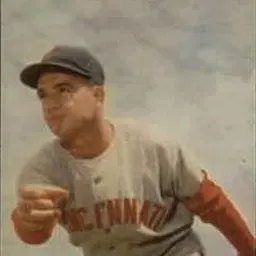
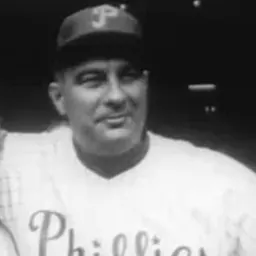
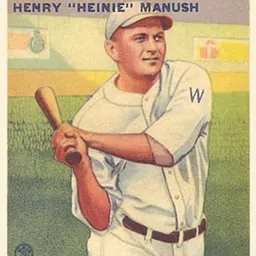

Related people
Same field, nearest in time
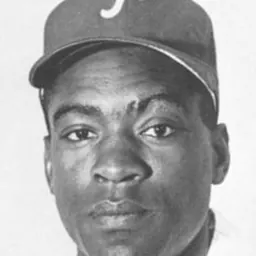
Contemporaries
People whose lives overlapped Jocko Thompson's

Frequently asked questions
Who was Jocko Thompson?
American baseball player
When was Jocko Thompson born?
Jocko Thompson was born on 17 January 1917 in Beverly.
When did Jocko Thompson die?
Jocko Thompson died on 3 February 1988 in Olney.
What was Jocko Thompson's occupation?
Jocko Thompson was a baseball player.
What nationality was Jocko Thompson?
Jocko Thompson was American.
Sources & further reading
Cite this page
APA: Biography.guide. (2026). Jocko Thompson. https://biography.guide/jocko-thompson/
MLA: "Jocko Thompson." Biography.guide, https://biography.guide/jocko-thompson/.
Chicago: "Jocko Thompson." Biography.guide. https://biography.guide/jocko-thompson/.
Data last updated: 2026-09-20 · Spot an error? Report a correction.
Page generated 2026-09-27 05:31 UTC