
Job von Witzleben
German historian
About Job von Witzleben
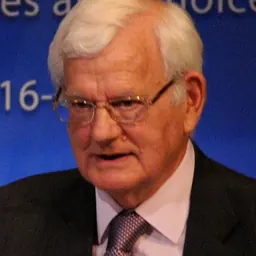
Lived 1916 – 1999 (aged 82–83). Job von Witzleben was a German military historian, historian of Modern Age, colonel and historian.
Job-Wilhelm Henning Dietrich von Witzleben (4 August 1916 – 1999) was a German army officer and a military historian. he was a descendant of the Prussian general Job von Witzleben (1783–1837) and grand-nephew to Erwin von Witzleben. He was a member of the Hitlerjugend, holding the rank of Gefolgschaftsführer. On 1 February 1935, he joined the Nazi Party (membership number: 3590830).
World War II During the Second World War, Witzleben served in the Wehrmacht. After being commissioned as a lieutenant, he was assigned to an anti-aircraft battery. In autumn 1943, he returned from the Eastern Front to be trained for General Staff duty in the Prussian War Academy. Soon after his arrival, he visited his uncle, Field Marshal von Witzleben, who notified him of his intention to remove Adolf Hitler by force. The younger Witzleben was promoted to the rank of major and posted in the General Staff.
Job von Witzleben claimed that he was not personally involved in the 20 July Plot and that he was not made privy to its planning. Yet, under the new Sippenhaft laws and after his uncle was executed, he was interrogated by the Gestapo. Though nothing came of the investigation, he was temporarily discharged from the Wehrmacht. He was then recalled and relegated back to the Eastern Front; Witzleben told an interviewer that he was expected to "prove himself once more." The division, with the rest of Army Group North, was already besieged by the Red Army in the city of Königsberg.
In early April, the corps' chief of staff informed Witzleben that he is to be flown out of the pocket and face court-martial in Vienna, that would probably result in an execution. Witzleben ordered a radio operator to contact the Soviets.
Barracked People's Police Witzleben spent three years in the POW Camp no. 27 near Krasnogorsk. In June 1945, he witnessed the arrival of Field Marshal Ferdinand Schörner in the camp, after he was handed over by the American authorities. A group of some 200 inmates attempted to lynch Schörner, but they were held at bay by the guards. While in the camp, Witzleben joined the League of German Officers, that was disbanded in November 1945. Later, he became a member of the Socialist Unity Party of Germany.
After the KVP was formally established in July 1952, Witzleben joined it. On 15 September 1953 he became chief of staff for the newly formed Territorial Command North in Pasewalk.
National People's Army On 1 March 1956, the National People's Army was officially created, and the command was renamed Military Area V. Witzleben remained in his office, with the same rank (although now as a member of the NVA).
Witzleben was considered to be unreliable by the Stasi, due to his 'bourgeois background' and aristocratic descent. He also worked as a military consultant for several films: his participation in the production of the documentary Himmelsstürmer won him the Heinrich Greif Prize, 2nd degree, on 17 May 1966. He served in the same position in the 1970 adventure film , scripted by Jurek Becker, and consulted director Yuri Ozerov during the making of his World War II epic Liberation.
Witzleben was married to Anka von Witzleben and resided in a villa in Potsdam that once belonged to Wilhelm Kempff. In 1970, he received the Friedrich Engels Prize, 3rd degree.
Selected works Die Bundeswehr – ein gefährliches, aber perspektivloses Instrument des westdeutschen Imperialismus und Militarismus. Institut für deutsche Militärgeschichte (1965). ASIN B003TVXQ7G. Bundeswehr Armee der Revanche: Probleme der Entwicklung der Bundeswehr. Deutscher Militärverlag (1965). ASIN B000Z3SKOK. [Written in collective, with Witzleben as director and chief editor]. Der Einsatz der HVA-Kräfte zur Sicherung der III. Weltfestspiele der Jugend und Studenten im Sommer 1951 in Berlin. Institut für deutsche Militärgeschichte (1970). Die Verschwörung vom 20. Juli 1944 — keine nationale Alternative für das deutsches Volk. Published in Das Nationalkomitee "Freies Deutschland" und seine militärpolitische Bedeutung. Institut für deutsche Militärgeschichte (1963). Stauffenberg und das Nationalkomitee Freies Deutschland. Ein verdrängtes Kapitel deutschen Widerstandes. Dokumentation Berlin (1990).
Don’t just read it —
keep it.
Full-length biographies made to live with: read them, listen on the way to work, watch them tonight.
- E-book
- Audio
- Video
Instant download · yours to keep · every purchase keeps this site free
Important facts
People in Job von Witzleben's life
Named in this biography and alive at the same time



Related people
Same field, nearest in time



Contemporaries
People whose lives overlapped Job von Witzleben's





Frequently asked questions
Who was Job von Witzleben?
German historian
When was Job von Witzleben born?
Job von Witzleben was born on 4 August 1916 in Copitz.
When did Job von Witzleben die?
Job von Witzleben died in 1999 in Potsdam.
What was Job von Witzleben's occupation?
Job von Witzleben was a military historian, historian of Modern Age, colonel and historian.
What nationality was Job von Witzleben?
Job von Witzleben was German.
Sources & further reading
· Wikipedia: Job von Witzleben
· DBpedia: Job von Witzleben (historian)
Cite this page
APA: Biography.guide. (2026). Job von Witzleben. https://biography.guide/job-von-witzleben-military-historian/
MLA: "Job von Witzleben." Biography.guide, https://biography.guide/job-von-witzleben-military-historian/.
Chicago: "Job von Witzleben." Biography.guide. https://biography.guide/job-von-witzleben-military-historian/.
Data last updated: 2026-09-20 · Spot an error? Report a correction.
Page generated 2026-09-27 05:10 UTC