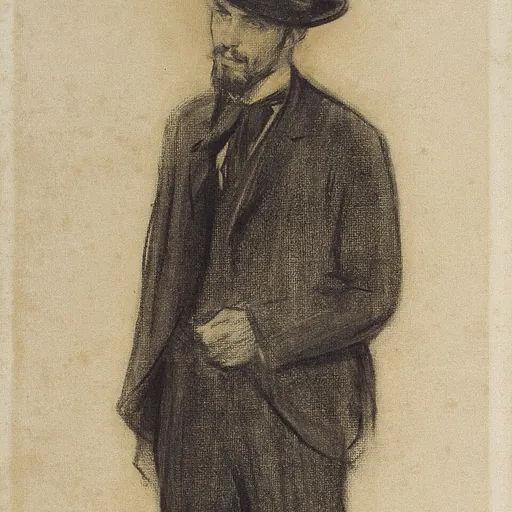
About Joaquín Torres-García
Lived 1874 – 1949 (aged 75). Joaquín Torres-García was an Uruguayan and Spanish professor, painter, sculptor, writer, illustrator and art theorist.
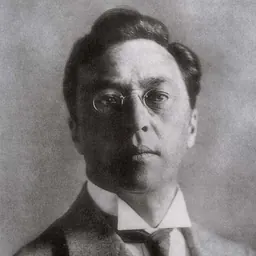
Joaquín Torres-García (28 July 18748 August 1949), was a Spanish Uruguayan painter, theorist, teacher and author, who spent most of his adult life in Spain. Later, traveled and lived in the United States, Italy, France, and Uruguay. One of the most influential artists of the 20th century, he is known for founding influential schools and groups, including the Escola de Decoració (School of Decoration) in Barcelona; Cercle et Carré (Circle and Square) in Paris—the first European abstract-art group, which brought together artists such as Piet Mondrian and Wassily Kandinsky; the Grupo de Arte Constructivo (Constructive Art Group) in Madrid; and the Taller Torres-García (Torres-García's Workshop) in Montevideo.
In his paintings Torres-García developed a pictorial language, that was a synthesis between representation and abstraction. His pictograms, figures reduced to signs that function like a written language, were embedded within a geometric composition. His structural principles were rooted in classical traditions derived from Greek and Roman culture; he experienced in Catalonia during his youth—He first referred to it as Modern Classicism, later evolving it into what became known as Universal Constructivism. At its core was his conviction that geometry constitutes a universal visual language, shared instinctively across cultures and eras. Early life Joaquín Torres-García was born on July 28, 1874, in Montevideo, Uruguay, a bustling port city on the edge of the South American Pampas. He was the eldest child of Joaquim Torras Fradera, an immigrant from Mataró, Spain, and María García Pérez. His early years were spent in his father's general store 'Almacén de Joaquín Torres. left Joaquin Torres-Garcia c.1895'The picturesque store was situated in the old Square of the Wagons, the arrival point for raw materials destined for export to Europe. Colonial Montevideo had a thriving port, railways, and a vibrant population, dotted with countless gauchos draped in capes, whips in hand.' He attended public school only sporadically, preferring to read, draw and to work in his father's store, inspecting all the merchandise arriving from abroad. "Much of his early education in this predominantly agricultural society came from observing the world around him..."
In 1891, Torres-García's father returned with the family to Spain, where he and his siblings became Spanish citizens. Young Torres-García studied under a local painter and quickly demonstrated a talent for art. He enrolled in the School of Fine Arts (Escuela de Bellas Artes de Barcelona), the Baixas Academy (Academia Baixas), and the Saint Lluc Artists' Circle.
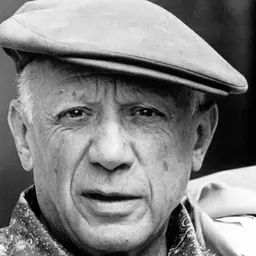
Classmates included Ricard Canals, Manolo Hugue, Joaquim Mir, Isidre Nonell, Pablo Picasso, and Julio Gonzalez.
'Torres-García and Picasso were contemporaries, both beginning their artistic journeys in modern Barcelona, whose vibrant epicenter was the café Els Quatre Gats ...'
Torres-García contributed illustrations to the leading newspapers and magazines of the time, including La Vanguardia, Iris, Barcelona Cómica, and La Saeta. His work gained recognition for its distinctive style and sharp artistic sensibility. In 1900, he faced a personal tragedy with the loss of his father.
Career Torres-García's first big break came with a solo show at Barcelona's Sala La Vanguardia in 1900. The exhibition caught plenty of attention, prompting Miguel Utrillo to write a review titled "Joaquín Torres-García, Decorator" in Pèl i Ploma. The piece included a portrait of the artist by Ramon Casas, photos of several of his works—one even landing on the cover—and marked the debut of Torres-García's first published text."Impressions." In 1903, Antoni Gaudí commissioned Torres-García to design stained-glass windows for Palma Cathedral, a project that ran from 1902 to 1905. Torres worked with Ivo Pascual and Jaime Llongueras on stained-glass designs for the presbytery. He created the lateral windows and the small rose window in the apse, interpreting Marian symbols such as the sun, moon, star, well, garden, tower, and temple, themes he would revisit throughout his life.
Through these commissions, Torres-García quickly became Barcelona's leading artist of his generation. His stained glass, murals, and decorative creations brought vibrant life to churches, public spaces, and private homes. Critics praised him, institutions sought him out, and patrons followed. By the end of the decade, he was the foremost artistic figure in Barcelona, shaping both its public image and its modern artistic language through his paintings, articles, and teaching.
In 1907, Torres-García began teaching in the experimental school Colegio Mont d'Or, founded by the progressive educator Joan Palau Vera. Breaking away from academic routines, the school ditched copying from casts, prints, and books, opting instead for drawing based on direct observation of real life, using everyday objects like leaves, fruit, fish, flowers, and animals. This method became the foundation of the visual language that would later define his Universal Constructivism, first developed as a pedagogical practice.
Torres-García married Manolita Piña i Rubíes in 1909. She was the daughter of the merchant Jaume Piña i Segura, born in Palma (1830–1902), and Mercè de Rubies de Balaguer. The couple had four children who were also notable artists, two girls named Olimpia Torres and Ifigenia and two boys named Augusto Torres and .
1910
Shortly after the wedding Torres-García and Manolita journeyed to Brussels where he was commissioned to paint murals for a pavilion at the Brussels International World Fair. Five months later they spent an extended period in Paris, where he explored museums and galleries, visited friends and studios. Around this time, his work started to show elements of cubism, reflecting the ideas outlined in "Du Cubisme," published in 1912.
In 1911, Torres-García displayed the painting 'Philosophy X Musa' at the sixth International Exhibition of Art in Barcelona, subsequently donating it to the Institut d'Estudis Catalans. Since its debut, this work has been consistently recognized by historians as a foundational piece of noucentisme. Torres-García created a second version of this painting, which is now housed in the collection of the Reina Sofia Museum in Madrid.
In 1912, two exhibitions were held at the Galeries Dalmau: Torres-García (works from his Noucentista period) and Pablo Picasso, with drawings from his Blue Period (February - March 1912).
Torres-García published his first book, Notes sobre Art (Notes on Art), in May 1913. In the introduction, he wrote: "These short essays may be of interest also because they are closely related to, something that is alive, sprung from our tradition, in thought and in reality, to form the true Renaissance of Catalonia" ("Aquestes curtes notes poden tenir interès, demes, per anar estretament lligades, com quelcom de viu, a tot o que arrencant de la nostra tradició, en el pensament i en la realitat, tendeix a formar el ver Renaixement e Catalunya").
Torres-García founded the Escuela de Decoración (School of Decoration/Decorative Arts) in Sarrià. "Prat de la Riba (president of the Council) had then his newly formulated conception of Catalan nationalism, and sees in the Mediterranean tradition proposed a positive content for the national profile, rich in spiritual substance."
Prat de la Riba commissioned Joaquín Torres-García to paint frescoes for the atrium of the Municipal Palace of Barcelona, the fifteenth-century Gothic seat of the Catalan government. Over the following five years, Torres-García completed four monumental frescoes and studies for two additional compositions. The murals became emblematic of Catalan Noucentisme. He worked on the first mural for 13 days, beginning on 28 July 1912, and it was unveiled on 13 September of that year.
The four completed frescoes are entitled La Catalunya Eterna (Catalunya Eternal), L'Etat d'Or (The Golden Age), Les Muses (The Muses) and Lo temporal no es mes que simbol (The Temporal is Nothing But a Symbol). The murals were hidden from 1926 to 1966.
"In the fourth mural... Torres-Garcia represented a gigantic Pan-God with a quote from Goethe's 'Faust' at his feet: 'The temporal is only a symbol'. 'That is the key to all the poetics of Torres-García, the will to surrender to the ephemeral in order to reach eternity,' explained Llorens. For Torres-García, classicism was the door of a better future, not a brake for modernity." Torres-García used iconostatic composition for pagan subjects adapted to modern themes, demonstrating that classicism is not unique to the Greeks. What interested him was the rhythmic structure underlying the image, an idea he later described in El Descubrimiento de sí mismo and Evolucionista (both published in 1917). The same structural principles would later reappear in his Constructivist works.
He designed and decorated his home in Tarrasa ("Mon Repos") with frescoes, and invited friends and pupils to a housewarming party.
In 1918, "Torres-García can be seen exploring the grid structure," on the one hand as an inherent characteristic of a modern city and on the other as a form to explore the symbolic potential of everyday motifs. He also explored the potential for language within images, as in the 1916–17 drawing "Descubrimiento de si mismo (Discovery of Oneself)."
He presented an exhibition at Galeries Dalmau of "Joguines d'Art (Artistic Toys)": "The toys teach children which are the correct colors, the correct forms. Each toy is a form, a color that mixes with other shapes and colors and finally becomes a whole: a dog, a car, a city. The toys guide future generations to acquire a natural eye."
1920 Torres-García visited Paris for a second time with thirty-two crates of paintings, his intention was to travel to United States. In Paris he met with Picasso, who advised him to remain in Paris: "Do not to go to America, because it will be like leaping into a void".
In comparing their work, they discovered that his style shifted from classicism to Cubism, while Picasso's took the opposite path. Torres-García traveled to New York. "He determined to take the pulse of the greatest and most modern of cities, New York." He drew all, cityscapes, featuring bridges, boats, cars, and people. He also wrote the manuscript *New York*, which he completed in Paris in 1926. He met everyone, visited speakeasies, published articles, and even painted theater scenery.
He lived in Manhattan: first on 49th Street, then on 14th Street and finally on West 29th Street. He painted a series of portraits, including one of Joseph Stella. Alongside partners like Gertrude Vanderbilt Whitney and others, he revised a version of his Artistic Toys he had originally created in Barcelona through a company called Alladin Toys.
He exhibited at the Whitney Studio gallery and the Society of Independent Artists with Stuart Davis and Stanisław Szukalski in 1922, describing his work as "expressionistic and geometric at the same time, and very dynamic".
In 1922, Torres-García returned to Italy, settling just outside Florence and moving the toy production there due to the lower costs.
During this time, he was hit with bad news: his mother passed away, and Spain banned the Catalan language, including all of his writings.
He settled in Villefranche-sur-Mer in 1925 and had another solo exhibition at Galeries Dalmau in Barcelona.
Torres-García returned to Paris for the third time in 1926, and was a key animator of the interwar abstract movement over the next six years.
"However, by returning to the Classicism of his early work he made it clear that this was not an artistic language he had sought to vanquish through abstraction".
He had a solo exhibition at the Galerie Zak in December 1928 and was part of a group exhibition at the Galerie des Editions Bonaparte with John Graham, Kakabadze, Tutundjian, and Vantongerloo in August 1929. Torres-García then had another solo exhibition at the Galerie Carmine.
As a correspondent for the Catalan literary magazine Mirador, he wrote a series of articles on painters, including an interview with Georges Braque.
1930 Joaquín Torres-García, "Constructive" Oil on canvas, 65 x 54 cm. Collection Patricia Phelps de Cisneros. For Torres-García, Constructivism was no different from Neoplasticism—just another label. What truly mattered was crafting a new image and a new visual language within a traditional composition, where he skillfully balanced representation and abstraction using signs.
He had two solo exhibitions in 1931 at the Galerie Jeanne Bucher and the Galerie Percier, and a group show in October of that year at the Galerie Georges Petit with Giacometti, Ozenfant, Max Ernst, Joan Miro, and Salvador Dalí.
The following year, Torres-García presented a solo exhibition of paintings and sculptures at the Galerie Pierre. "The friendship between van Doesburg and Torres-Garcia will create the foundations for the three most important movements to promote abstract art: "Cercle et Carre" (1929–1930), "Art Concret" (1930); and "Abstraction-Creation"(1931–1936)."
He founded the magazine Cercle et Carre and assembled a group of 80 artists to exhibit . Many artists admired and studied his work, which was extensively exhibited in New York and Europe posthumously, such as Louise Nevelson, Adolph Gottlieb, and Barnett Newman.
Major exhibitions 12 April – 29 June 2018, The Worlds of Joaquín Torres-Garcia, Acquavella Galleries, New York. 25 October 2015 – 15 February 2016, Joaquín Torres-García: the Arcadian modern, Museum of Modern Art, New York 29 December 2013 – 2 March 2014, Art & Textiles: fabric as material and concept in modern art from Klimt to the present, Kunstmuseum Wolfsburg, Germany 22 April 2013 – 30 June 2013, From Picasso to Barceló: Spanish Sculpture of the 20th Century, National Art Museum of China 16 May – 11 September 2011, Torres-García a les seves cruïlles (Torres-García at his Crossroads), Museu Nacional d'Art de Catalunya (MNAC), Barcelona 20 February – 30 May 2010, Joaquín Torres-García: Constructing Abstraction with Wood, the San Diego Museum of Art 27 March 2009, Trazos de Nueva York, Museo Torres-Garcia, Montevideo December 2008 – April 2009, Torres García a Vieira da Silva, 1929–1949, IVAM, Valencia, Museu Colecção Berardo, Portugal 8 October 2005 – 15 February 2006, Le feu sous les cendres : de Picasso à Basquiat, Fondation Dina Vierny-Musée Maillol, Paris 7 October 2005 – 19 February 2006, Obras maestras del siglo XX en las colecciones del IVAM, Valencia 25 November 2003 – 11 April 2004, Torres-Garcia, Museu Picasso, Barcelona 2003, Jean-Michel Basquiat-Gaston Chaissac-Jean Dubuffet-Joaquin Torres-Garcia, Jan Krugier Gallery, New York September 2002, From Puvis De Chavannes to Matisse and Picasso : Toward Modern Art, Palazzo Grassi, Venice 24 May – 8 September 2002, Joaquin Torres-Garcia : un monde construit : Musée d'art moderne et contemporain, Strasbourg 31 May – 23 August 1992 Joaquin Torres-Garcia en Theo van Doesburg, The Stedelijk Museum, Amsterdam
Selected writings Augusta et Augusta, Barcelona, Universitat Catalana, 1904 Dibujo educativo en el colegio Mont D'Or, Barcelona, 1907 Notes sobre Art, Barcelona, 1913 Diàlegs, 1914 Descubrimiento de sí mismo, 1914 Consells als artistes, Barcelona, Un enemic del poble, 1917 Em digué tot aixó, Barcelona, La Revista, 1917 D'altra orbita, Barcelona, Un enemic del poble, 1917 Devem Caminar, Barcelona, Un enemic del poble, 1917 Art-Evolució, Barcelona, Un enemic del poble, 1917 El Públic i les noves tendéncies d'art, Barcelona, Velli nou, 1918 Plasticisme, Barcelona, Un Enemic del poble, 1918 Natura i Art, Barcelona, Un Enemic del poble, 1918 L'Art en relació al home etern i l'home que passa, Sitges, Imprenta El eco de Sitges. 1919 La Regeneració de si mateix, Barcelona, Salvat Papasseit Editor, 1919 Poemes en ondes hertzianes, 1919 (illustrator) Foi, París, 1930 Ce que je sais, et ce que je fais par moi-même, Losones, Suiza, 1930 Pére soleil, París, Fundación Torres García, 1931 Raison et nature, Ediciones Imán, París, 1932 Estructura, Montevideo, 1935 De la tradición andina: Arte precolombino, Montevideo, Círculo y cuadrado, 1936 Manifiesto 2: Constructivo 100 %, Montevideo, Asociación de Arte Constructivo, 1938 La tradición del hombre abstracto (Doctrina constructivista). Montevideo, 1938 Historia de mi vida. Montevideo, 1939 Metafísica de la prehistoria indoamericana, Montevideo, Asociación de Arte Constructivo, 1939 Manifiesto 3, Montevideo, Asociación de Arte Constructivo, 1940 La ciudad sin nombre. Montevideo, Uruguay, Asociación de Arte Constructivo, 1942 Universalismo Constructivo, Montevideo, 1944 Con respecto a una futura creación literaria y dos poemas, Divertimento 1 y Divertimento 11, Montevideo, Revista Arturo, 1944 La decoración mural del pabellón Martirené de la colonia Saint Bois. Montevideo, Gráficas Sur, 1944 En defensa de las expressiones modernas del arte, Montevideo, 1944 Nueva escuela de arte de Uruguay. Montevideo, Asociación de Arte Constructivo, 1946 La regla abstracta. Montevideo, Asociación de Arte Constructivo, 1946 Mística de la pintura, Montevideo, 1947 Lo aparente y lo concreto en el arte, Montevideo, 1948 La recuperación del objeto, Montevideo, 1948
Don’t just read it —
keep it.
Full-length biographies made to live with: read them, listen on the way to work, watch them tonight.
- E-book
- Audio
- Video
Instant download · yours to keep · every purchase keeps this site free
Important facts
People in Joaquín Torres-García's life
Named in this biography and alive at the same time



Related people
Same field, nearest in time

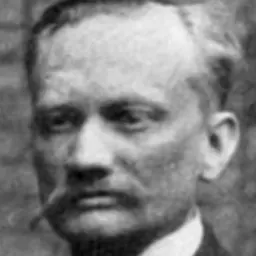
Contemporaries
People whose lives overlapped Joaquín Torres-García's
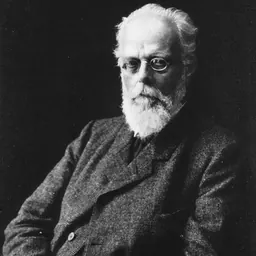

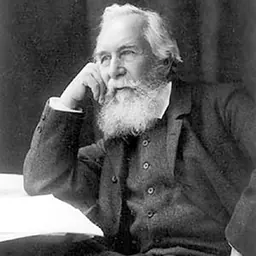
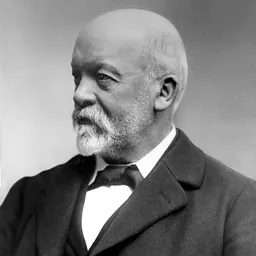

Frequently asked questions
Who was Joaquín Torres-García?
Spanish Uruguayan painter, sculptor, writer and theorist of modern art (1874-1949)
When was Joaquín Torres-García born?
Joaquín Torres-García was born on 28 July 1874 in Montevideo.
When did Joaquín Torres-García die?
Joaquín Torres-García died on 8 August 1949 in Montevideo.
What was Joaquín Torres-García's occupation?
Joaquín Torres-García was a professor, painter, sculptor, writer, illustrator and art theorist.
What nationality was Joaquín Torres-García?
Joaquín Torres-García was Uruguayan and Spanish.
Sources & further reading
· Wikipedia: Joaquín Torres-García
· DBpedia: Joaquín Torres-García
Cite this page
APA: Biography.guide. (2026). Joaquín Torres-García. https://biography.guide/joaquin-torres-garcia/
MLA: "Joaquín Torres-García." Biography.guide, https://biography.guide/joaquin-torres-garcia/.
Chicago: "Joaquín Torres-García." Biography.guide. https://biography.guide/joaquin-torres-garcia/.
Data last updated: 2026-09-23 · Spot an error? Report a correction.
Portrait: Wikimedia Commons · author & licence
Page generated 2026-09-27 05:05 UTC