
About Joaquín Ibarra y Marín
Lived 1725 – 1785 (aged 60). Joaquín Ibarra y Marín was a Spanish typographer, editor, printer and book printer.
Joaquín Ibarra y Marín, also known as Joaquín Ibarra, (Zaragoza, July 20, 1725 - Madrid, November 13, 1785) was a Spanish printer who was known for several important technical developments in the fields of the press, books, and typography. Some of his most important works are Conhuración de Catilina y la guerra de Yugurta, printed in 1772, and an edition of Don Quijote de la Mancha, as well as Real Academia Española, done in 1780.
Ibarra was influenced by .
Early life and career Ibarra studied at Cervera, in the province of Lleida, as an apprentice to his brother Manuel, who was serving as first officer of Printing Pontifical and Royal University. He also studied academics, learning Latin and classical culture bases. As teacher, he moved to Madrid in 1754, setting up a print shop with 16 presses. Working alongside the best painters and engravers of his time, Ibarra was a well recognized printer. Ibarra was an innovator. The ink he used had exceptional quality and brilliance, based on a secret formula he invented.
Ibarra implemented several innovations in printing and the process of composition. He experimented with the satin of the paper to remove marks from the printing plate; established a standardized format for developing measures of graphic types, based on the surface of a capital, similar in principle to the rules to be developed by Fournier independently; and typographical conventions such as using V to represent U or using the same block for the long S and F.
One of his disciples, the later head of the Company of Printers and Booksellers in the United States, Jose Siguenza, systematically collected observations as a collection and published them in 1811 with the title Mechanism of the Printing Art.
Between 1754 and 1836, Ibarra continued to run his workshop, producing some 2,500 editions. Notable are the aforementioned de Cervantes and Sallust, the latter being printed as an edition of 120 copies Other significant issues included the Spanish Paleography (1758), Plant History (1762), Breviarium regulam Gothicum Beatissimi Secundum Isidori (1775), the second edition of the Tour of Spain by Antonio Ponz, the General History of Spain by John Mariana (1780), and the Bibliotheca Hispana Vetus et Nova (1783 - 1788), in four volumes.
He collaborated with the publisher Antonio Sancha before it established its own printing press, printing among other works the first volumes of the Spanish Parnassus.
Contributions Ibarra made many contributions to the art of printing, including conducting experiments with paper. He began to experiment with paper in an effort to reduce plate mark impressions. Ibarra also developed a standardized measure for the production of type and created a formula for ink. These contributions are seen in most of his best-known works.
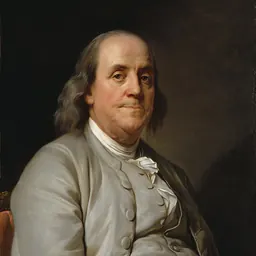
Considered one of Spain's finest printers, Joaquin Ibarra was printer to the Court of Spain. The Spanish version of Sallust is widely considered to be one of the finest books ever produced and was greatly admired by Benjamin Franklin.
Type Ibarra did not design, engrave, or cast types, contrary to what is often assumed. The error is probably based on the documents in his edition of Don Quixote of the Royal Academy, for which they made a new cast (but not a new design).
Ibarra's printing used various foundries of his time, especially games Gerónimo Gil, the Smelter Rangel (used by the Gazette, and really a game of Garamond), types of Lleida Eudald Pradell with casting Madrid, a game of Garamond, and the celebrated and reviled italic cast which composed the Sallust, abierta created by the academic and writer Murcia Espinosa de los Monteros, who owned a foundry in Madrid.
In the early twentieth century, Madrid smelter Gans held a revival called Ibarra from several of these castings, which was the starting point for other recent redesigns.
According to expert Mariano Villegas Garcia, there were many outstanding typographers and printers during the Golden Age of Spain. One exceptionally recognized among them was Don Juaquin Ibbara Marin, followed by Don Antonio Sancha, who was also a bookbinder.
Ibarra was also known for creating his own paper. Creating different mottled paper grades depends on the way in which colors are deposited and manipulated. His technique consisted of preparing paper in a rubber bath which served as background.
It was necessary to prepare this in one or two liters of cold water with about 50 grams of “Alquitira” rubber (Tragacanto),
La conjuración de Catilina y La guerra de Iugurta was considered a masterpiece because of several pages filled with illustrations by Mariano Maella. It was customary for Ibarra projects to contain a perfect flow of harmonious type, inks, illustration, margins, and textures. Only 120 volumes were printed and were distributed to the royal family, institutions, and major personalities in Spain.
El ingenioso hidalgo don Quixote de La Mancha was a deluxe edition of Don Quixote, in four volumes, made on paper called "ex profeso" with melted types of "ex novo" on the pages. The text in this edition was a rendition of the second edition of 1605 Cuesta. This contemporary piece, which was known as an artistic piece, was entrusted to the Academy of San Fernando.
There are about 2,500 works that are recognized to have come out of Ibarra's workshop QUEVEDO, Francisco de, Politica de Dios y gobierno de Christo : sacada de la Sagrada Escritura para acierto de rey, y reyno en sus acciones. Madrid: por D. Joachin Ibarra, 1772, PONZ, Antonio, Viage de España o Cartas en que se da noticia de las cosas mas apreciables y dignas de saberse que hay en ella. Madrid: por D. Joachin Ibarra, 1772, BECCARIA, Cesare Bonesana, Marchese di, Tratado de los delitos y de las penas. Traducido del italiano por D. Juan Antonio de las Casas. Madrid: por D. Joachin Ibarra, 1774
When Ibarra died in 1785, his wife and children ran the workshop until 1836.
Year Number of Books 1768 28 1769 18 1770 18 1771 26 1772 17 1773 18 1774 15 1775 42 1776 32 1777 40 1778 36 1779 34 1780 38 1781 33 1782 48
Don’t just read it —
keep it.
Full-length biographies made to live with: read them, listen on the way to work, watch them tonight.
- E-book
- Audio
- Video
Instant download · yours to keep · every purchase keeps this site free
Important facts
People in Joaquín Ibarra y Marín's life
Named in this biography and alive at the same time


Related people
Same field, nearest in time


Contemporaries
People whose lives overlapped Joaquín Ibarra y Marín's





Frequently asked questions
Who was Joaquín Ibarra y Marín?
Spanish printer (1725-1785)
When was Joaquín Ibarra y Marín born?
Joaquín Ibarra y Marín was born on 20 July 1725 in Zaragoza.
When did Joaquín Ibarra y Marín die?
Joaquín Ibarra y Marín died on 13 September 1785 in Madrid.
What was Joaquín Ibarra y Marín's occupation?
Joaquín Ibarra y Marín was a typographer, editor, printer and book printer.
What nationality was Joaquín Ibarra y Marín?
Joaquín Ibarra y Marín was Spanish.
Sources & further reading
· Wikipedia: Joaquín Ibarra y Marín
Cite this page
APA: Biography.guide. (2026). Joaquín Ibarra y Marín. https://biography.guide/joaquin-ibarra-y-marin/
MLA: "Joaquín Ibarra y Marín." Biography.guide, https://biography.guide/joaquin-ibarra-y-marin/.
Chicago: "Joaquín Ibarra y Marín." Biography.guide. https://biography.guide/joaquin-ibarra-y-marin/.
Data last updated: 2026-09-20 · Spot an error? Report a correction.
Page generated 2026-09-27 05:12 UTC