
About Joaquín de San Martín y Ulloa
Lived 1770 – 1854 (aged 83–84). Joaquín de San Martín y Ulloa was a Salvadoran politician.
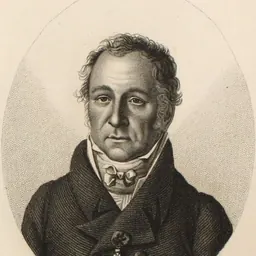
Joaquín de San Martín y Ulloa (1770 – 29 November 1854) was a Salvadoran military officer and politician who served as the 5th and 7th Head of State of El Salvador between 1832 and 1834. His leadership was defined by the suppression of the Nonualco indigenous uprising and a complex political relationship with federal General Francisco Morazán.
Early life San Martín was born in Comayagua, Honduras, in 1770. He began his career as a lieutenant of dragoons in Yoro and served in administrative posts in Tegucigalpa and Nacaome. In 1819, he moved permanently to El Salvador with his wife, Joaquina Fugón. By 1824, he was established as a prominent landowner in the Chalatenango region and was elected as a deputy for Tejutla and Chalatenango.
First Term as Head of State (1832) In 1832, San Martín was elected vice-chief of state under Mariano Prado. However, due to political upheavals involving federal intervention, he exercised the functions of the 5th Head of State from 13 May 1832 until 25 July 1832, at which point Prado returned to power.
Second Term and the Nonualco Revolt (1833–1834) San Martín assumed office as the 7th Head of State on 1 July 1833. His most significant domestic challenge was the massive Nonualco indigenous revolt led by Anastasio Aquino. San Martín took decisive military action to suppress the uprising, eventually capturing and executing Aquino. On 13 February 1833, he decreed a general amnesty for the rebel Indians to stabilize the region.
His second term was also marked by friction with General Francisco Morazán. Although the two signed a reconciliation agreement in April 1833, the federal Congress eventually annulled San Martín's election. On 23 June 1834, he was forced from office by General Carlos Salazar Castro, who was imposed by Morazán.
Exile and Later Years Following his ousting, San Martín was sentenced to two years of exile and his property was confiscated. Upon his return, he served in the constituent congress of 1840–1841. He was elected Vice President of El Salvador in 1840 under President Antonio José Cañas. In September 1841, he distinguished himself as a defender of constitutional law when he opposed the coup d'état staged by General Francisco Malespín.
Personal life and Death San Martín died on 29 November 1854 at his hacienda, Amayo, at the age of 84. He was the father of José María San Martín, who would later serve as the President of independent El Salvador in the 1850s.
Don’t just read it —
keep it.
Full-length biographies made to live with: read them, listen on the way to work, watch them tonight.
- E-book
- Audio
- Video
Instant download · yours to keep · every purchase keeps this site free
Important facts
People in Joaquín de San Martín y Ulloa's life
Named in this biography and alive at the same time



Related people
Same field, nearest in time



Contemporaries
People whose lives overlapped Joaquín de San Martín y Ulloa's





Frequently asked questions
Who was Joaquín de San Martín y Ulloa?
President of El Salvador (1770-1854)
When was Joaquín de San Martín y Ulloa born?
Joaquín de San Martín y Ulloa was born in 1770 in Comayagua Department.
When did Joaquín de San Martín y Ulloa die?
Joaquín de San Martín y Ulloa died on 29 November 1854.
What was Joaquín de San Martín y Ulloa's occupation?
Joaquín de San Martín y Ulloa was a politician.
What nationality was Joaquín de San Martín y Ulloa?
Joaquín de San Martín y Ulloa was Salvadoran.
Sources & further reading
· Wikipedia: Joaquín de San Martín y Ulloa
· DBpedia: Joaquín de San Martín
Cite this page
APA: Biography.guide. (2026). Joaquín de San Martín y Ulloa. https://biography.guide/joaquin-de-san-martin-y-ulloa/
MLA: "Joaquín de San Martín y Ulloa." Biography.guide, https://biography.guide/joaquin-de-san-martin-y-ulloa/.
Chicago: "Joaquín de San Martín y Ulloa." Biography.guide. https://biography.guide/joaquin-de-san-martin-y-ulloa/.
Data last updated: 2026-09-20 · Spot an error? Report a correction.
Page generated 2026-09-27 05:22 UTC