
About Joan Court
Lived 1919 – 2016 (aged 97). Joan Court was a British midwife and social worker.
Joan Court (13 April 1919 – 1 December 2016) was a British midwife and social worker who set up the Battered Child Research Department at the NSPCC. She was also a prominent figure in the animal rights movement.
Early life 1919–1934
The second of two children, Joan Court was born on 13 April 1919 in Knightsbridge Square, London, England, where her father Cecil was a solicitor with the family firm. Joan's mother Muriel was the daughter of the mayor of St Albans, Henry Gibson. Joan's parents separated in 1922 when she was three years old, Muriel taking the two children to live at Parsonage Farm, Rickmansworth, where her parents lived. After a year at Parsonage Farm, Muriel moved to Baker Street, London and Peter was sent to boarding school. Muriel succumbed to alcoholism and Joan retreated from her mother's rages and found solace in her pet cats.
In 1926 the family moved to 7 Stanley Villas in Marsh Lane, Pinner, not far from the railway station. In 1930 Cecil Court intervened and took Joan to a convent in Torquay. In the holidays Joan would return to Pinner. In the hot summer of 1932 Cecil Court committed suicide. Joan and her mother then entered domestic service in Cornwall to make ends meet, while Peter left for India to work for the Ceylon Tea Company.
McKenna was a lifelong vegetarian. Joan's work in the department became renowned and she had many visitors nationally and internationally, as well as a great demand for public talks and media interviews. Her favourite visitor was Dame Eileen Younghusband, a famous international pioneer of social work, who became a mentor to Joan over the next twenty years until her death in 1981. Joan was highly influential in promoting child abuse as a social problem category and wrote prolifically on the subject in various welfare journals.
In 1970 Joan travelled overland to the Middle East and India. On the way she stayed in Kabul, from where she visited the Buddha statues at Bamiyan.
Following a disagreement over the prosecution of a single mother, and a direct challenge to the director of the NSPCC, Joan found herself summarily dismissed in 1972, which in turn brought letters of protest in the Times and many petitions but she was not reinstated.
Civil Service 1972–1977
Joan's next position was in the Social Services Inspectorate of the Department of Health and Social Services. Over the next five years she advised ministers including Sir Keith Joseph on legislation in connection with abused children, and made appearances as an expert witness in court.
Cambridge, UK, 1977
At age 57 Joan was approaching compulsory retirement at 60. Fortunately at this time she met an old friend from the convent in Torquay, Professor Mary Douglas, who was now a distinguished anthropologist. Taking some of Mary's books to St Lucia on holiday, Joan realised that she wanted a change of career, to social anthropology. Despite already having an MA in social work, she was accepted onto the undergraduate degree course in social anthropology at Cambridge University, studying at New Hall. She moved to Cambridge in 1977 and made a lifelong friend, Nicola Carmichael, while studying there.
When she graduated in 1979 Joan went off to Bengal where she met her friend Bela whom she knew from the Calcutta riots in 1946. After a brief attempt at anthropological study in Orissa Joan decided this was not for her and returned to Cambridge, becoming a child protection officer representing children as a Guardian Ad Litem.
Animal Aid Cambridge
In 1978 Joan went to protest in Trafalgar Square against the Canadian seal massacre. There she met Jean Pink, founder of Animal Aid, who told her about an anti-vivisection march in Cambridge. Joan attended the march, which was followed by a lecture by Hans Ruesch, and then a few days later Joan and a few others set up Animal Aid Cambridge. The new group quickly organised a small all-night vigil outside the Downing Site in Cambridge, where many animal experiments are carried out.
The new group met at the Friends' Meeting House, run by Quakers, but were eventually evicted because protests at Huntingdon Research Centre (as Huntingdon Life Sciences was formerly called) were a concern to the Quakers.
Joan made another lifelong friend, Hilda Ruse, at Animal Aid meetings from about 1979.
Animal Rights Cambridge, 1982 Following disagreements, Joan split from Animal Aid Cambridge around 1982 and formed a new group, Animal Rights Cambridge, which still meets today.
A prominent campaign of this era was the protest against Club Row in London, where puppies and kittens were sold in the market with no regard for their welfare. Joan and Hilda went to this protest in 1983 - eventually the sale of pets was stopped. Hilda also took part in Animal Liberation Front raids and some of Joan's rabbits came from such raids.
Campaigns and protests With Animal Rights Cambridge Joan organised many campaigns against animal abuse. In the mid 1990s, as well as attending protests in Dover and Brightlingsea against the live export of animals to Europe, she staged a hunger strike outside the Ministry for Agriculture, Food and Fisheries against the trade.
Campaigning moved to anti-vivisection after this, with ARC joining the campaign to close down Hillgrove Farm, which bred cats for animal research. Hillgrove eventually went out of business and campaigners stepped up efforts against Huntingdon Life Sciences, forming Stop Huntingdon Animal Cruelty and setting up a protest camp. When Hilda died in 1997, some of her ashes were scattered at HLS.
In July 2004 Joan, aged 85, sailed with Sea Shepherd on the Farley Mowat ship to protest against whaling. She travelled with companion Darren Collis, joining the expedition from Brazil.
By 2004 Oxford University was coming under attack for its plans to set up a new animal laboratory. Joan protested outside the proposed site of the laboratory, undertaking a fast for 72 hours. In 2004 she had become a Buddhist with the Amida Trust and brought a spiritual dimension to protest.
In 2007 Cambridge University also planned to set up a new primate laboratory on the edge of the city. Six national animal rights organisations joined to oppose this plan, with high-profile marches in Cambridge. Animal Rights Cambridge worked with a new organisation, Stop Primate Experiments At Cambridge (SPEAC); actions included a protest at the degree ceremony and a sit down protest in the major road that passed the proposed site. Joan was arrested for initiating this but the authorities were reluctant to prosecute an 88 year old. Joan also conducted another fast in protest.
Even aged 91 Joan was still protesting against vivisection at Cambridge University, during the national University Vivisection Week of Action in 2010.
Author
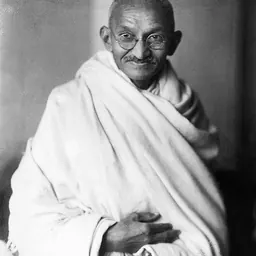
In 2002, Joan published In the Shadow of Mahatma Gandhi, her account of her life up to the point she moved to Cambridge. Her story of her many adventures was well received and encouraged her to write a sequel in 2009, The Bunny Hugging Terrorist, which covered the rest of her life in Cambridge and her animal rights activism. This led to a feature-length interview with her in the Cambridge Evening News. Continuing the theme of explaining animal activism, she published in 2012 her third book, Animals Betrayed, Interviews with Animal Rights Activists. BBC Radio Cambridgeshire interviewed her about her last book in April 2013.
Awards
Joan received the Mahaveer Award for showing exceptional compassion to animals in 1999 and one of the RSPCA's highest awards, the Lord Erskine Award, in October 2008 for contributions to animal welfare.
Death
Joan died in her sleep on 1 December 2016 with her favourite cat Benji sleeping on her. She was 97. Her funeral service on 14 December was attended by many animal rights activists from all over the country. Obituaries appeared in the Guardian, the Cambridge News as well as the website for Quaker Concern for Animals.
Don’t just read it —
keep it.
Full-length biographies made to live with: read them, listen on the way to work, watch them tonight.
- E-book
- Audio
- Video
Instant download · yours to keep · every purchase keeps this site free
Important facts
People in Joan Court's life
Named in this biography and alive at the same time






Related people
Same field, nearest in time


Contemporaries
People whose lives overlapped Joan Court's




Frequently asked questions
Who was Joan Court?
English health worker and activist
When was Joan Court born?
Joan Court was born on 13 April 1919 in London.
When did Joan Court die?
Joan Court died on 1 December 2016 in Cambridge.
What was Joan Court's occupation?
Joan Court was a midwife and social worker.
What nationality was Joan Court?
Joan Court was British.
Sources & further reading
Cite this page
APA: Biography.guide. (2026). Joan Court. https://biography.guide/joan-court/
MLA: "Joan Court." Biography.guide, https://biography.guide/joan-court/.
Chicago: "Joan Court." Biography.guide. https://biography.guide/joan-court/.
Data last updated: 2026-09-20 · Spot an error? Report a correction.
Page generated 2026-09-27 05:27 UTC