
About Joan Clarke
Lived 1917 – 1996 (aged 79). Joan Clarke was a British cryptanalyst, mathematician, computer scientist and numismatist.
Joan Elisabeth Lowther Murray (; 24 June 1917 – 4 September 1996) was an English cryptanalyst and numismatist who worked as a code-breaker at Bletchley Park during the Second World War. Although she did not personally seek the spotlight, her role in the Enigma project that decrypted the German secret communications earned her awards and citations, such as appointment as a Member of the Order of the British Empire (MBE), in 1946.
Early life and education Joan Elisabeth Lowther Clarke was born on 24 June 1917 in West Norwood, London, England. She was the youngest child of Dorothy Elisabeth Clarke (née Fulford) and the London clergyman Revd. William Kemp Lowther Clarke. She had three brothers and one sister. She won the Philippa Fawcett prize and was awarded the Helen Gladstone scholarship for a further year of study. She arrived at Bletchley Park on 17 June 1940 and was initially placed in an all-women group, referred to as "The Girls", who mainly did routine clerical work. Clarke said she knew of only one other female cryptologist working at Bletchley Park. She quickly became the only female practitioner of Banburismus, a cryptanalytic process developed by Alan Turing which reduced the need for bombes: electromechanical devices as used by British cryptologists Welchman and Turing to decipher German encrypted messages during World War II.
In 1941, trawlers were captured as well as their cipher equipment and codes. Before this information was obtained, wolf packs had sunk 282,000 tons of shipping a month from March to June 1941. By November, Clarke and her team were able to reduce this number to 62,000 tons. Hugh Alexander, head of Hut 8 from 1943 to 1944, described her as "one of the best Banburists in the section". Alexander himself was regarded as the best of the Banburists. He and I. J. Good considered the process more an intellectual game than a job. It was "not easy enough to be trivial, but not difficult enough to cause a nervous breakdown".
An Enigma machine of four rotors was introduced in 1942 which stymied Hut 8's decryption efforts and led to German U-boats successfully attacking Allied shipping convoys again. Clarke had access to intercepted code papers and worked out that that same cipher was used on the fourth rotor as the three-rotor system, which enabled Shaun Wylie to break the code. Over a million German naval messages were decrypted from the Enigma machines by Hut 8.
In the period before D-Day, Hut 8's work increased, as the team worked in conjunction with Hut 10. Their work involved decoding German weather signals, enabling Allied bombing raids in the time prior to the Normandy Landings. Their work also supported the Special Operations Executive operations which laid groundworks for the invasion. image2 = image3 = audio1 = audio2 = audio3 = video1 =Joan (née Clarke) Murray talking about her engagement to Turing, Horizon, 1992 video2 =Meet the real Joan (née Clarke) Murray, Horizon, 1992 video3 = The Strange Life and Death of Dr Turing, Horizon, 1992
Clarke became deputy head of Hut 8 in 1944,
In order to be paid for her promotion, Clarke needed to be classed as a linguist, as Civil Service bureaucracy had no protocols in place for a senior female cryptanalyst. She would later take great pleasure in filling in forms with the line: "grade: linguist, languages: none". and subsequently introduced her to his family. When he privately admitted his homosexuality to her, she was reportedly unfazed by the revelation. After a holiday in Wales, Turing decided that he could not go through with the marriage, and broke up with Clarke in mid-1941. Clarke later admitted that she suspected Turing's homosexuality for some time, and it was not much of a surprise when he made the admission to her. Shortly after their marriage, John Murray retired from GCHQ due to ill health and the couple moved to Crail in Fife In 1962, they returned to work at GCHQ, where Clarke would work until retiring in 1977 at the age of 60.
After her husband's death in 1986, Clarke moved to Headington, Oxfordshire, where she continued her research into coinage. During the 1980s, she helped Sir Harry Hinsley with the appendix to Volume 3, Part 2 of British Intelligence in the Second World War. She also helped historians studying war-time codebreaking at Bletchley Park. Due to continuing secrecy among cryptanalysts, the full extent of her accomplishments remains unknown.
Numismatic interest After meeting her husband, who had published work on the Scottish coinage of the 16th and 17th centuries, Clarke developed an interest in numismatics history.
Death Clarke died at her home at 7 Larkfields, Headington Quarry, Oxford, England on 4 September 1996 at age 79.
In May 2024 a blue plaque in Joan Clarke's memory was unveiled by English Heritage at 193 Rosendale Road, West Dulwich, London, SE21 8LW, her home as a child.
Portrayal in adaptation Clarke was portrayed by Keira Knightley in the film The Imitation Game (2014), opposite Benedict Cumberbatch as Alan Turing. Turing's surviving niece, Inagh Payne, described Clarke as "rather plain" and thought that Knightley was inappropriately cast as Clarke. Turing biographer Andrew Hodges also criticised the film, stating the script "built up the relationship with Joan much more than it actually was".
In contrast, an article by BBC journalist Joe Miller said that Clarke's "story has been immortalised". Director Morten Tyldum said the film shows how Clarke succeeded in her field despite working in a time "when intelligence wasn't really appreciated in women".
Works Murray, J. (2001). A Personal Contribution to the Bombe Story. United States Department of Defense
Don’t just read it —
keep it.
Full-length biographies made to live with: read them, listen on the way to work, watch them tonight.
- E-book
- Audio
- Video
Instant download · yours to keep · every purchase keeps this site free
Important facts
People in Joan Clarke's life
Named in this biography and alive at the same time
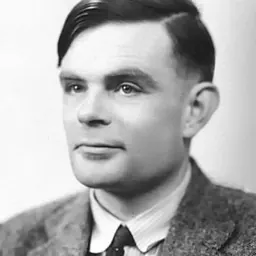
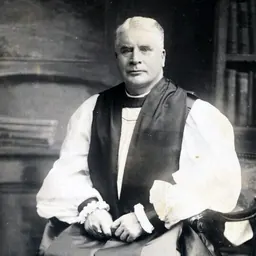






Related people
Same field, nearest in time

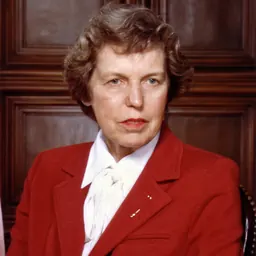

Contemporaries
People whose lives overlapped Joan Clarke's

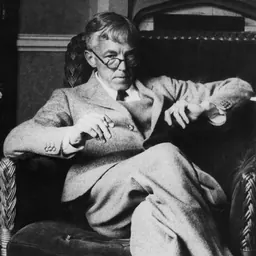
Frequently asked questions
Who was Joan Clarke?
English cryptanalyst
When was Joan Clarke born?
Joan Clarke was born on 24 June 1917 in West Norwood.
When did Joan Clarke die?
Joan Clarke died on 4 September 1996 in Headington.
What was Joan Clarke's occupation?
Joan Clarke was a cryptanalyst, mathematician, computer scientist and numismatist.
What nationality was Joan Clarke?
Joan Clarke was British.
Sources & further reading
Cite this page
APA: Biography.guide. (2026). Joan Clarke. https://biography.guide/joan-clarke/
MLA: "Joan Clarke." Biography.guide, https://biography.guide/joan-clarke/.
Chicago: "Joan Clarke." Biography.guide. https://biography.guide/joan-clarke/.
Data last updated: 2026-09-20 · Spot an error? Report a correction.
Page generated 2026-09-27 05:22 UTC