
About Joachim Helbig
Lived 1915 – 1985 (aged 70). Joachim Helbig was a German military officer.
Joachim Helbig (10 September 1915 – 5 October 1985) was a German bomber pilot during World War II. He joined the Luftwaffe in 1936, and served almost all of his career with Demonstration Wing 1 (Lehrgeschwader 1 (LG 1)). With his unit, he participated in the Invasion of Poland, the Norwegian Campaign, the Battles of the Netherlands, Belgium, France and Britain in 1939–40. For his contributions in these campaigns, Helbig received the Knight's Cross of the Iron Cross in late 1940. He was then transferred to the Mediterranean theatre where he bombed Malta, the British Mediterranean Fleet and flew in support of the Afrika Korps. Helbig received the Knight's Cross of the Iron Cross with Oak Leaves and Swords in late 1942 for the support of Field Marshal Erwin Rommel's 1942 summer offensive.
He was then banned from further combat flying and was assigned to the staff of the General of Bombers, the senior officer responsible for the Luftwaffe's bomber force. In August 1943 the ban was revoked and Helbig was appointed commander of LG 1 which was then operating against the Allied forces in Italy. In June 1944, he and LG 1 were transferred to France after Operation Overlord. In early 1945, LG 1 was transferred to the Eastern Front and Helbig was tasked to destroy the bridges over the Oder. He surrendered to the American forces at the end of the war in May. After the war, Helbig pursued a civilian career; he died in 1985.
Early life Joachim Helbig was born on 10 September 1915 in Dahlen, Saxony. He volunteered for military service on 1 April 1935 and initially served one year with an artillery regiment. In the fall of 1936, he transferred to the Luftwaffe and entered the Bomber Flying School in Lechfeld. After completing his training as an observer and aerial gunner on 20 April 1937, he was posted as an observer to the Bomber Wing (Kampfgeschwader (KG)) 152 in Schwerin.
World War II Western Europe; Battle of Britain At the beginning of World War II in September 1939, Helbig held the rank of Second Lieutenant and was serving as an observer in a He 111 reconnaissance aircraft of Demonstration Wing 1 (Lehrgeschwader 1 (II./LG 1)) in 1938. He was awarded the Iron Cross 2nd Class following the campaign. Helbig took part in the April 1940 invasion of Norway (Operation Weserübung). As part of II. Gruppe, he flew missions in support of the German ground forces, particularly in the Åndalsnes area. During one of these missions on 2 May, his unit sank the Norwegian hospital ship with heavy losses. Following their attack on Dronning Maud, the German aircraft then dropped bombs on the nearby Gratangen Municipality, destroying several houses and killing two civilians. Shortly afterwards, the unit returned to Germany. During the Battle of France later that month, Helbig served as squadron commander of the Fourth Squadron of LG 1, flying both He 111 and Junkers Ju 88 bombers, a position he held until 5 November 1941. For his actions, he was awarded the Iron Cross 1st Class. and his unit remained in France to participate in the Battle of Britain. On 15 August 1940, Helbig and his squadron, consisting of seven Ju 88s, took off with the primary target of the British airfield at Worthy Down together with other German units. The Germans were intercepted by British fighters and the mission was very costly for 4. Staffel as over half the bombers were shot down by the British or were written off after landing. Helbig was forced to jettison his bombs before reaching the target and return to base, flying on a single engine with wounded crewmen aboard. (Sources disagree about the number of aircraft flown by 4.) Staffel as well as the losses inflicted by the British during this mission. Helbig himself, in his account of the mission excerpted in Taghon, claims that the Staffel had seven bombers on the mission and that he was the sole survivor, bringing his heavily damaged aircraft home with two badly wounded crewmen. The Luftwaffe loss records, however, only record three bombers shot down and another written off after landing. And that Helbig's aircraft had only one wounded crewman aboard. Ramsey confirms three bombers crashed on British soil based on wreckage recovered. Mason and Bungay concur on the five of seven aircraft lost, but Mason does not breakdown his loss listing by Staffel or aircraft identification so it is impossible to cross-reference his list and the Luftwaffe records. De Zeng, Stankey and Creek also agree on five aircraft lost during the mission. Bergstrom says that only Helbig's aircraft returned while Schumann says that the Staffel had 32 men taken prisoner, which would mean that the entire crews of eight Ju 88s were captured. Historian Christer Bergström has suggested that this might have been Pilot Officer Richard Hardy from No. 234 Squadron RAF. As the battle continued, LG 1 mostly switched to bombing cities at night.
North African and Mediterranean campaign alt=A twin engine propeller powered aircraft in flight and viewed from the right side. The aircraft bears multiple markings including a black and white cross on its side and a swastika on the tail fin
The Gruppe flew to Sicily in mid-January 1941 and attacked targets in Malta as well as British ships in the Mediterranean. On one of these missions, they damaged the aircraft carrier on 16 January while she was docked for repairs in Grand Harbour, Malta. The unit was transferred to Bulgaria in early April in preparation for Operation Marita, the German invasions of Greece and Yugoslavia, where it participated in the bombing of Belgrade, Yugoslavia on 6 April. Shortly afterwards, it returned to Sicily and spent the rest of the campaign on anti-shipping missions near Southern Greece and Crete with occasional ground-attack missions. and unsuccessfully attacked a British convoy near Malta during Operation Tiger on 11 May.
The unit transferred to Athens on 16 May in preparation for the invasion of Crete (Operation Merkur) and continued its efforts to interdict shipping in Greek waters. II./LG 1 remained in the Mediterranean for the rest of the year, attacking targets in Palestine, Egypt and Libya, including long-range missions mining the Suez Canal and various ports at night. On 16 January 1942, Helbig became the 64th recipient of the Knight's Cross of the Iron Cross with Oak Leaves after having completed 210 combat missions. The attack was successful despite the presence of defending Bristol Beaufighters from No. 272 Squadron RAF. In June, British commandos attacked Helbig's unit at their base in Heraklion, Crete, and succeeded in blowing up seven Ju 88s. On 28 September 1942 he was awarded the 20th Knight's Cross of the Iron Cross with Oak Leaves and Swords. After numerous difficulties and clashes with his superiors, including Field Marshal Albert Kesselring, he returned to LG 1 as its Geschwaderkommodore (wing commander) on 14 August.
When his Geschwader was transferred to Italy to operate against the Allied beachheads at Anzio and Nettuno in Italy after the landings there (Operation Shingle) on 22 January 1944, Helbig was appointed as the commander of all bomber units in Italy. On the night of 23/24 January, his aircraft sank the destroyer HMS Janus with a torpedo and damaged severely Jervis with a Henschel Hs 293 glider bomb at the cost of 11 aircraft. The Corsica operation was a success and these long-range operations destroyed 23 aircraft and damaged 90.
In June 1944, LG 1 was ordered to transfer to Belgium for air defence during the Allied invasion of France. Helbig formed a combined ground support and reconnaissance battle group as part of the Luftwaffe's operations against the Allied bombing campaign on 10 September 1944. Visiting unit at the Vogelsang Airfield, he was severely wounded by strafing Allied aircraft. Due to his injuries, Helbig had to surrender command of his unit.
In the last weeks of the war in Europe, Helbig commanded a combat unit on the Eastern Front; he surrendered to the American forces on 8 May 1945. After the war he returned to civilian life, becoming the director of the Schultheiss brewery plant in Berlin. Helbing died in Malente on 5 October 1985 following a car accident on vacation in Spain. Ehrenpokal der Luftwaffe (6 October 1940) 64th Oak Leaves on 16 January 1942 as Hauptmann and Gruppenkommandeur of the I.(K)/Lehrgeschwader 1 20th Swords on 28 September 1942 as Hauptmann and Gruppenkommandeur of the I.(K)/Lehrgeschwader 1
Don’t just read it —
keep it.
Full-length biographies made to live with: read them, listen on the way to work, watch them tonight.
- E-book
- Audio
- Video
Instant download · yours to keep · every purchase keeps this site free
Important facts
People in Joachim Helbig's life
Named in this biography and alive at the same time
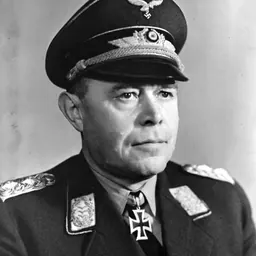
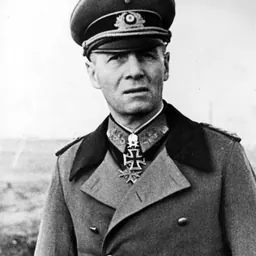
Related people
Same field, nearest in time




Contemporaries
People whose lives overlapped Joachim Helbig's





Frequently asked questions
Who was Joachim Helbig?
German World War II bomber pilot (1915–1985)
When was Joachim Helbig born?
Joachim Helbig was born on 10 September 1915 in Dahlen.
When did Joachim Helbig die?
Joachim Helbig died on 5 October 1985 in Malente.
What was Joachim Helbig's occupation?
Joachim Helbig was a military officer.
What nationality was Joachim Helbig?
Joachim Helbig was German.
Sources & further reading
Cite this page
APA: Biography.guide. (2026). Joachim Helbig. https://biography.guide/joachim-helbig/
MLA: "Joachim Helbig." Biography.guide, https://biography.guide/joachim-helbig/.
Chicago: "Joachim Helbig." Biography.guide. https://biography.guide/joachim-helbig/.
Data last updated: 2026-09-20 · Spot an error? Report a correction.
Page generated 2026-09-27 05:08 UTC