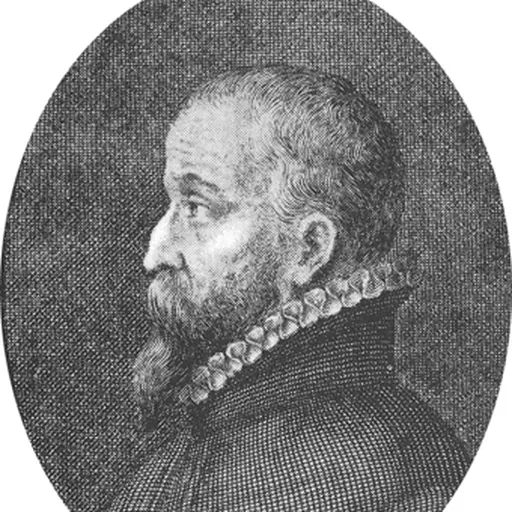
Joachim Camerarius the Younger
German physician and scientist
About Joachim Camerarius the Younger
Lived 1534 – 1598 (aged 63). Joachim Camerarius the Younger was a German physician, botanist and entomologist.
Joachim Camerarius the Younger (German "Kammermeister") (6 November 1534 – 11 October 1598, Nuremberg) was a German physician, botanist, zoologist and humanist scholar.
Life He was born in Nuremberg, the son of the famed humanist Joachim Camerarius the elder (1500–1574). The younger Camerarius’s association with the luminaries of later sixteenth-century German intelligentsia was secured by his father’s network of influential friends—including Philip Melanchthon and Johannes Crato von Krafftheim. After his early studies at Wittenberg and Leipzig, Camerarius turned to medical pursuits under the tutelage of Crato. Following in Crato’s footsteps, he pursued medical studies at the University of Padua before taking his doctorate at the University of Bologna in 1562. He returned to Nuremberg where he established his medical practice. In 1592 the Nuremberg city council established the Collegium Medicum. Camerarius served as dean of the medical college until his death. He corresponded with such notables as Gaspard Bauhin, Carolus Clusius, Thomas Erastus, and Konrad Gessner.
Works
Though trained in the strict Galenic school of philosophically based medicine, Camerarius also displayed the naturalistic proclivity of his exemplars Gessner and Pietro Andrea Mattioli. His works include a Synopsis [...] commentariorum de peste (which includes his own De recta et necessaria ratione, praeservandi a pestis contagio) (Nuremberg, 1583), Hortus Medicus et Philosophicus (Frankfurt/M., 1598) and Symbola et emblemata (Centuria, I: 1590, II: 1595, III :1596, IV: 1604; ed. Wolfgang Harms and Ulla-Britta Kuechen, Graz, 1988). His son Ludwig Camerarius (1573–1651) brought out a posthumous edition of this work that added a fourth “century” of symbols and emblems drawn from aquatic animals and reptiles to the three previously published “centuries” taken from herbs and plants, four-legged animals, and birds and insects. Joachim Camerarius also published a very popular edition of Mattioli’s commentaries on Dioscorides (Kreutterbuch, Frankfurt/M., 1586, etc.).
List Camerarius, Joachim (1588), Hortus medicus et philosophicus in quo plurimorum stirpium brevis descriptio. Frankfurt: S. Feyerabend, H. Dack, & P. Fischer
Don’t just read it —
keep it.
Full-length biographies made to live with: read them, listen on the way to work, watch them tonight.
- E-book
- Audio
- Video
Instant download · yours to keep · every purchase keeps this site free
Important facts
People in Joachim Camerarius the Younger's life
Named in this biography and alive at the same time



Related people
Same field, nearest in time
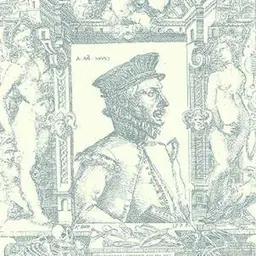
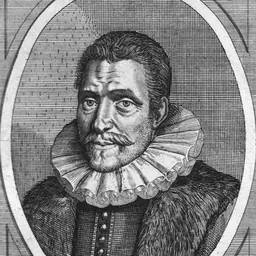
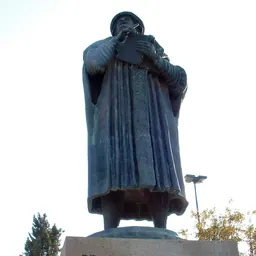
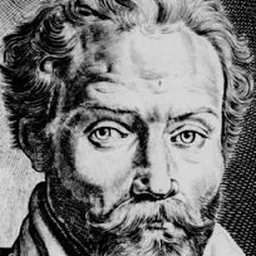

Contemporaries
People whose lives overlapped Joachim Camerarius the Younger's

Frequently asked questions
Who was Joachim Camerarius the Younger?
German physician and scientist (1534-1598)
When was Joachim Camerarius the Younger born?
Joachim Camerarius the Younger was born on 16 November 1534 in Nuremberg.
When did Joachim Camerarius the Younger die?
Joachim Camerarius the Younger died on 11 October 1598 in Nuremberg.
What was Joachim Camerarius the Younger's occupation?
Joachim Camerarius the Younger was a physician, botanist and entomologist.
What nationality was Joachim Camerarius the Younger?
Joachim Camerarius the Younger was German.
Sources & further reading
· Wikipedia: Joachim Camerarius the Younger
· DBpedia: Joachim Camerarius the Younger
Cite this page
APA: Biography.guide. (2026). Joachim Camerarius the Younger. https://biography.guide/joachim-camerarius-the-younger/
MLA: "Joachim Camerarius the Younger." Biography.guide, https://biography.guide/joachim-camerarius-the-younger/.
Chicago: "Joachim Camerarius the Younger." Biography.guide. https://biography.guide/joachim-camerarius-the-younger/.
Data last updated: 2026-09-21 · Spot an error? Report a correction.
Portrait: Wikimedia Commons · author & licence
Page generated 2026-09-27 04:59 UTC