
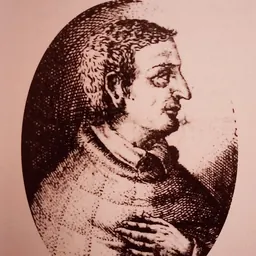
Joachim Camerarius
German humanist, polymath and poet
About Joachim Camerarius
Lived 1500 – 1574 (aged 74). Joachim Camerarius was a German renaissance humanist, university teacher, poet and classical philologist.
Joachim Camerarius (12 April 1500 – 17 April 1574), the Elder, was a German classical scholar. His critical abilities, his deep understanding of Greek and Latin, and his wide-ranging knowledge of the ancient world made him one of the foremost German scholars of his time.
Life Camerarius was born in Bamberg, in the Prince-Bishopric of Bamberg. His family name was Liebhard, but he was generally called Kammermeister, previous members of his family having held the office of chamberlain to the bishops of Bamberg.
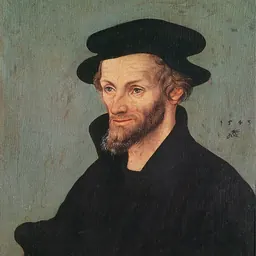
He studied at Leipzig, Erfurt and Wittenberg, where he became a student and friend of Philipp Melanchthon. For some years he was teacher of history and Greek at the gymnasium in Nuremberg (Ägidiengymnasium). In 1530 he was sent as deputy for Nuremberg to the diet of Augsburg, where he helped Melanchthon in drawing up the Augsburg Confession.
Five years later he was commissioned by Duke Ulrich of Württemberg to reorganize the University of Tübingen; and in 1541 he rendered a similar service at Leipzig, where the remainder of his life was chiefly spent. He played an important part in the Reformation movement, and his advice was frequently sought by leading men.
In 1535 he entered into a correspondence with Francis I as to the possibility of a reconciliation between the Catholic and Protestant creeds; and in 1568 Maximilian II sent for him to Vienna to consult him on the same subject. He died in Leipzig on 17 April 1574.
He was the father of the physician Joachim Camerarius the Younger, and his grandson Ludwig Camerarius was a leading figure of the Thirty Years' War, as head of the Palatinate government in exile.
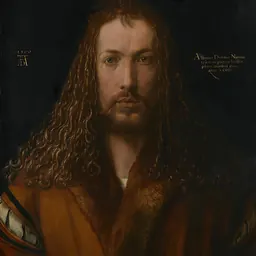
Works He translated into Latin Herodotus, Demosthenes, Xenophon, Homer, Theocritus, Sophocles, Lucian, Theodoretus, Nicephorus, Ptolemy, Euclid, and other Greek writers. He published upwards of 150 works, including a Catalogue of the Bishops of the Principal Sees; Greek Epistles; a treatise on numismatics; the Hippocomicus, a book of horsemanship; accounts of his journeys in Latin verse; and biographies of such contemporaries as Eobanus Hessus, George of Anhalt, Melanchthon, and Albrecht Dürer. His Epistolae Familiares, published after his death, are a valuable contribution to the history of his time.
He produced the first printed Greek edition of Ptolemy's astrology text, the Tetrabiblos, in 1535. It was printed in a quarto format by the publisher Johannes Petreius at Nuremberg along with Camerarius's translation to Latin of Books I, II and portions of Books III and IV, accompanied with his notes on the first two books, the Greek text of the Centiloquium (Καρπός) and a Latin translation from Iovianus Pontanus. A second edition, with a Latin translation by Melanchthon, appeared in 1553, printed in Basel, Switzerland in octavo format by Johannes Oporinus. In 1976 Rudolf Pfeiffer judged that this edition had still not been completely superseded. Camerarius was also responsible for the first edition of Ptolemy's Almagest, published in Basel in 1538.
His edition of the comic playwright Plautus, published in Basel in 1552, was the first to draw on the oldest extant manuscripts, one of which is still known today as the codex vetus Camerarii ("Camerarius's ancient codex"). His text of the plays was not substantially improved until the work of Friedrich Ritschl in the 19th century.
Don’t just read it —
keep it.
Full-length biographies made to live with: read them, listen on the way to work, watch them tonight.
- E-book
- Audio
- Video
Instant download · yours to keep · every purchase keeps this site free
Important facts
People in Joachim Camerarius's life
Named in this biography and alive at the same time

Related people
Same field, nearest in time





Contemporaries
People whose lives overlapped Joachim Camerarius's





Frequently asked questions
Who was Joachim Camerarius?
German humanist, polymath and poet (1500-1574)
When was Joachim Camerarius born?
Joachim Camerarius was born on 12 April 1500 in Bamberg.
When did Joachim Camerarius die?
Joachim Camerarius died on 17 April 1574 in Leipzig.
What was Joachim Camerarius's occupation?
Joachim Camerarius was a renaissance humanist, university teacher, poet and classical philologist.
What nationality was Joachim Camerarius?
Joachim Camerarius was German.
Sources & further reading
· Wikipedia: Joachim Camerarius
Cite this page
APA: Biography.guide. (2026). Joachim Camerarius. https://biography.guide/joachim-camerarius/
MLA: "Joachim Camerarius." Biography.guide, https://biography.guide/joachim-camerarius/.
Chicago: "Joachim Camerarius." Biography.guide. https://biography.guide/joachim-camerarius/.
Data last updated: 2026-09-20 · Spot an error? Report a correction.
Page generated 2026-09-27 05:34 UTC