
About Jitendra Abhisheki
Lived 1929 – 1998 (aged 69). Jitendra Abhisheki was an Indian actor, composer and singer.
Ganesh Balawant Nawathe (21 September 1929 – 7 November 1998), popularly known as Pandit Jitendra Abhisheki, was an Indian vocalist, composer, scholar, and teacher of Indian classical, semi-classical, and devotional music. Primarily associated with Hindustani music, he was noted for his mastery of diverse musical forms, including Thumri, Tappa, Bhajan, and Bhavageet.
Abhisheki's musical style reflected influences from multiple gharanas, particularly the Agra gharana, Jaipur-Atrauli gharana, and Khurja gharana, which he synthesised into a distinctive vocal approach.
Early life and training Abhisheki was born in a priestly Padye Karhade Brahmin family in village Mangeshi, Goa. making Abhisheki related to the Mangeshkar family. He passed his matriculation examination in 1949 and followed it with a degree in Sanskrit literature.
He left for Mumbai (then Bombay), where he continued his formal musical training in vocal music from Jagannathbuwa Purohit “Gunidas" of Agra Gharana, and Gullubhai Jasdanwala of Jaipur Gharana, whose influences later shaped his distinctive musical style.
A prolific composer, Abhisheki composed the padas and songs performed live in the acclaimed Marathi play Katyar Kaljat Ghusali (1967). His music was later adapted for the film adaptation of the play, released in 2015. His compositions for plays such as Yayati Devyani, Hey Bandh Reshamache, Lekurachi Hoshiyari, and Matsyagandha also became widely popular. xpanding beyond traditional Hindustani ragas, he incorporated Western musical elements into the opera Lekure Udand Jhali, which was staged in the style of a Broadway musical and ran for over 1,000 performances.
After receiving a Homi Bhabha Fellowship for 1969–1971 to conduct research in Hindustani music, during this period Abhisheki taught at a music school in the United States run by sitarist Ravi Shankar.
Abhisheki maintained close ties with his native Goa through his association with the Kala Academy, where he mentored and guided students from the state. He also wrote extensively on Hindustani classical music and served as an adviser to several organisations, including All India Radio.
Owing to his extensive training across multiple traditions, gharanas, he became proficient in the styles of the Agra gharana, Jaipur-Atrauli gharana, and Khurja gharana. In time, he became known for synthesising influences from multiple gharanas and musical traditions into a distinctive personal style, sometimes referred as Abhisheki Gayaki.
Abhisheki was known for encouraging his disciples to develop an individual musical identity rather than merely imitate their guru's style.
Personal life Abhisheki spent much of his career in Mumbai and later settled in Pune, where he trained a number of disciples.
Legacy Abhisheki is regarded as an influential figure in post-independence Hindustani music and is particularly credited with revitalising Natya Sangeet by simplifying complex classical compositions for theatrical performance while retaining their musical depth. Several prominent vocalists trained under him, including Shubha Mudgal, Devaki Pandit, Asha Khadilkar, Mahesh Kale, and his son Shounak Abhisheki. The Pandit Jitendra Abhisheki Sangeet Mahotsav is organised annually in his memory in, since 2004, in Goa. It marks his birth anniversary on September 21, and attracts performances by noted singers from across India.
Teaching style and students Throughout his career he taught several students as a part of guru-shishya parampara and for free, many who became noted musicians in their own right. He would start his morning riaz in kharaj (lower octave) around 3:45 am along with his students. Abhisheki's teaching methods placed considerable emphasis on voice development, expanding vocal range, and systematic practice of ragas and bandishes, aspects later documented by his disciple Mohankumar Darekar in a biographical work on the musician.
Besides son Shounak Abhisheki, Abhisheki's well-known musical disciples include Asha Khadilkar, Devaki Pandit, Shubha Mudgal, Mohankumar Darekar, Jeevan Dharmadhikari, Hemant Pendse, Ajit Kadkade, Raja Kale, Prabhakar Karekar, Vijay Koparkar, Sameer Dublay, Dr. Hrishikesh Majumdar and Dr Mrs Madhuri Joshi, Pt. Sudhakar Deoley of Ujjain, Mahesh Kale.
Awards and recognitions Homi Bhabha Fellowship (1969) Natyadarpan Award (1978) Padma Shri (1988) Sangeet Natak Akademi Award (1989) Maharashtra Gaurav Puraskar (1990) Gomantak Marathi Academy Award (1992) Balgandharva Award (1995) Surashree Kesarbai Kerkar Award (1996) Master Deenanath Smriti Award (1996) Lata Mangeshkar Award (1996) Balgandharva Award (Natyaparishad, 1997) Saraswati Award (Kailas Math, Nasik, 1997)
Don’t just read it —
keep it.
Full-length biographies made to live with: read them, listen on the way to work, watch them tonight.
- E-book
- Audio
- Video
Instant download · yours to keep · every purchase keeps this site free
Important facts
People in Jitendra Abhisheki's life
Named in this biography and alive at the same time

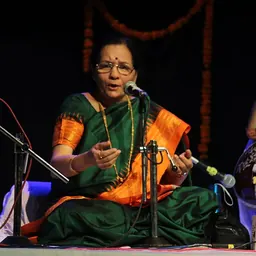



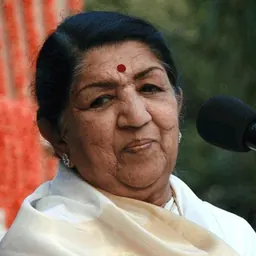
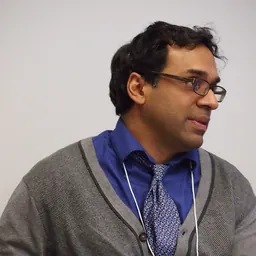

Related people
Same field, nearest in time

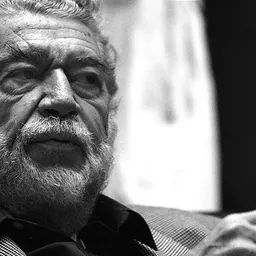

Contemporaries
People whose lives overlapped Jitendra Abhisheki's


Frequently asked questions
Who was Jitendra Abhisheki?
singer (1929-1998)
When was Jitendra Abhisheki born?
Jitendra Abhisheki was born on 21 September 1929 in Mangeshi.
When did Jitendra Abhisheki die?
Jitendra Abhisheki died on 7 November 1998 in Pune.
What was Jitendra Abhisheki's occupation?
Jitendra Abhisheki was an actor, composer and singer.
What nationality was Jitendra Abhisheki?
Jitendra Abhisheki was Indian.
Sources & further reading
· Wikipedia: Jitendra Abhisheki
Cite this page
APA: Biography.guide. (2026). Jitendra Abhisheki. https://biography.guide/jitendra-abhisheki/
MLA: "Jitendra Abhisheki." Biography.guide, https://biography.guide/jitendra-abhisheki/.
Chicago: "Jitendra Abhisheki." Biography.guide. https://biography.guide/jitendra-abhisheki/.
Data last updated: 2026-09-20 · Spot an error? Report a correction.
Page generated 2026-09-27 05:11 UTC