
Jim Russo
American scout for professional baseball
About Jim Russo
Lived 1922 – 2004 (aged 81).
James Joseph Russo (April 22, 1922 – February 8, 2004) was an American baseball scout for the St. Louis Browns and Baltimore Orioles. He has been called one of professional baseball's original "super scouts". He not only excelled in finding talented players to sign or acquire by trade, but also was a seminal modern pioneer of “advance scouting”, where the scout observes and reports on the tendencies of opposing teams to provide insight and strategy on how those teams could be more easily defeated. Most notably, his extensive three weeks of advance scouting of the Los Angeles Dodgers in 1966 is considered a watershed event in advance scouting and a key reason that the underdog Orioles defeated the Dodgers 4–0 in the 1966 World Series.
A New York Times article once referred to Russo as "baseball's secret weapon". In 2003, the Orioles established the Jim Russo Scout of the Year Award. In 2026, Russo was inducted into the Baltimore Orioles Hall of Fame. During most of his 33-year career with the Orioles, the team had the highest winning percentage of any team in Major League Baseball.
Early life Russo was born on April 22, 1922, in Huntington, Indiana. He was the child of Sicilian immigrants. At 17 years old, Russo also managed the semi-pro team that he organized. Russo worked as a school teacher. He was a member of the Army Air Corps, stationed in the China-Burma-India theater.
Russo worked under McLaughlin, the Browns head of scouting and minor league system, who was ahead of his time in systematizing and analytically evaluating baseball prospects. When the Browns moved to Baltimore in 1954, as the Baltimore Orioles, McLaughlin maintained his roles on the new team, and kept Russo as one of his scouts. Russo was with the Orioles from 1954 to 1986. Russo differed with McLaughlin concerning evaluating young pitchers. McLaughlin believed that a pitcher would never throw any faster than he threw at age 18, but Russo found this demonstrably inaccurate based upon his experience with, among others, Gary Bell and future Hall of Fame pitcher Nolan Ryan.
Another one of McLaughlin's innovations was to have the team's scouts crosscheck the reports of local area scouts before signing a player (and not simply taking the word of the local scout). In 1958, McLaughlin made Russo the Orioles national crosschecker scout, overseeing the reports of 14 local scouts over 26 midwestern and western states. Russo moved to St. Louis at the time with his family, and remained in the St. Louis area for the rest of his life. Scouting and evaluating trades Russo excelled in scouting players who would one day become stars for the Orioles. Russo said "A scout can spend a lifetime waiting to see a Jim Palmer". Russo was also integral in signing future American League All-Star and Most Valuable Player (MVP) Boog Powell, four-time 20-game winner Dave McNally, and Gold Glove second baseman Davey Johnson (also a future two-time Manager of the Year). As the Orioles' national crosschecker scout, Russo also was involved in drafting or signing future Baltimore Orioles Hall of Fame players Mark Belanger, Rich Dauer, Doug DeCinces, Mike Flanagan, and Bobby Grich.
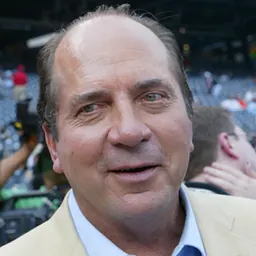
Johnny Bench In 1965, Major League Baseball (MLB) established the free agent draft. The Orioles and the Cincinnati Reds had an arrangement to share scouting information that year. On the recommendation of the Orioles' scout in Oklahoma (Byron Humphrey), Russo went to Oklahoma to see 17-year old catcher Johnny Bench play. He recognized Bench's talent and wanted him for the Orioles, but when his old mentor Jim McLaughlin, at that time with the Reds, asked for player recommendations Russo told McLaughlin to send a scout to observe Bench; consistent with the teams' arrangement to share scouting information. In his autobiography, Russo states that he desperately wanted the Orioles to draft Bench in the first or second round of that first free agent draft, but his boss Harry Dalton, who lacked Russo's scouting experience, had other players he wanted.
Dalton drafted pitcher Scott McDonald (15th overall pick) and catcher Richard Horton from Dartmouth (35th overall pick) instead of Bench in the 1965 MLB draft. The Reds drafted Bench immediately after Horton with the 36th pick in the draft. McDonald played six years in the Orioles' minor league system, never getting above the Double-A level. After 17 years with the Reds, in which he was Rookie of the Year, a two-time National League Most Valuable Player, Gold Glove Award winner and multi-time All-Star, Johnny Bench went into the Baseball Hall of Fame and is often considered the greatest catcher in MLB history. Russo said that thinking of the Orioles' failure to draft Bench sickened him for years. from the Cincinnati Reds before the 1966 season; a trade that was instrumental in making the Orioles American League champions four times (1966, 1969 to 1971) and World Series champions twice (1966, 1970). The trade process for Robinson began when Jim McLauglin, still with the Reds, approached Russo on behalf of Reds' general manager Bill DeWitt (who co-owned the Browns when Russo originally worked for them at the start of his career). The Reds proposed trading Robinson for the Orioles best pitcher, Milt Pappas, rookie of the year Curt Blefary and pitcher Jack Baldschun.
The trade's notoriety went beyond baseball into popular culture. In the film Bull Durham, the character Annie Savoy (played by Susan Sarandon) says "But bad trades are part of baseball; now who can forget Frank Robinson for Milt Pappas, for gosh sakes". In the film Trouble with the Curve, the character Mickey Lobel (played by Amy Adams) expounds on the trade's details and Robinson's prowess, in establishing her baseball expertise.
Other significant trades Russo also was pivotal in the Orioles trading for Mike Cuellar before the 1969 season (for Blefary, among others). Russo had followed Cuellar for three years while Cuellar was pitching for the Houston Astros, and determined he would be an excellent candidate as another left-handed pitcher for the Orioles; even though he was nearly 32-years old. Cuellar's pitching style caused batters to hit ground balls, and the Orioles had three gold glove infielders in Brooks Robinson, Mark Belanger and Dave Johnson. Cuellar went on to win the Cy Young Award in his first Orioles season (1969), with a total career-Orioles record of 143–88 (1969 to 1976), four seasons of over 20 wins, and two seasons with 18 wins. Other Orioles' trades in which Russo played a significant role included, among others, future Baltimore Orioles Hall of Fame members Lee May, Ken Singleton, Rick Dempsey, Scott McGregor, and Tippy Martinez. the more common view is that Russo's advance scouting of the 1966 Los Angeles Dodgers is the watershed event of modern advance scouting. assigned Russo to attend the Dodgers' games and prepare a scouting report on the Dodgers; as Dalton correctly anticipated the Orioles would be meeting the Dodgers in the 1966 World Series. had pitching tendencies that could be used against him if the Oriole batters were disciplined in their at bats. Along with two other Orioles scouts who later joined Russo in watching the Dodgers (Al Kubski and Harry Craft), Russo wrote up a 16-page single spaced report on the Dodgers' strengths and weaknesses. On the day before the World Series began, Russo spent two hours with the Orioles' players going over each point in his report on the Dodgers. The Orioles swept the 1966 World Series 4–0.
By 1977, Russo was regularly doing advance scouting for the Orioles. who had a tempestuous, but deeply close, relationship with Russo for well over a decade, said that "'Jimmy Russo helped us win a lot of ball games.'" By at least the 2010s, some teams had replaced human advance scouts entirely with the use of video technology to study opponents.
Legacy and honors Orioles' executive Frank Cashen, who would later serve as the New York Mets general manager, gave Russo the nickname "super scout", and called Russo the best scout he ever saw. Early in his career, Russo found himself overwhelmed and confused in how to scout a 60-team baseball tournament in Norman, Oklahoma. Wog Rice, an experienced scout with the Boston Red Sox, saw that Russo was confused and took the time to help him focus on who and how to scout in that situation. Russo not only became a loyal friend to Rice, but took the lesson with him into the future in guiding inexperienced scouts he encountered in learning their trade.
He co-authored with Bob Hammel SuperScout: Thirty-Five Years of Major League Scouting which was released by Bonus Books on 1 April 1992.
In 1991, he was inducted into the Greater St. Louis Baseball Scouts Hall of Fame. In 2003, the Orioles established the Jim Russo Scout of the Year Award. Huntington County (Indiana) Honors inducted Russo into its class of 2024. He was inducted into the Orioles' Hall of Fame in 2026.
Personal life and death Russo met his wife Betty while working as a minor league baseball announcer in Riverside, California.
Don’t just read it —
keep it.
Full-length biographies made to live with: read them, listen on the way to work, watch them tonight.
- E-book
- Audio
- Video
Instant download · yours to keep · every purchase keeps this site free
Important facts
People in Jim Russo's life
Named in this biography and alive at the same time





Contemporaries
People whose lives overlapped Jim Russo's


Frequently asked questions
Who was Jim Russo?
American scout for professional baseball
When was Jim Russo born?
Jim Russo was born on 22 April 1922.
When did Jim Russo die?
Jim Russo died on 8 February 2004.
Sources & further reading
· DBpedia: Jim Russo (baseball scout)
Cite this page
APA: Biography.guide. (2026). Jim Russo. https://biography.guide/jim-russo/
MLA: "Jim Russo." Biography.guide, https://biography.guide/jim-russo/.
Chicago: "Jim Russo." Biography.guide. https://biography.guide/jim-russo/.
Data last updated: 2026-09-20 · Spot an error? Report a correction.
Page generated 2026-09-27 05:08 UTC