
About Jim Hegan
Lived 1920 – 1984 (aged 63). Jim Hegan was an American baseball player.
James Edward Hegan (August 3, 1920 – June 17, 1984) was an American professional baseball player, coach, and scout. He played for 17 seasons as a catcher in Major League Baseball (MLB) from to and to , most prominently with the Cleveland Indians where he was an integral member of the 1948 World Series winning team. A five-time All-Star player, Hegan was a light-hitting player offensively, but he distinguished himself as one of the best defensive catchers of his era as well as a capable handler of pitching staffs.
After retiring as a player, he continued to serve as a major league coach in a baseball career that spanned almost 40 years. Hegan was inducted into the Cleveland Indians Hall of Fame in 1966.
Early life and Major League career
Born in Lynn, Massachusetts, Hegan attended Lynn English High School and was signed by the Cleveland Indians in 1938. After playing in the minor leagues for four seasons, he made his major league debut with the Indians on September 7, 1941 at the age of 20.
Post-war career
When Hegan returned in 1946 he became the Indians' regular starting catcher, replacing Frankie Hayes. In his second season back after the war, Hegan was recognized as one of the top catchers in the American League when, he was selected as a reserve in the 1947 All-Star Game. He had his best season offensively in 1948, posting a .248 batting average along with 14 home runs and 61 runs batted in, as the Indians finished the season tied for first place with the Boston Red Sox.
After defeating the Red Sox in a one-game playoff, the Indians went on to defeat the Boston Braves in the 1948 World Series. Despite his low batting average, Hegan ended the season ranked in 19th place in the American League Most Valuable Player Award voting, due in part to his handling of the Indians' pitching staff which led the league in winning percentage, shutouts and in earned run average.
Recognition for handling pitchers
Hegan's pitch-calling skills continued to be made evident as, the Indian's pitching staff would lead the American League in earned run average every year from to . In 1951 and 1952, the Indians' pitching staff would have three 20-game winning pitchers. Cleveland pitchers gave Hegan credit for part of their success.
Cleveland Indian Hall of Fame pitcher Bob Feller was quoted as saying,"He was one of the best defensive catchers in baseball history. Jim called a good game. We disagreed rarely. Jim was very good at keeping pitchers calm." The Indians would eventually lose to the New York Giants in the 1954 World Series. Hegan would once again guide the Indians' pitching staff to the league's lowest earned run average in 1956 as, the Indians boasted three 20-game winning pitchers for the third time during his career.
Later playing career
After the 1957 season, Hegan was traded to the Detroit Tigers. In 1,666 games played, Hegan had a 1,087 hits for a .228 batting average, with 92 home runs and 525 runs batted in. Hegan caught 121 shutouts in his career, ranking him 9th all-time among major league catchers. He is the Indians' all-time leader in games played as a catcher with 1,491.
As a testament to Hegan's pitch-calling skills during this period, the Indians' pitching staff was the best in baseball, leading the American League six times in earned run average. Hegan was selected to be an American League All-Star five times during his playing career.
Despite his considerable defensive skills, because he was a light-hitting player, Hegan is almost a forgotten man in major league baseball history.
Coaching career
He began his coaching career as a playing coach for the Cubs working under former Cleveland teammate Lou Boudreau in . In mid-year, after his active career ended July 4, Hegan became the full-time bullpen coach for the New York Yankees, helping to mentor future catching stand outs Thurman Munson and Rick Dempsey. He served with the Yankees through the 1973 season.
He then moved with manager Ralph Houk to the Detroit Tigers for five years, through . He finished his career in uniform back with the Yankees as a coach (1979–80), and was serving as a scout for the Yankees when he died on June 17, 1984, at the age of 63 in Swampscott, Massachusetts, of a heart attack.
Personal life
Jim Hegan's son, Mike Hegan, was an All-Star first baseman who played major league baseball from 1964 to 1977, and later a sports commentator for both the Milwaukee Brewers and Indians, retiring shortly before his death in 2013.
Mike had two different tenures with the Yankees in the 1960s and 1970s, both times overlapping with Jim's tenure on the Yankee coaching staff.
Don’t just read it —
keep it.
Full-length biographies made to live with: read them, listen on the way to work, watch them tonight.
- E-book
- Audio
- Video
Instant download · yours to keep · every purchase keeps this site free
Important facts
People in Jim Hegan's life
Named in this biography and alive at the same time

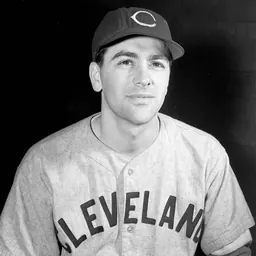


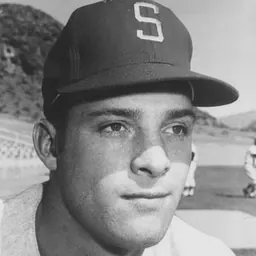


Related people
Same field, nearest in time

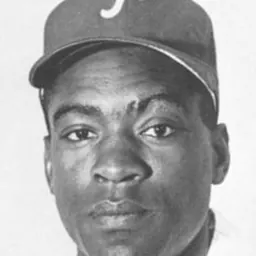
Contemporaries
People whose lives overlapped Jim Hegan's




Frequently asked questions
Who was Jim Hegan?
American baseball player and coach (1920–1984)
When was Jim Hegan born?
Jim Hegan was born on 3 August 1920 in Lynn.
When did Jim Hegan die?
Jim Hegan died on 17 June 1984 in Swampscott.
What was Jim Hegan's occupation?
Jim Hegan was a baseball player.
What nationality was Jim Hegan?
Jim Hegan was American.
Sources & further reading
Cite this page
APA: Biography.guide. (2026). Jim Hegan. https://biography.guide/jim-hegan/
MLA: "Jim Hegan." Biography.guide, https://biography.guide/jim-hegan/.
Chicago: "Jim Hegan." Biography.guide. https://biography.guide/jim-hegan/.
Data last updated: 2026-09-20 · Spot an error? Report a correction.
Page generated 2026-09-27 05:29 UTC