
Jim Dennistoun
New Zealand mountaineer, explorer and airman
About Jim Dennistoun
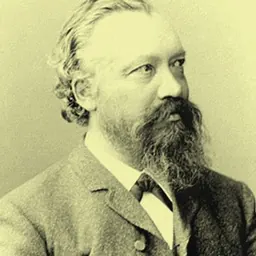
Lived 1883 – 1916 (aged 33). Jim Dennistoun was a New Zealand military personnel and mountaineer.
James Robert Dennistoun (7 March 1883 – 9 August 1916) was a New Zealand mountaineer, explorer and airman in the First World War. He is known in particular as the first person to climb to the top of Mitre Peak / Rahotu.
Early life Dennistoun was born the middle of the three children of Emily (née Russell, 1856–1937) and George James Dennistoun (1847–1921) who farmed at Peel Forest Station which is located near the settlement of Peel Forest near Geraldine in the South Island of New Zealand. His siblings were older sister Barbara and younger brother George Hamilton Dennistoun (23 September 1884 – 16 June 1977). Dennistoun attended the Collegiate School in Whanganui and later from 1894 to 1901, Malvern College in England.
After he left school, he took up sheep farming, while his younger brother George eventually went into the navy. He bought a farm at Hāwea in April 1910 but ended up selling it in September 1910. He then bought another farm near Lumsden, in the South Island.
Mountain climbing Attracted by the nearby mountains he became passionate about mountaineering, climbing Little Mount Peel at the age of 12, Big Mt Peel at the age of 14, Ben Nevis at 15, Ben Lomond at 16 and later a number of other of peaks in the Southern Alps including Mt Cook.
In 1908 he and 1905 All Black Eric Harper were the first to cross the 1899 m high pass in the Southern Alps that now bears his name. In March 1910 with Jack Clarke and Lawrence Earle he made first ascent of the Mount D'Archiac in the Southern Alps.
Mitre Peak Undoubtedly his most famous climb, was the first known ascent of Mitre Peak / Rahotu.
During a sea voyage in the area with brother George in HMS Pioneer in 1909 Dennistoun had identified what he thought was a possible route but as he wasn't able to reconnoitre it he instead decided to take a route recommended by Donald Sutherland. Sunderland had in 1883 unsuccessfully attempted to climb the peak.
After rowing across in a boat to the mouth of Sinbad Gully at the base of the peak they starting climbing at 7.30am on 13 March 1911. Dennistoun and Beaglehole climbed via the south east-ridge through the bush until 300 metres short of the summit Beaglehole decided it was too difficult to continue and stopped. Dennistoun continued on alone up steep, smooth slabs of granite, to reach the summit at 1.15pm.
Descending back down Dennistoun rejoined Beaglehole and they continued with the descent. Unfortunately to avoid climbing back over the Footstool, they decided to descend straight into Sinbad Gully, which meant they had to resort to using a rope to lower themselves down bluffs. They eventually reached the valley floor in darkness, and it soon commenced to rain. When J.H. Christie and G. Raymond completed the third ascent in 1941, they found remains of the handkerchief, as well as two halfpennies left by Murrell and Williams. The mules had arrived in September 1911 and were quarantined on Quail Island which is located 3 km from the port of Lyttelton. Pennell could offer no pay, but the adventure was enough to attract Dennistoun and he signed up. While some clothing was provided, Dennistoun had to supply much of his own. As well as caring for the mules Dennistoun was also responsible for 14 Siberian dogs being transported south.
The Terra Nova arrived at Cape Evans on 22 February 1912. After offloading the mules and other supplies Dennistoun returned to New Zealand arriving on 1 April 1912. Instead of being used on a second attempt on the Pole the mules were used later that year to pull the sledges of the search party for Scott. The mules struggled in the harsh environment and all were eventually put down.
For his services to the expedition he received the Polar Medal in silver and the medal of the Royal Geographical Society.
Return to farming He returned to his farm near Lumsden but eventually sold it in April 1914.
During an expedition in the Southern Alps in January 1914 by Dennistoun, his brother George and Sydney King they discovered and named the Terra Nova Pass which overlooks the Havelock and Godley Valleys.
In July 1914 he bought yet another farm, this time at Mangamahu, near Whanganui, but his business partner hadn't seen it. When he did eventually see it, he didn't like it. In a panic, Dennistoun tried to get out of the deal as he risked being declared bankrupt and to his relief, he was able to find other partners.
World War I Following the outbreak of the First World War, Dennistoun travelled as a deckhand on a ship to England where he enlisted. By mid-May in 1915 he was commissioned as a 2nd lieutenant and had joined the North Irish Horse. Arriving in France with his squadron in November, he was immediately promoted to lieutenant. At first he served as an intelligence officer but after a few months was seconded to the Royal Flying Corps, joining the newly-arrived No.23 Squadron as an observer. Another member of the squadron was Dennistoun's cousin, pilot officer Herbert Bainbrigge (Herbie) Russell (1895–1963), and the pair were permitted to fly in the same plane. as is New Zealand's Dennistoun Peak, which is located close to the headwaters of the Godley and Havelock Rivers in the Southern Alps. Nearby Dennistoun Pass and Dennistoun Glacier also bear his name.
St Stephen's Church in Peel Forest has a stained glass window donated by Dennistoun's mother, Emily in 1923. It commemorates Dennistoun and his father George. The face of St Michael is a portrait of Dennistoun and in the bottom pane is a small representation of Mitre Peak.
In 1999, Guy Mannering of Geraldine, whose father, also named Guy, was a friend and climbing companion of Dennistoun, compiled and published The Peaks and Passes of JRD, using letters, diaries, photographs and notebook entries held by the Dennistoun family through three generations.
Don’t just read it —
keep it.
Full-length biographies made to live with: read them, listen on the way to work, watch them tonight.
- E-book
- Audio
- Video
Instant download · yours to keep · every purchase keeps this site free
Important facts
People in Jim Dennistoun's life
Named in this biography and alive at the same time

Related people
Same field, nearest in time





Contemporaries
People whose lives overlapped Jim Dennistoun's


Frequently asked questions
Who was Jim Dennistoun?
New Zealand mountaineer, explorer and airman (1883-1916)
When was Jim Dennistoun born?
Jim Dennistoun was born on 7 March 1883 in Geraldine.
When did Jim Dennistoun die?
Jim Dennistoun died on 9 August 1916 in Ohrdruf.
What was Jim Dennistoun's occupation?
Jim Dennistoun was a military personnel and mountaineer.
What nationality was Jim Dennistoun?
Jim Dennistoun was New Zealand.
Sources & further reading
Cite this page
APA: Biography.guide. (2026). Jim Dennistoun. https://biography.guide/jim-dennistoun/
MLA: "Jim Dennistoun." Biography.guide, https://biography.guide/jim-dennistoun/.
Chicago: "Jim Dennistoun." Biography.guide. https://biography.guide/jim-dennistoun/.
Data last updated: 2026-09-25 · Spot an error? Report a correction.
Page generated 2026-09-27 05:13 UTC