
About Jibanananda Das
Lived 1899 – 1954 (aged 55). Jibanananda Das was an Indian poet, writer and university teacher.
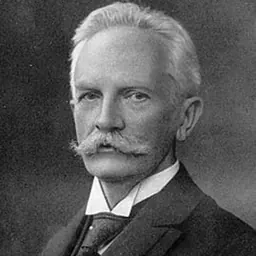
Jibanananda Das (; 17 February 1899 – 22 October 1954) was a Bengali poet, writer, and educationist he received limited recognition during his lifetime but later came to be considered one of the most important and influential figures in Bengali literature after Rabindranath Tagore and Kazi Nazrul Islam.
Born in Barisal, Bengal Presidency, Das studied English literature at Presidency College and University of Calcutta. He worked mainly as a teacher of English at several colleges, while also writing poetry, essays and fiction. His first poem appeared in print in 1919, and his first poetry collection, Jhara Palok, was published in 1927.
Das's verse explores a world of surrealism, depression, and melancholia. His work often combines nature, time, death, desire and urban alienation through dense metaphor and surreal suggestion. His major works include Jhara Palok, Dhusar Pandulipi, Banalata Sen, Mahaprithibi, Shreshtha Kavita and the posthumously published Rupasi Bangla; among them, the poem “Banalata Sen” and the poetry collection Rupasi Bangla remain his most discussed and celebrated works.
Early life
Jibanananda Das was born in 1899 in Barisal, a district town in the British Raj (now Barisal, Bangladesh), into a Bengali Baidya family. His father, Satyananda Das, was a schoolmaster and publisher, and his mother, Kusumkumari Das, was a poet who explored social issues. Das was called by the nickname Milu by his parents. He was the eldest son and had two siblings, Ashokananda Das and Sucharita Das.
Ancestry Das' ancestors originated from the Bikrampur region (now Mushiganj, Dhaka, Bangladesh) from the now-extinct village of Gaupara in the Kumarvog area of the Louhajang Upazila on the banks of the river Padma. Das' grandfather Sarbānanda Dāśgupta was the first to settle permanently in Barisal. He was an early exponent of the reformist Brahmo Samaj movement in Barisal and was highly regarded in town for his philanthropy. He erased the -gupta suffix from the family name, regarding it as a symbol of Vedic Brahmin excess, thus rendering the surname to Das.
Education and career Jibanananda attended Brajamohon College in Barisal, where he passed both his Matriculation and Intermediate exams with a first division in 1915 and 1917 respectively. In 1919, he received a BA Degree in English literature from Presidency College, Kolkata and earned a master's degree from Calcutta University in 1921. In 1922, Jibanananda Das joined City College as a lecturer and continued there until 1928, when he lost his position at the institution. :P14-15
While working as a teacher at City College, Das occasionally wrote poems, sometimes under pseudonyms, for various Bengali magazines including Bangabani, Kallol, Kalikalam, and Progoti.
Personal life
In May 1930, Jibanananda married Labanyaprabha Das (née Gupta) and they had a daughter and son named Manjusree and Samarananda. Labanyaprabha was the daughter of Rohini Kumar Gupta and Sarojubala Gupta. Her paternal uncle was Acharya of the Brahmo Samaj in Dhaka.
Death During Jibanananda's evening walk on 14 October 1954, he was struck by a tram while crossing a road near Calcutta's Deshapriya Park. He was taken to Shambhunath Pundit Hospital, where he died eight days later. Witnesses had later reported that the tram had sounded its whistle, but Das did not stop and was hit. Some accounts have speculated that the incident may have been a suicide.
His body was cremated the following day at Keoratola crematorium.
Writing style Jibananda Das was one of the five leading figures of modern Bengali poetry, collectively known as the Pancha Pandab of the Kallol era. Alongside Sudhindranath Dutta, Bishnu Dey, Amiya Chakravarty, and Buddhadeva Bose, he played a pivotal role in introducing literary modernism in twentieth-century Bengali poetry. His early poetry reflected the influence of his contemporary poets including Kazi Nazrul Islam, Satyendranath Dutta, and Mohitlal Majumdar
Das’s poetry is marked by sensuousness, mysteriousness, the macabre, symbolism, the aesthetics of synaesthesia and imagism, and a profound sense of melancholy. He was known as a surrealist poet for his spontaneous, frenzied overflow of subconscious mind in poetry and especially in diction.
In collections such as Rupasi Bangla and Dhusar Pandulipi, nature appears as both a physical environment and an imaginative space. Literary critics have observed that his portrayal of Bengal’s landscape differs from earlier romantic depictions of nature in Bengali poetry. His natural world is often quiet, sensuous, melancholic, and closely connected with human consciousness.
In Das’s poetry, the rivers of Bengal, such as the Padma, Meghna, Jamuna, and Dhaleshwari symbolize life, memory, and the flow of time rather than merely serving as natural features. Through rivers, fields, and green landscapes, he creates a dreamlike image of Bengal.
Legacy During his lifetime, Das published only 269 poems in different journals and magazines, of which 162 were collected in seven anthologies, from Jhara Palak to Bela Obela Kalbela. After his death, it was discovered that, in addition to poetry, Das had written 21 novels and 108 short stories.
Jibanananda scholar Clinton B. Seely has termed Jibanananda Das as "Bengal's most cherished poet since Rabindranath Tagore".
A film inspired by his short story Jamrultola, titled 'Sunder Jibon', directed by Sandeep Chattopadhyay and produced by Satyajit Ray Film and Television Institute; won the National Film Award for Best Short Fiction Film at the 50th National Film Awards, with Shantanu Bose in the lead role.
Awards in his honour The Kolkata Poetry Confluence, in collaboration with Bhasha Samsad, has instituted the Jibanananda Das Award for poetry translation. Jibanananda Das awards for translation were given away in ten different languages.
A literary award named Jibanananda Puroshkar, also known as the Jibanananda Prize, has been instituted in Bangladesh. It confers annual awards to the best works of poetry and prose by Bangladeshi authors.
In 2025, the interim government of Bangladesh officially renamed the cricket stadium in Barisal to Kabi Jibanananda Das Stadium, after the prominent Bengali poet, who was born & spent much of his life in Barisal. The renaming was done in recognition of his extensive contributions to Bengali literature.
Major works Poetry Jhôra Palok (Fallen Feathers), 1927. Dhusar Pandulipi (Grey Manuscript), 1936. Banalata Sen, 1942. Môhaprithibi (Great Universe), 1944.
First page of the manuscript of Rupashi Bangla by Jibanananda DasShaat-ti Tarar Timir, (Darkness of Seven Stars), 1948. Shreshtho Kobita, (Best Poems), 1954: Navana, Calcutta. Ruposhi Bangla (Bengal, the Beautiful), written in 1934, published posthumously in 1957. Bela Obela Kalbela (Times, Bad Times, End Times), 1961, published posthumously but the manuscript was prepared during lifetime. Sudorshona(The beautiful), published posthumously in 1973: Sahitya Sadan, Calcutta. Alo Prithibi (The World of Light), published posthumously in 1981: Granthalaya Private Ltd., Calcutta. Manobihangam (The Bird that is my Heart), published posthumously in 1979: Bengal Publishers Private Ltd. Calcutta. Oprkashitô Ekanno (Unpublished Fifty-one), published posthumously in 1999, Mawla Brothers, Dhaka. Krishna Dasami, Pathak Samabesh, Dhaka. published posthumously in 2015. Surya Osuryaloke, Suchoyoni, Dhaka. published posthumously in 2021.
Major collected texts Bandopdhaya, Deviprasad : Kabya Songroho − Jibanananda Das (tr. Collection of Poetry of Jibanananda Das), 1993, Bharbi, 13/1 Bankim Chatterjje Street, Kolkata-73. Bandopdhaya, Deviprasad : Kabya Songroho − Jibanananda Das (tr. Collection of Poetry of Jibanananda Das), 1999, Gatidhara, 38/2-KA Bangla Bazaar, Dhaka-1100, Bangladesh. Bandopdhaya, Deviprasad : Jibanananda Das Uttorparba (1954–1965), 2000, Pustak Bipani, Calcutta. Chowdhury, Faizul Latif (editor) (1990), Jibanananda Das'er Prôbôndha Sômôgrô, (tr: Complete non-fictional prose works of Jibanananda Das), First edition : Desh Prokashon, Dhaka. Chowdhury, Faizul Latif (editor) (1995), Jibanananda Das'er Prôbôndha Sômôgrô, (tr: Complete non-fictional prose works of Jibanananda Das), Second edition : Mowla Brothers, Dhaka. Chowdhury, F. L. (ed) : Oprokashito 51 (tr. Unpublished fifty one poems of Jibanananda Das), 1999, Mawla Brothers, Dhaka. Shahriar, Abu Hasan : Jibanananda Das-er Gronthito-Ogronthito Kabita Samagra, 2004, Agaami Prokashoni, Dhaka.
Footnotes
Don’t just read it —
keep it.
Full-length biographies made to live with: read them, listen on the way to work, watch them tonight.
- E-book
- Audio
- Video
Instant download · yours to keep · every purchase keeps this site free
Important facts
People in Jibanananda Das's life
Named in this biography and alive at the same time
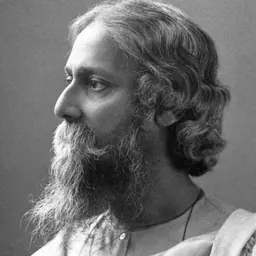






Related people
Same field, nearest in time
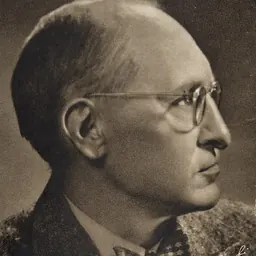
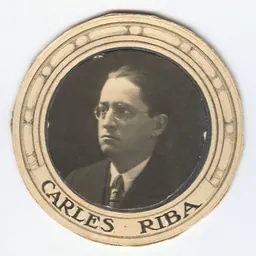
Contemporaries
People whose lives overlapped Jibanananda Das's

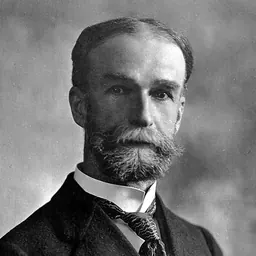
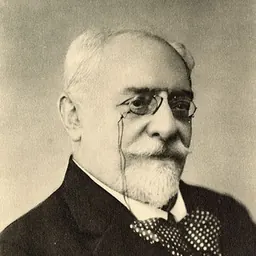

Frequently asked questions
Who was Jibanananda Das?
Bengali Poet (1899-1954)
When was Jibanananda Das born?
Jibanananda Das was born on 17 February 1899 in Barishal.
When did Jibanananda Das die?
Jibanananda Das died on 22 October 1954 in Kolkata.
What was Jibanananda Das's occupation?
Jibanananda Das was a poet, writer and university teacher.
What nationality was Jibanananda Das?
Jibanananda Das was Indian.
Sources & further reading
Cite this page
APA: Biography.guide. (2026). Jibanananda Das. https://biography.guide/jibanananda-das/
MLA: "Jibanananda Das." Biography.guide, https://biography.guide/jibanananda-das/.
Chicago: "Jibanananda Das." Biography.guide. https://biography.guide/jibanananda-das/.
Data last updated: 2026-09-20 · Spot an error? Report a correction.
Page generated 2026-09-27 05:30 UTC