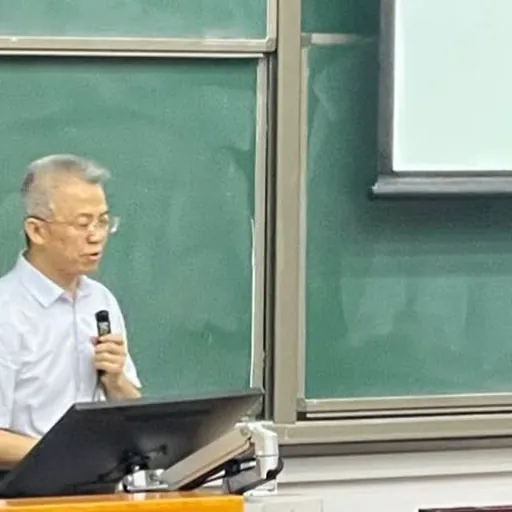
About Jiang Shigong
Born 1967. Jiang Shigong is a Chinese philosopher and academic.
Jiang Shigong (; born 11 November 1967) is a Chinese legal and political theorist, who is currently the president of the Minzu University of China. He was previously a professor at Peking University Law School, and a researcher on Hong Kong affairs. He is a "conservative socialist" exponent of Xi Jinping Thought and is opposed to liberalism in China.
Jiang previously worked at the Hong Kong Liaison Office from 2004 to 2008, and has advised the Chinese government on Hong Kong on subsequent occasions. Among his major ideas are his theory of the "absolute" or unwritten constitution of China embodied in the leadership of the Chinese Communist Party (CCP) and his argument for the supremacy of the state as an "ethical entity" and the embodiment of the people's drive towards self-transformation. One of the main Chinese translators of Carl Schmitt, Jiang is a notable promoter of Schmitt's political theory in China.
Career Born on 11 November 1967 in Yulin, Shaanxi, Jiang attended high school in Hengshan District, graduating in 1986. He describes his decision to pursue studies in law as purely accidental, motivated at the time by his lack of knowledge about alternative fields such as economics.
From 2004 to 2008 Jiang worked at the Hong Kong Liaison Office. He has published on Hong Kong's role in the Chinese political system, and he is believed to have authored or contributed to the 2014 white paper The Practice of the 'One Country, Two Systems' Policy in the Hong Kong Special Administrative Region. In 2019, he is Director of the Centre for Studies in Politics and Law and Deputy Director of the Centre for Macau and Hong Kong Studies at Peking University and an expert adviser to the Beijing Municipal People's Congress. He was appointed as the vice president of the Minzu University of China, affiliated with the National Ethnic Affairs Commission, in October 2023. He was also appointed as a member of the university's CCP Committee's Standing Committee.
Views and influence
Theory of the state and opposition to liberalism Jiang has been described as a member of the Chinese New Left, a "conservative socialist", and an implicit Legalist. Some scholars have identified the Chinese New Left as a conservative movement and in defense of hierarchy in the name of equality. Jiang played a significant role in the introduction of the thought of far-right legal theorist Carl Schmitt in China, and is a "preeminent representative" of Schmittian theory in the country who uses the theories to justify state power.
Commenting on the colour revolutions of the 2000s, Jiang stated, "The crucial questions in politics are not questions of right and wrong, but of obedience and disobedience. If you do not submit to political authority, then 'If I say you're wrong, you're wrong, even if you're right. Jiang has attacked the thought of John Rawls on the basis that reasoning from the veil of ignorance cannot contribute to political legitimacy: the legitimacy of the state is premised on the civilisational values it embodies and cannot be understood rationally. Drawing on Max Weber, he depicts politics as the product of the "unceasing, deadly struggles of different gods"—different civilisations—with no rational conclusion; the politics of one civilisation cannot be adjudicated by the values of another. According to Jiang in a 2019 article, Western civilisation has created a world empire encompassing every major power in the world, including China, and based on liberal principles. This empire is currently in terminal decline due to economic inequality, decaying government structures, and the spread of nihilism triggered by cultural liberalism. Jiang concludes that it is China's responsibility, alongside other nations, to construct a blueprint for the second world empire: the reconstruction of Chinese civilisation and a new world empire are mutually reinforcing. In an essay published in 2020, Jiang attributed the demise of the West to "the ever-increasing inequality created by the liberal economy; state failure, political decline, and ineffective governance caused by political liberalism; and decadence and nihilism created by cultural liberalism."
Role of the Communist Party Jiang holds that the Chinese Communist Party (CCP), as the institutional leader of the people Drawing on Mao Zedong's Ten Major Relationships, the constitution of the state, and an unwritten constitution embodied by the CCP and based on a vertical hierarchy of democratic centralist subordination; local governments may be consulted on executive decisions, but remain ultimately subject to the supremacy of the Party.
In 2018, Jiang published a commentary on Party general secretary Xi Jinping's report to the 19th National Congress of the CCP. In the essay, he states that certain political forces since the Deng Xiaoping era attempted to introduce "subversive reforms of the political system", which would have diminished and eventually eliminated the leadership of the Communist Party and created a "Western democracy" in China. On the other hand, the appearance of exploitative capitalist forces in China created nostalgia for the "stagnation" of the era before reform and opening-up. "At [this] moment of historical crisis", Jiang argues, "Xi Jinping has turned the tide", legitimising Xi's position as "core of the Party center, the core of the entire Party".
Hong Kong politics
Jiang is a prominent adviser to the Chinese government on Hong Kong affairs, The Apple Daily labelled Jiang a "dark force" promoting mainland intervention in Hong Kong affairs. During the Legislative Council oath-taking controversy later that year, he invoked the doctrine of necessity to justify the preemption of a local judicial review by the Standing Committee of the National People's Congress in Beijing. In 2017, he described Hong Kong's cultural elite as hostile to socialism with Chinese characteristics, and too Westernised to be capable of understanding general secretary Xi Jinping's report to the 19th CCP Congress. He also supported the Hong Kong national security law passed in 2020.
Works in English
Don’t just read it —
keep it.
Full-length biographies made to live with: read them, listen on the way to work, watch them tonight.
- E-book
- Audio
- Video
Instant download · yours to keep · every purchase keeps this site free
Important facts
People in Jiang Shigong's life
Named in this biography and alive at the same time
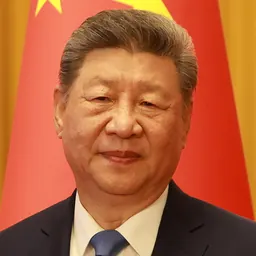

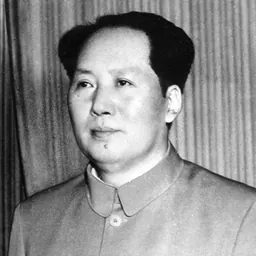
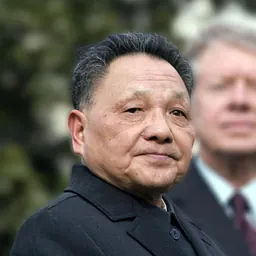


Related people
Same field, nearest in time


Contemporaries
People whose lives overlapped Jiang Shigong's



Frequently asked questions
Who is Jiang Shigong?
Chinese legal and political theorist
When was Jiang Shigong born?
Jiang Shigong was born on 11 November 1967 in Yulin.
What is Jiang Shigong's occupation?
Jiang Shigong is a philosopher and academic.
What nationality is Jiang Shigong?
Jiang Shigong is Chinese.
Sources & further reading
Cite this page
APA: Biography.guide. (2026). Jiang Shigong. https://biography.guide/jiang-shigong/
MLA: "Jiang Shigong." Biography.guide, https://biography.guide/jiang-shigong/.
Chicago: "Jiang Shigong." Biography.guide. https://biography.guide/jiang-shigong/.
Data last updated: 2026-09-20 · Spot an error? Report a correction.
Portrait: Wikimedia Commons · author & licence
Page generated 2026-09-27 04:57 UTC