
Jhaverchand Meghani
Poet, litterateur, social reformer and freedom fighter from Gujarat, India
About Jhaverchand Meghani
Lived 1896 – 1947 (aged 50). Jhaverchand Meghani was an Indian writer, poet and folklorist.
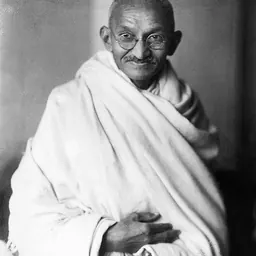
Jhaverchand or Zaverchand Kalidas Meghani ( – ) was an Indian poet, writer, social reformer and freedom fighter. He is a well-known name in the field of Gujarati literature. He was born in a Jain family in Chotila where the Government College has been renamed for this literary figure as Raashtreeya Shaayar Zaverchand Meghani College, Chotila. Mahatma Gandhi spontaneously gave him the title of Raashtreeya Shaayar (National Poet).
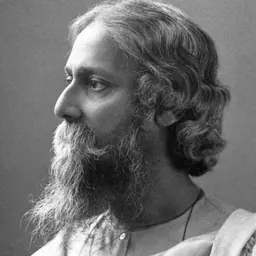
Besides this he received many awards like Ranjitram Suvarna Chandrak and Mahida Paaritoshik in literature. He authored more than 100 books. His first book was a translation work of Rabindranath Tagore's called Kathaa-u-Kaahinee titled Kurbani Ni Katha (Stories of martyrdom) which was first published in 1922. He contributed widely to Gujarati folk literature. He went from village to village in search of folk-lores and published them in various volumes of Saurashtra Ni Rasdhar. He was also the Editor of Phulchhab Newspaper of Janmabhoomi group (which is being published till date from Rajkot).
A sample of his collection of folk tales from Saurashtra has recently been published in English, with the translation done by his son Vinod Meghani. The three volumes published so far are titled A Noble Heritage, A Shade Crimson and The Ruby Shattered.
His poems are taught as a part of syllabus in Gujarat Board Schools (GSEB).
Life Jhaverchand Meghani was born on 28 August 1896 in Chotila, Gujarat, to Kalidas and Dholima Meghani. His father Kalidas worked in the Police force and hence was often transferred to new places causing most of Jhaverchand's education to happen in Rajkot. He had two brothers Lalchand and Prabhashankar. He was married to a woman named Damyanti at the age of 24 and following the demise of his wife, he married Chitradevi at the age of 36. He had 9 children out of which 3 were girls namely Indu, Padmala and Murli, while 6 were boys, namely Mahendra, Mastan, Nanak, Vinod, Jayant and Ashok.
Early life
He lived a simple and sober life and his simplicity prompted his college mates to call him Raja Janak.
He habitually wore a white long coat, a dhoti reaching well down the knees and a turban typically tied around his head. He finished his matriculation in 1912 and completed his BA in 1917. He started his career in Kolkata and joined Jeevanlal and Co. in 1918 as Personal Assistant and was fondly called Paghadee Babu by his colleagues and workers alike. He was soon promoted as the Manager of the company's factory at Belur, Crown Aluminium. In 1919, he went to England for a four-month tour. After coming back to India, he continued to work in Kolkata for 2 and half-years. Later, he returned to Saurashtra and joined the editorial board of the weekly Saurashtra at Rajkot in 1922.
Contribution to the freedom struggle
In 1930, he was sentenced to 2 years in jail for writing the book Sindhudo that contained songs to inspire the youth of India that was participating in the struggle for Independence against the British Raj. It is during this time that he wrote Kavya Triputi based on Gandhiji's visit to London for the Round Table conference. During this period, he also started writing short stories independently and served as editor for Phoolchaab magazine.
Publications
In 1926, he ventured into poetry with his book of children poems Veni Na Phool and started writing in Janmabhumi under the column Kalam Ane Kitaab. He established his reputation as a critic by his independent novels. In 1936, he became the editor of Phoolchaab. In 1942, he ventured into publishing with his book Marela Na Rudhir. In 1945, after retiring from Phoolchaab, he concentrated on personal writing. In 1946, his book Mansai Na Deeva was awarded the Mahida Award. The same year, he was elected to head the Gujarati Sahitya Parishad's Sahitya Section. In 1929, he gave 6 lectures for Gyan Prasarak Mandali. He also lectured at Santiniketan owing to his long association with Rabindranath Tagore. Meghani was also known as a Manbhatt poet due to his significant contribution to folk ballads.
Folklores
Doshi Ni Vato Sorathi Baharvatiya Sorathi Baharvatiya 3–1929 Saurashtra Ni Rasdhar 1 Saurashtra Ni Rasdhar 2 Saurashtra Ni Rasdhar 3 Saurashtra Ni Rasdhar 4 Saurashtra Ni Rasdhar 5 Kankavati 1–1927 Kankavati 2–1928 Dadaji Ni Vato Sorthi Santo-1928 Sorthi Geetkathao-1931 Puratan Jyot-1938 Rang Che Barot-1945 Loksahitya-1939 Pagandino Panth-1942 Charano Ane Charani Sahitya-1943 Dhartinu Dhavan-1944 Loksahitya Nu Samalochan-1946
Poems Veni Na Phool (1927) Killol (1930) Sindhudo (1930) Yugvandana (1935) Ektaro (1940) Bapuna Parna (1943) Ravindra Veena (1944) Midnight Lace (1946)
Folk Songs
Radhiyali Raat 1–1925 Radhiyali Raat 2–1925 Radhiyali Raat 3–1927 Radhiyali Raat 4–1942 Chundadi 1–1928 Chundadi 2–1929 Rutugeeto-1929 Halarda-1929 Sorthi Santvani-1947 Sorthiya Duha-1947
Drama
Rano Pratap (Translation)-1923 Raja Rani-1924 Shah Jahan (Translation)-1927 Vanthela-1933
Travelogue
Saurashtrana Khandaroma-1928 Sorathne Tire Tire-1933 Parkamma-1946 Chellu Prayan-1947
Short stories
Kurbani Ni Kathao-1922 Chinta Na Angara 1–1931 Chinta Na Angara 2–1932
Dariyaparna Bahrvatiya-1932 Pratimao-1932
Dhup Chaya-1935 Meghanini Navlikao 1 and 2–1942 Vilopan-1946 Anu nam te dhani
Novels
Samarangan-1928
Vevishal Ra Gangajaliyo -1 Ra Gangajaliyo -2
Gujaratno Jay 1–1940 Gujaratno Jay 2–1942 Tulsi Kyaro-1940
Kalchakra-1947 Garvi Gujarat
Biography
Annie Besant-1927 Hungary no Taaranahaar-1927 Narvir Lalaji-1927 Satyavir Shradhdhanand-1927 Sorathee Santo-1928 Puraatan Jyot −1938 Thakkar Bapa-1939 Akbar Ni Yaadma-1942 Aapnu Ghar-1942 Panch Varas Na Pankhida-1942 Marelana Rudhir-1942 Aapna Gharni Vadhu Vato-1943 Dayanand Sarasvati-1944
Sant Deveedaas-1946 Vasant-Rajab Smaarak Granth-1947
Don’t just read it —
keep it.
Full-length biographies made to live with: read them, listen on the way to work, watch them tonight.
- E-book
- Audio
- Video
Instant download · yours to keep · every purchase keeps this site free
Important facts
Family & relationships
People in Jhaverchand Meghani's life
Named in this biography and alive at the same time

Related people
Same field, nearest in time






Contemporaries
People whose lives overlapped Jhaverchand Meghani's




Frequently asked questions
Who was Jhaverchand Meghani?
poet, litterateur, social reformer and freedom fighter from Gujarat, India
When was Jhaverchand Meghani born?
Jhaverchand Meghani was born on 28 August 1896 in Chotila.
When did Jhaverchand Meghani die?
Jhaverchand Meghani died on 9 March 1947 in Botad.
What was Jhaverchand Meghani's occupation?
Jhaverchand Meghani was a writer, poet and folklorist.
What nationality was Jhaverchand Meghani?
Jhaverchand Meghani was Indian.
Sources & further reading
· Wikipedia: Jhaverchand Meghani
· DBpedia: Jhaverchand Meghani
Cite this page
APA: Biography.guide. (2026). Jhaverchand Meghani. https://biography.guide/jhaverchand-meghani/
MLA: "Jhaverchand Meghani." Biography.guide, https://biography.guide/jhaverchand-meghani/.
Chicago: "Jhaverchand Meghani." Biography.guide. https://biography.guide/jhaverchand-meghani/.
Data last updated: 2026-09-20 · Spot an error? Report a correction.
Page generated 2026-09-27 05:24 UTC