
About Jerome Kagan
Lived 1929 – 2021 (aged 92). Jerome Kagan was an American psychologist and university teacher.
Jerome Kagan (February 25, 1929 – May 10, 2021) was an American psychologist, who was the Daniel and Amy Starch Research Professor of Psychology at Harvard University, as well as, co-faculty at the New England Complex Systems Institute. He was one of the key pioneers of developmental psychology.
Kagan has shown that an infant's "temperament" is quite stable over time, in that certain behaviors in infancy are predictive of certain other behavior patterns in adolescence. He did extensive work on temperament and gave insight on emotion.
In 2001, he was listed in the Review of General Psychology among the one hundred most eminent psychologists of the twentieth century. After being evaluated quantitatively and qualitatively, Kagan was twenty-second on the list, just above Carl Jung.
Biography Born in Newark, New Jersey, to Myrtle and Joseph Kagan, Jerome Kagan grew up in Rahway, New Jersey. After his graduation from Rahway High School in 1946, he chose to study psychology because he was attracted to being a scientist and he wanted to preserve his grandfather's interest in human nature. While at Yale University, he assisted Frank Beach, a well-respected researcher. Specifically, he found that these children had slower psychological development when in their homes due to their restricted experiences. Kagan also examined the effects of infant daycare in response to a congressional proposal to fund federal day care centers for working mothers.
Emotion Kagan proposed that emotion is a psychological phenomenon controlled by brain states and that specific emotions are products of context, personal history, and biological make-up. Kagan also explained emotion as occurring in four distinct phases, including the brain state (created by an incentive), the detection of changes in bodily movement, the appraisal of a change in bodily feeling, and the observable changes in facial expression and muscle tension.
Temperament According to Kagan, (conventionally):
The study of temperament is perhaps what Kagan is best known for. He began his work on temperament after his research in Guatemala. Kagan primarily focused on children's fear and apprehension. He defined two types of temperament; inhibited and uninhibited. Inhibited refers to a shy, timid, and fearful profile of a child, whereas uninhibited refers to the appearance of bold, sociable, and outgoing behaviours. In Kagan's first published work on behaviourally inhibited children, he established the connection between his work on behavioural inhibition to the works of neuroscientists such as Joseph LeDoux and Michael Davis.
In 2008, Kagan and several other researchers conducted a study to examine whether behavioral inhibition in adulthood can be predicted by certain behavioral characteristics in infants. The research hypothesized that the frequency of infant reactivity, based on motor and crying dimensions, is predictive of behavioral inhibition. As a result of his ground-breaking work on temperament, we know that these characteristics have the ability to influence later behavior, depending on how they interact with the environment. Kagan also believed that there is no guarantee of an indefinitely stable profile considering that environmental factors are always changing and that both genes and environmental factors influence a child's temperament
Publications Articles, contributions, essays, and reports authored by Kagan include: Personality and the learning Process (1965) Reflection- Impulsivity and Reading Ability in Primary Grade Children (1965) On the Need for Relativism, American Psychologist, 1967, 22, 131-142 Personal Development (1971) The growth of the child. Reflections on human development (1978) The Nature of the Child. Basic Books (1982) An argument for mind (2006) What is emotion?: History, measures, and meanings (2007) In defense of Qualitative Changes in Development (2008) The three cultures: Natural sciences, social sciences, and the humanities in the 21st century (2009) Once more into the Breach (2010) The temperamental thread. How genes, culture, time, and luck make us who we are (2010) Trad. esp.: El temperamento y su trama. Cómo los genes, la cultura, el tiempo y el azar inciden en nuestra personalidad, Buenos Aires/Madrid, Katz editores, 2011,
Books authored or co-authored by Kagan include: Birth to Maturity (1962) Understanding Children: Behavior, Motives, and Thought (1971) The Second Year: The Emergence of Self-Awareness (1981) Unstable Ideas: Temperament, Cognition, and Self (1989) Galen’s prophecy: Temperament in human nature (1994) Three Seductive Ideas (2000) A Young Mind in a Growing Brain (2005) Developing Cultures: Essays On Cultural Change (co-editor with Samuel P. Huntington) (2006) Psychology's Ghosts: The Crisis in the Profession and the Way Back (2012) Kinds Come First (2019) A Trio of Pursuits: Puzzles in Human Development (2021)
Don’t just read it —
keep it.
Full-length biographies made to live with: read them, listen on the way to work, watch them tonight.
- E-book
- Audio
- Video
Instant download · yours to keep · every purchase keeps this site free
Important facts
People in Jerome Kagan's life
Named in this biography and alive at the same time



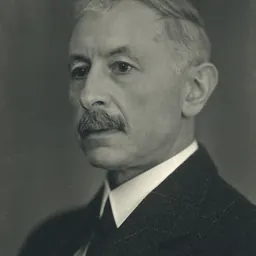
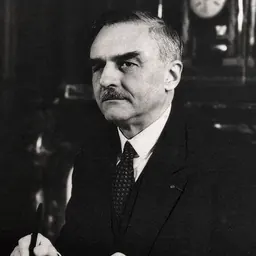
Related people
Same field, nearest in time


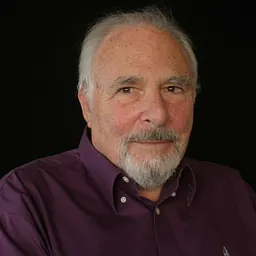


Contemporaries
People whose lives overlapped Jerome Kagan's



Frequently asked questions
Who was Jerome Kagan?
American psychologist (1929–2021)
When was Jerome Kagan born?
Jerome Kagan was born on 25 February 1929 in Newark.
When did Jerome Kagan die?
Jerome Kagan died on 10 May 2021 in Chapel Hill.
What was Jerome Kagan's occupation?
Jerome Kagan was a psychologist and university teacher.
What nationality was Jerome Kagan?
Jerome Kagan was American.
Sources & further reading
Cite this page
APA: Biography.guide. (2026). Jerome Kagan. https://biography.guide/jerome-kagan/
MLA: "Jerome Kagan." Biography.guide, https://biography.guide/jerome-kagan/.
Chicago: "Jerome Kagan." Biography.guide. https://biography.guide/jerome-kagan/.
Data last updated: 2026-09-20 · Spot an error? Report a correction.
Page generated 2026-09-27 05:32 UTC