
About Jerome Cavanagh
Lived 1928 – 1979 (aged 51). Jerome Cavanagh was an American lawyer and politician.
Jerome Patrick Cavanagh (June 16, 1928 – November 27, 1979) was an American politician who served as the 64th mayor of Detroit, Michigan from 1962 to 1970. Initially a popular figure, his reputation was seriously damaged by the city's 1967 riots, the most destructive of any U.S. city that decade. He was the first mayor to reside at the Manoogian Mansion, donated to the city by the industrial baron Alex Manoogian.
Early life and family Jerome P. Cavanagh was born on June 16, 1928, in Detroit, the son of Mary Irene (Timmins) and Sylvester J. Cavanaugh, a boilermaker at Ford Motor Company. He attended the University of Detroit, earning an undergraduate degree in 1950 and a law degree in 1954, and practiced law in Detroit after graduation. New skyscrapers were built downtown. The Model Cities Program was a key component of President Lyndon B. Johnson's Great Society and War on Poverty. Begun in 1966, it operated five-year-long experiments in 150 cities to develop new antipoverty programs and alternative forms of municipal government. The ambitious federal urban aid program succeeded in fostering a new generation of mostly black urban leaders. Detroit was one of the largest Model Cities projects. Mayor Cavanagh was the only elected official to serve on Johnson's task force. Detroit received widespread acclaim for its leadership in the program, which used $490 million to try to turn a nine-square-mile section of the city (with 134,000 inhabitants) into a model city. The city's political and business elite, and city planners, along with the black middle class, wanted federal funding to assist the economic growth of the entire city. They sought to protect the central business district property values from nearby slums and to construct new revenue-generating structures. However local community organizers and civil rights activists rallied poor residents in opposition to these plans. They said federal renewal funding should be used to replace deteriorating housing stock, whether with new public housing or low-cost housing built by private developers. The Model City program was terminated in Detroit and nationwide in 1974 after major race riots in most of its target cities.
Observers believed that Detroit had extinguished the embers of resentment left over from the 1943 Detroit Race Riot.
For example, Fortune magazine commented:
The economy of the city also seemed in generally good health. The National Observer commented:
1967 riots However, deeper problems existed under the surface. After World War II, the automobile industry, requiring more lateral space than was available in a city, and desiring to avoid city taxes, decentralized its operations. As with other cities, Detroiters were leaving Detroit for its suburbs by the thousands by 1967. Some 22,000 residents, mostly white, moved to the suburbs in 1966 alone, following new auto plants and new housing, or using the newly constructed Interstate system to commute into Detroit.
Detroit faced serious financial trouble. Cavanagh had inherited a $28 million budget gap in 1962. To close the gap, and to pay for the new programs he wanted to implement, Cavanagh had pushed through the legislature income and commuter taxes for Detroit, but these proved unpopular with residents and businesses.
On July 23, 1967, a police attempt to break up an illegal party escalated into what would be known as the 12th Street Riot. Feeling a large police presence would make things worse, Cavanagh acted slowly to stop the riots. Late Sunday afternoon, Cavanagh and city officials met at the 10th precinct with black community leaders and neighborhood activists. When asked why it took so long to call in the guard, Cavanagh replied "because they're all white. Were leery about that." Rioting lasted for five days, killed 43 people, left over 5,000 people homeless, and required two divisions of federal paratroopers to be put down; these would be the most destructive of the approximately 400 riots that American cities experienced in the 1960s. Cavanagh himself had to admit in July 1967, "Today we stand amidst the ashes of our hopes. We hoped against hope that what we had been doing was enough to prevent a riot. It was not enough."
The view that Detroit was a “Model City" led to the belief that it might not suffer the same race-related troubles of many other cities. The riots came as a complete shock to Cavanagh. He was, moreover, procedurally limited in his ability to control the riots as it was the role of Governor George Romney to ask for federal assistance once it appeared local resources might not be sufficient. By the time the National Guard had been called in, riots had already reached a massive scale. Cavanagh believed that a prompt federal response may very well have greatly reduced the severity of the riots. In October, Cavanagh counter-sued, and in 1968 the couple went through a contentious and public divorce.
After Cavanagh left office, he returned to his private law practice in Detroit and was also one of the first adjunct professors at the newly created Public Policy Department (later renamed The Gerald Ford Public Policy Institute) at the University of Michigan. In 1974, Cavanagh again ran for office, this time for Governor, but lost in the primary election to Democrat Sander Levin, who later lost in the general election to Republican William Milliken. It was Cavanagh's last attempt at political office.
Cavanagh died of a heart attack on November 27, 1979, at St. Joseph Hospital in Lexington, Kentucky, while visiting a client in that city. He was 51 years old. He is buried in Mt. Elliott Cemetery in Detroit.
Don’t just read it —
keep it.
Full-length biographies made to live with: read them, listen on the way to work, watch them tonight.
- E-book
- Audio
- Video
Instant download · yours to keep · every purchase keeps this site free
Important facts
People in Jerome Cavanagh's life
Named in this biography and alive at the same time
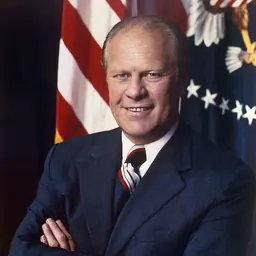

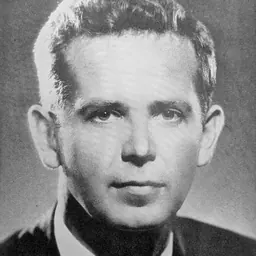

Related people
Same field, nearest in time


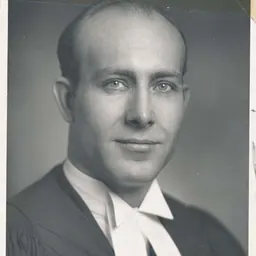
Contemporaries
People whose lives overlapped Jerome Cavanagh's


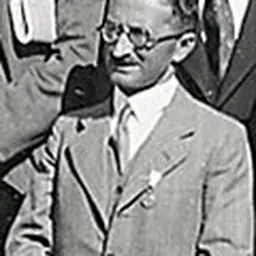


Frequently asked questions
Who was Jerome Cavanagh?
American mayor (1928-1979)
When was Jerome Cavanagh born?
Jerome Cavanagh was born on 16 June 1928 in Detroit.
When did Jerome Cavanagh die?
Jerome Cavanagh died on 27 November 1979 in Lexington.
What was Jerome Cavanagh's occupation?
Jerome Cavanagh was a lawyer and politician.
What nationality was Jerome Cavanagh?
Jerome Cavanagh was American.
Sources & further reading
Cite this page
APA: Biography.guide. (2026). Jerome Cavanagh. https://biography.guide/jerome-cavanagh/
MLA: "Jerome Cavanagh." Biography.guide, https://biography.guide/jerome-cavanagh/.
Chicago: "Jerome Cavanagh." Biography.guide. https://biography.guide/jerome-cavanagh/.
Data last updated: 2026-09-20 · Spot an error? Report a correction.
Page generated 2026-09-27 05:26 UTC