
About Jeremy Griffith
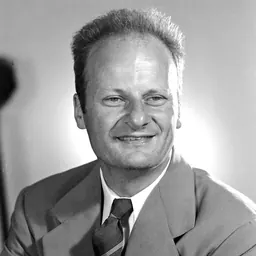
Born 1945. Jeremy Griffith is an Australian biologist.
Jeremy Griffith (born 1945) is an Australian author. He first came to public attention for his attempts to find the Tasmanian tiger. He later became noted for his writings on the human condition and theories about human progress, which seek to give a biological, rational explanation of human behaviour. He founded the not-for-profit Fix The World in 1983.
Early life and career
Griffith was raised on a sheep property in central New South Wales. He was educated at Tudor House School, New South Wales, and the Geelong Grammar School, Victoria, in 1965 completing the NSW Higher School Leaving Certificate with first class honours in biology. He began a science degree at the University of New England, in northern New South Wales, and completed his Bachelor of Science degree in zoology at the University of Sydney in 1971.
Search for the Tasmanian Tiger Griffith first became known for his search for surviving Tasmanian tigers, or thylacines, the last known specimen of which had died in captivity in 1936. The search was conducted from 1967 to 1973. It is considered the most intensive search to that point, and included exhaustive surveys along Tasmania's west coast, and his report of the search was published in Natural History.
Some ten years later the thylacine was declared extinct by the International Union for Conservation of Nature in 1982 and by the Tasmanian government in 1986.
Furniture business After returning from his search for the thylacine, Griffith started a furniture business, Griffith Tablecraft, with his brother Gervase. The business made simple furniture out of solid slabs of wood without use of nails or glue. Griffith left the company in 1990 and it was ultimately sold in 2002.
On human nature, the human condition, and progress Griffith began writing on the human condition in 1975. His books seek to give a biological and rational explanation of human behaviour and include references to philosophical and religious sources.
His first book on the subject, Free: The End of the Human Condition, was published in 1988, and Griffith was interviewed by Caroline Jones on her Radio National program, The Search for Meaning. A Species In Denial (2003) became a bestseller in Australia and New Zealand. Freedom: The End of the Human Condition (2016) has been described as the definitive presentation of his treatise.
Griffith presents a wide-ranging induction-derived synthesis.
Griffith explains human nature (what he terms the human condition) by proposing that as consciousness emerged in our hominid ancestors, the intellect's experiments in self-management were in effect criticised by our pre-established instincts, the result of which was that humans unavoidably became increasingly "angry, egocentric and alienated". Kirkus Reviews wrote, "Griffith offers a treatise about the true nature of humanity and about overcoming anxieties about the world".
According to psychologist Ronald Conway, Griffith holds that we are at war with our own selves, causing humanity to become, as Plato proposed in his allegory of the cave, alienated from its original peaceful state of innocence. Griffith says that this war within is the cause of ongoing actual wars and the general lack of cooperation in the world. Griffith analyses the scientific literature in human evolution; rejects claims that human ancestors were brutal and aggressive; and instead points to fossil evidence such as that of Ardipithecus ramidus, and primatological studies of bonobos (the great ape Pan paniscus), in support of his thesis that ancient humans were a gentle, loving and co-operative species.
A reviewer of Griffith's 2003 book A Species in Denial described the book's thesis as "humanity is in denial about the loss of its innocence in a corrupt and broken world", and believed it would have benefited from including discussion of the works of Martin Buber, H. Richard Niebuhr, Lawrence Kohlberg and James W. Fowler, who also examine the moral stages of human growth.
Some reviewers described A Species in Denial as challenging or difficult to read, however "through the repetition of his concepts the reader finally grasps Griffith's meaning and, surprisingly, when this happens all kinds of questions arise, which is refreshing." Conway wrote "A Species In Denial needs repeated reading, not because it is particularly difficult but because it goes against so much of the resigned don't-rock-the-boat attitude of the Western mind in particular."
In a 2020 article "The fury of the left, explained", published in The Spectator Australia, Griffith argues that the ideology of the Left is dangerous to humanity's progress. He describes left-wing views as regressive and likely to lead to extinction.
Fix The World Fix The World was founded by Griffith in 1983 as the Centre for Humanity's Adulthood, an organisation dedicated to developing and promoting understanding of the human condition. It was incorporated in 1990 with Griffith and his colleague, mountaineer Tim Macartney-Snape, among its founding directors and became a registered charity in New South Wales in 1990, known as the Foundation for Humanity's Adulthood. In 2009, its name changed to the World Transformation Movement and then to Fix The World in 2026.
Media coverage and legal proceedings In 1995, Griffith, Macartney-Snape and the Foundation for Humanity's Adulthood (Fix The World's name at the time) were the subject of an Australian Broadcasting Corporation (ABC) Four Corners programme and an article in the Sydney Morning Herald (SMH) newspaper in which it was alleged that Macartney-Snape used speaking appearances at schools to promote the foundation, and that Griffith "publishes work of such a poor standard that it has no support at all from the scientific community". In defamation actions against the ABC and the SMH, the allegations were ruled to be false and the pieces defamatory.
In 1998, following a complaint by Griffith and Macartney-Snape, the Australian Broadcasting Authority censured the ABC for unbalanced and inaccurate reporting and breaching the ABC code of practice, with The Bulletin describing the Four Corners programme as a "hatchet job" (another term for a "hit piece").
Griffith, Macartney-Snape and Fix The World sued the ABC and the Sydney Morning Herald in the NSW Supreme Court and both publications were found to be defamatory. In 2008, the ABC was ordered to pay Macartney-Snape almost $500,000 in damages, and with costs, the payout was expected to exceed $1 million. on the basis of qualified privilege and comment being upheld, but found that the defamatory allegation about Griffith was not justified. The court case against the Sydney Morning Herald was resolved in 2009 when it published an apology to Fix The World for the harm caused by the publication.
Selected works Books
Monographs
Don’t just read it —
keep it.
Full-length biographies made to live with: read them, listen on the way to work, watch them tonight.
- E-book
- Audio
- Video
Instant download · yours to keep · every purchase keeps this site free
Important facts
People in Jeremy Griffith's life
Named in this biography and alive at the same time





Related people
Same field, nearest in time



Contemporaries
People whose lives overlapped Jeremy Griffith's


Frequently asked questions
Who is Jeremy Griffith?
Australian biologist
When was Jeremy Griffith born?
Jeremy Griffith was born in 1945.
What is Jeremy Griffith's occupation?
Jeremy Griffith is a biologist.
What nationality is Jeremy Griffith?
Jeremy Griffith is Australian.
Sources & further reading
Cite this page
APA: Biography.guide. (2026). Jeremy Griffith. https://biography.guide/jeremy-griffith/
MLA: "Jeremy Griffith." Biography.guide, https://biography.guide/jeremy-griffith/.
Chicago: "Jeremy Griffith." Biography.guide. https://biography.guide/jeremy-griffith/.
Data last updated: 2026-09-22 · Spot an error? Report a correction.
Page generated 2026-09-27 05:21 UTC