
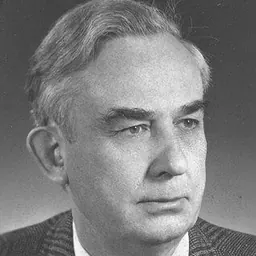
Jeffrey Skolnick
Computational biologist
About Jeffrey Skolnick
Born 1953. Jeffrey Skolnick is an American computational biologist.
Jeffrey Skolnick is an American computational biologist. He is currently a Georgia Institute of Technology School of Biology Professor, the Director of the Center for the Study of Systems Biology, the Mary and Maisie Gibson Chair, the Georgia Research Alliance Eminent Scholar in Computational Systems Biology, the Director of the Integrative BioSystems Institute, and was previously the Scientific Advisor at Intellimedix.
He has focused on the development of computational algorithms and their application to proteomes for the prediction of protein structure and function, the prediction of small molecule ligand-protein interactions with applications to drug discovery, the prediction of off-target uses of existing drugs, and the exploration of the interplay between protein physics and evolution in determining protein structure and function. He is a pioneer in the field of protein structure prediction, including the development of CABS and CAS methods of lattice based conformation sampling, and the algorithms Touchstone II and TASSER.
Skolnick is most known for demonstrating that the number of ligand binding pockets in proteins is quite small, thereby justifying the likelihood that large scale drug repurposing will work. This combined with the ability to use predicted as well as experimental structures in virtual ligand screening at higher accuracy and precision than existing approaches will enable FDA approved drugs with novel mechanisms of action to be identified computationally with a high likelihood of experimental success.
He is also known for his unique teaching methodology and interactive pedagogy to simplify the comprehension of complex concepts in computational chemistry.
Major Discoveries
Completeness of the library of protein structures and interactions
Skolnick was first to demonstrate that the library of single domain protein structures is likely complete and that the observed folds in nature arise from the confinement of dense polymer chains. He further demonstrated that the confinement of these dense polymer chains plus hydrodynamic interactions were the dominant contributor to diffusive processes in cells. Moreover, that the hydrodynamic interactions introduced large scale temporal and spatial correlations that may have important functional consequences.
Ligand homology modeling He also pioneered the field of ligand homology modeling with his threading based, FINDSITE approach for protein function inference, binding site prediction and virtual ligand screening. The research showed that remotely related proteins identified by threading often share a common ligand binding site occupied by chemically similar ligands that contain strongly conserved anchor functional groups as well as a variable region that accounts for their binding specificity. These insights enable low-resolution predicted structures to be used for ligand screening/binding pose prediction, with comparable accuracy as with high-resolution experimental structures. In virtual ligand screening, the latest version, FINDSITEcomb, was shown to work far better than more traditional virtual screening approaches on both predicted and high resolution experimental structures.
TASSER protein structure prediction He also developed the TASSER protein structure prediction approach, whose variants were among the top performers in CASP in the 2000s and the basis for the I-TASSER service. TASSER was among the first methods whose models were closer to the native structure than the starting template.
Odijk-Skolnick-Fixman electrostatic persistence length Skolnick's Ph.D. thesis " “Investigations on a Rod Like Polyelectrolyte Model", along with Fixman and Odijk, developed a theory for the electrostatic persistence length in polyelectrolytes now known as the Odijk-Skolnick-Fixman electrostatic persistence length which is still considered the classical benchmark.
Education Skolnick graduated summa cum laude from Washington University in 1975 with a Bachelor of Arts degree in chemistry. After Washington University, he moved on to Yale, where he graduated with a Master of Philosophy in Chemistry in 1977 and a Ph.D. in Chemistry just one year later in 1978.
His Ph.D. thesis, “Investigations on a Rod Like Polyelectrolyte Model”, focused on polymer statistical mechanics with Dr. Marshall Fixman. The methods described by Skolnick and Fixman and independently developed by Theo Odijk are still used as the basis for the electrostatic persistence length of polyelectrolytes. Skolnick was awarded the Southeastern Universities Research Association’s (SURA) 2014 Distinguished Scientist Award. In 2020, Skolnick was appointed Regents Professor in the University of Georgia system, the highest honor for a professor acknowledging their national and international scholarship. He was selected for a Regents Professor renewal in 2026.
Journals and Editorial Boards Dates Journal 2012–present Editorial Board, PeerJ 2012–present Structural Biology Section Editor, Biology Direct 2011–present Editorial Board, Current Bioinformatics 2005–present Editorial Board, Biology Direct 1998–present Editorial Board, Proteins
He is also a cofounder of an early stage structural proteomics company, GeneFormatics, and his software has been commercialized by Tripos.
Professional career Dates Position 2010–present Director, Integrated Biosystems Institute, Georgia Institute of Technology 2008–2010 Associate Director, Integrated Biosystems Institute, Georgia Institute of Technology 2002–2005 Director, Buffalo Center of Excellence in Bioinformatics 2002–2005 Professor, Structural Biology, University at Buffalo 1999–2002 Director, Computational/Structural Biology, Danforth Plant Science Center
Patents System and method for determining three-dimensional structures of proteins, (1993). Prediction of relative binding motifs of biologically active peptides and peptide mimetics, (1999). Methods for using functional site descriptors and predicting protein function, (2003).
Don’t just read it —
keep it.
Full-length biographies made to live with: read them, listen on the way to work, watch them tonight.
- E-book
- Audio
- Video
Instant download · yours to keep · every purchase keeps this site free
Important facts
Related people
Same field, nearest in time




Contemporaries
People whose lives overlapped Jeffrey Skolnick's



Frequently asked questions
Who is Jeffrey Skolnick?
computational biologist
When was Jeffrey Skolnick born?
Jeffrey Skolnick was born in 1953 in Brooklyn.
What is Jeffrey Skolnick's occupation?
Jeffrey Skolnick is a computational biologist.
What nationality is Jeffrey Skolnick?
Jeffrey Skolnick is American.
Sources & further reading
Cite this page
APA: Biography.guide. (2026). Jeffrey Skolnick. https://biography.guide/jeffrey-skolnick/
MLA: "Jeffrey Skolnick." Biography.guide, https://biography.guide/jeffrey-skolnick/.
Chicago: "Jeffrey Skolnick." Biography.guide. https://biography.guide/jeffrey-skolnick/.
Data last updated: 2026-09-20 · Spot an error? Report a correction.
Page generated 2026-09-27 05:20 UTC