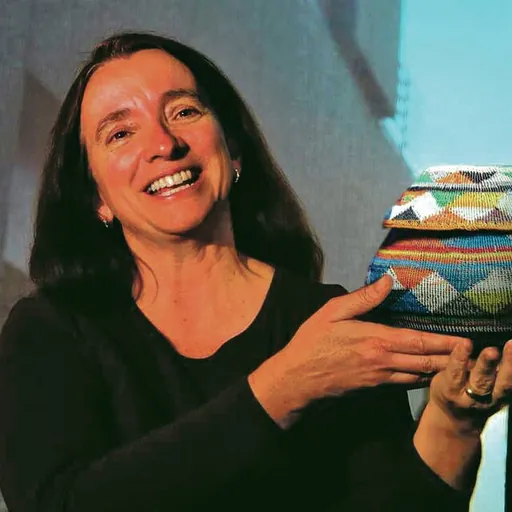
Bette Korber
American computational biologist
About Bette Korber
Born 1950. Bette Korber is an American computational biologist and virologist.
Bette Tina Marie Korber is an American computational biologist focusing on the molecular biology and population genetics of the HIV virus that causes infection and eventually AIDS. She has contributed heavily to efforts to obtain an effective HIV vaccine. at Los Alamos National Laboratory. She has received the Ernest Orlando Lawrence Award, the Department of Energy's highest award for scientific achievement. She has also received several other awards including the Elizabeth Glaser Award for pediatric AIDS research From 1981 to 1988, she was in the graduate program at the California Institute of Technology (Caltech), where she worked with Iwona Stroynowski in Leroy Hood's laboratory,
She then became a postdoctoral fellow with Myron Essex, working on the molecular epidemiology of the AIDS/HIV virus and HTLV-1, the human leukemia virus, at the Harvard School of Public Health until 1990. There, Korber used polymerase chain reaction (PCR) to show both complete and deleted versions of viral genomes in leukemic cells. Her work on these viral partial and complete genomes was influential and widely cited. She became a visiting faculty member at the Santa Fe Institute in 1991, continuing in that position until 2011. Several years later, looking back on this event, she described its effects: "I hate HIV ... I lost a couple friends to it. HIV kills in horrible ways. I think of what the epidemic has done to Africa and it motivates me." In addition, the database focuses on the small regions (called epitopes) within the virus that can be recognized by antibodies, and evaluates the evidence for the strength of each epitope in eliciting immune responses. There is also data on the immunological profiles of individuals resistant to HIV. The most variable region is the surface of the virus, but there is also some variation of the internal proteins involved in virus replication, which may be attacked by the cellular immunity system or T cell responses. A recent approach that Korber and collaborators have taken is to design mosaic antigens. In 2009, Korber described the process: "I create sort of little Frankenstein proteins that look and feel like HIV proteins but they don't exist in nature."
Several of the major variations are included in each molecule of protein, thus producing a variant protein antigen that probably does not exist in the wild virus population but should cross-react with variants that do exist. In 2009, she described a designed mosaic protein this way: "People didn't know if it would fold properly, if it would be antigenic, or if it would have the same sites that recognized by killer T cells". They found that the newly designed antigens did fold properly and acted as a strong antigen, and were recognized by the cytotoxic T cells (killer cells). She recalled that at Caltech when few women were there, she took a class with physicist Richard Feynman and became friends with him. She said, "At a time when kindness seemed rare, I really appreciated his generous spirit and encouragement. I think he would have been pleased about this award". that HIV could have jumped from chimpanzees to humans because of an accidental contamination by chimpanzee SIV of the oral polio vaccine (CHAT) used in Africa in the 1950s. Korber and her colleagues employed the Los Alamos National Laboratory database's genomic data to calculate when the HIV sequence evolution began, using a model of evolution based on the mutation rate of HIV strains and assuming that variable was the same on all branches of the evolutionary tree. In 2000 they published an estimate of approximately 1930 for the origin of the human immunodeficiency virus. Their research was covered widely as establishing a new date for the origin of the human virus, discrediting the oral polio virus theory, and therefore refuting concerns about using oral polio vaccine (OPV). These two concepts of the origin of this virus plus other related theories continued to compete for scientific credibility.
In 2008, Worobey and collaborators used a computer modeling approach similar to Korber's but with a relaxed evolutionary model and two older samples, collected earlier than any genomes included in Korber's study, and found an origin date for HIV of approximately 1900.
COVID-19 As the COVID-19 pandemic unfolded, Korber and her Los Alamos colleagues devised computational strategies that look for evolutionary changes in genes that encode the Spike proteins that stud the SARS-CoV-2 coronavirus and give it its crown-like appearance. Her strategies can examine millions of global genomes stored by GISAID, and it flags mutations that vary from the original Wuhan sequence by at least a minimum specified threshold amount. Using this strategy, she and colleagues identified a particular Spike mutation, Aspartic acid (Asp) to Glycine (Gly) at position 614 (D614G), that was gaining prevalence across the globe since February 2020. This finding, which was controversial at first, was validated by multiple other groups who showed that the D614G mutation was shown to improve the efficiency of replication and transmission of SARS-CoV-2, and this mutation, as of June 2020, has become part of all globally prevalent SARS-CoV-2 strains. As of September 28, 2021, she and her group continue to analyze GISAID data for novel variants, whose objective is to "provide actionable intelligence on SARS-CoV-2 variants through genomic surveillance, data sharing and curation, and standardized in vitro assessments of therapeutics against novel strains."
Personal life Korber married James Theiler in 1988. She also contributed to the distribution of Earth Boxes of maintenance-free portable gardens to orphanages, clinics, and schools in Africa. 2019: Inventor of the Year, Battelle, 2019, Award given in Columbus, Ohio 2018: R&D Magazine Scientist of the Year 2018: Richard Feynman Award for Innovation 2004: Ernest Orlando Lawrence Award 2001: Distinguished Alumna of CSULB
Selected publications
Keele, Brandon F.; Giorgi, Elena E.; Salazar-Gonzalez, Jesus F.; Decker, Julie M.; Pham, Kimmy T.; Salazar, Maria G.; Sun, Chuanxi; Grayson, Truman; Wang, Shuyi; Li, Hui; Wei, Xiping (2008-05-27). "Identification and characterization of transmitted and early founder virus envelopes in primary HIV-1 infection". Proceedings of the National Academy of Sciences. 105 (21): 7552–7557. doi:10.1073/pnas.0802203105. ISSN 0027-8424. PMID 18490657.
Don’t just read it —
keep it.
Full-length biographies made to live with: read them, listen on the way to work, watch them tonight.
- E-book
- Audio
- Video
Instant download · yours to keep · every purchase keeps this site free
Important facts
People in Bette Korber's life
Named in this biography and alive at the same time
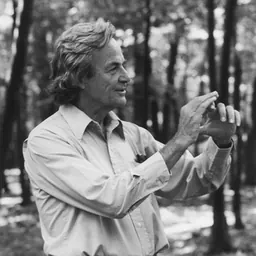



Related people
Same field, nearest in time




Contemporaries
People whose lives overlapped Bette Korber's


Frequently asked questions
Who is Bette Korber?
American computational biologist
When was Bette Korber born?
Bette Korber was born in 1950.
What is Bette Korber's occupation?
Bette Korber is a computational biologist and virologist.
What nationality is Bette Korber?
Bette Korber is American.
Sources & further reading
Cite this page
APA: Biography.guide. (2026). Bette Korber. https://biography.guide/bette-korber/
MLA: "Bette Korber." Biography.guide, https://biography.guide/bette-korber/.
Chicago: "Bette Korber." Biography.guide. https://biography.guide/bette-korber/.
Data last updated: 2026-09-23 · Spot an error? Report a correction.
Portrait: Wikimedia Commons · author & licence
Page generated 2026-09-27 05:07 UTC