
About Jeffrey Gilbert
Lived 1674 – 1726 (aged 51–52). Jeffrey Gilbert was a British judge.
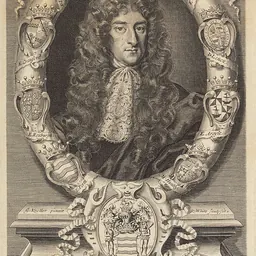
The Right Honourable Jefferay Gilbert. Mezzotint print by John Faber the Younger after an oil painting by Michael Dahl
Sir Jeffrey Gilbert (1674–1726) was an English barrister, judge and author who held office as Lord Chief Baron of the Exchequer in both Ireland and England. While he was serving as a judge in Ireland, a routine judgment he delivered unexpectedly led to a major political crisis, as a result of which he was briefly imprisoned. He later became renowned for his legal treatises, none of which were published in his lifetime.
Family and early career He was born at Goudhurst in Kent, son of William Gilbert, a farmer, who died a few months after his son's birth; his mother Elizabeth Gibbon is said to have been a cousin of the great historian Edward Gibbon. He was baptised on 10 October 1674.
He was called to the Bar in 1698 and earned some fame as a law reporter. He was an outstanding scholar, his interests including theology and mathematics as well as law: shortly before his death, he became a Fellow of the Royal Society. He enjoyed the patronage of William Cowper, 1st Earl Cowper, This dispute over the ownership of certain lands in Naas was notable only for the determination of both parties (who were cousins) to win it. In pursuit of this aim, they re-opened the sensitive issue of whether the Irish House of Lords or the British was the final court of appeal in Ireland. Unexpectedly, in the phrase of Gilbert's colleague Baron Pocklington, the case "caused a flame to burst forth", and the country's "last resentment" was visited on the Barons of the Exchequer. as a further insult they were ordered to pay for their own upkeep.
Aftermath After three months Gilbert emerged from custody to find that from having been "the darling of the nation" he had become "the most infamous of men". The British House of Lords responded to the imprisonment of the Barons by passing the Dependency of Ireland on Great Britain Act 1719 (the notorious Sixth of George I) which took away the right of appeal to the Irish House and declared the right of the Parliament of England to make laws for Ireland. Embittered by the loss of their powers, the Lords blamed Gilbert rather than their own provocative behaviour. He was venomously attacked by the influential Archbishop of Dublin, William King, and subjected to a campaign of petty persecution (he complained that while on assize at Longford he found it impossible to secure proper lodgings and had to sleep in the local barracks). The same year he became Lord Chief Baron of the Exchequer and was knighted.
There is one known portrait of him in his judicial robes, by the Swedish painter Michael Dahl.
The treatises Though he was renowned as a scholar, Gilbert published very little in his lifetime. After his death a large collection of his manuscripts was found: these covered almost the whole sphere of English law. Over the coming decades most of them were published, but in a rather haphazard way. This gave rise to some curious stories; in a leading copyright case in 1774, Gilbert's successor as Chief Baron, Sidney Smythe, said he understood that Gilbert left the works to a colleague who employed a journalist to copy them, but that the copyist stole them and sold them to a publisher. While this seems unlikely, it is clear that the quality of the early editions was poor: most of them were full of mistakes so in later editions readers were assured that the editors had corrected the errors.
On the other hand, it is generally agreed that the quality of the writing itself is remarkable: Francis Elrington Ball called Gilbert the most eminent author who ever sat on the Irish Bench. Its influence declined after Jeremy Bentham singled it out for attack in his own Treatise on Evidence (1825), but it is still regarded as a landmark in the development of evidence as a branch of the law in its own right.
Central to the work is the best evidence rule: despite a few earlier references to this concept, Gilbert can fairly be said to have invented it. He argued that "a man must have the utmost evidence the nature of the fact is capable of.... there can be no demonstration of the fact without the best evidence that the fact is capable of". He formulated the idea of weights or hierarchy of evidence: written evidence has more weight than verbal, and an original document has more weight than a copy (the latter rule is still generally regarded as good law).
Other works Blackstone also admired Gilbert's The History and Practice of Civil Law Actions, praising Gilbert's skill in tracing the origin of many modern rules; other critics however deplored the number of mistakes in the book, and questioned whether Gilbert had actually intended to publish it. His Treatise on Tenures was influential in America as well as England; the US Supreme Court in 1815 called it "an excellent work", and the future US President John Adams was studying it intensively in 1758. Gilbert's Treatise on Rents was regarded as authoritative by the Supreme Court of Canada as late as 1951.
List of treatises (possibly incomplete) Law of distresses and replevins 1730 Law of Uses and Trusts 1733 Law and Practice of Ejectments 1734 Reports of cases in Equity and the Exchequer 1734 The History and Practice of Civil Law Actions particularly in the Court of Common Pleas Treatise on Equity 1741 Law of Evidence 1754 Two Treatises on the Proceedings in Equity and the Jurisdiction of that Court, 2 vols. (Dublin, 1756–58) Treatise on Tenures 1757 History and Practice of the Court of Chancery 1758 Treatise on the Court of Exchequer 1758 Treatise on Rents 1758 Reports of cases in law and equity, including a Treatise on Debt and a Treatise on the Constitution 1760 Law of Executions 1763 Law of devises, last wills and revocations 1792
Don’t just read it —
keep it.
Full-length biographies made to live with: read them, listen on the way to work, watch them tonight.
- E-book
- Audio
- Video
Instant download · yours to keep · every purchase keeps this site free
Important facts
People in Jeffrey Gilbert's life
Named in this biography and alive at the same time




Related people
Same field, nearest in time


Contemporaries
People whose lives overlapped Jeffrey Gilbert's



Frequently asked questions
Who was Jeffrey Gilbert?
Judge and Lord Chief Baron of the Exchequer in England and Ireland
When was Jeffrey Gilbert born?
Jeffrey Gilbert was born in 1674.
When did Jeffrey Gilbert die?
Jeffrey Gilbert died in 1726 in Bath.
What was Jeffrey Gilbert's occupation?
Jeffrey Gilbert was a judge.
What nationality was Jeffrey Gilbert?
Jeffrey Gilbert was British.
Sources & further reading
· DBpedia: Jeffrey Gilbert (judge)
Cite this page
APA: Biography.guide. (2026). Jeffrey Gilbert. https://biography.guide/jeffrey-gilbert/
MLA: "Jeffrey Gilbert." Biography.guide, https://biography.guide/jeffrey-gilbert/.
Chicago: "Jeffrey Gilbert." Biography.guide. https://biography.guide/jeffrey-gilbert/.
Data last updated: 2026-09-25 · Spot an error? Report a correction.
Page generated 2026-09-27 05:11 UTC