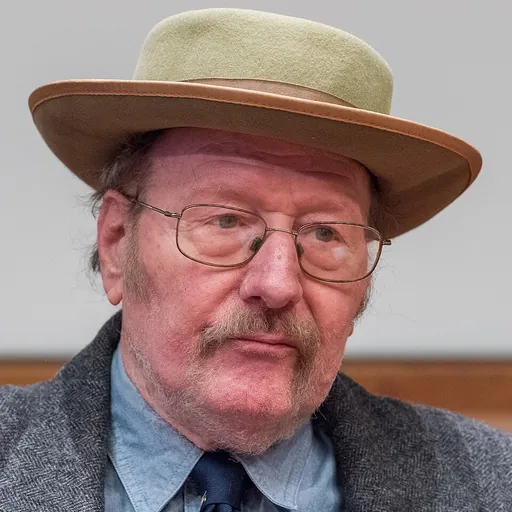
Jeffrey C. Hall
American geneticist and chronobiologist
About Jeffrey C. Hall
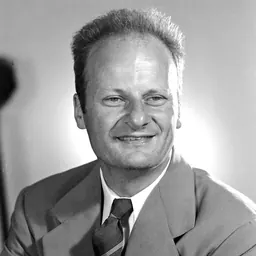
Born 1945. Jeffrey C. Hall is an American biologist, university teacher and geneticist, known for Period (gene).
Jeffrey Connor Hall (born May 3, 1945) is an American geneticist and chronobiologist. Hall is Professor Emeritus of Biology at Brandeis University and currently resides in Cambridge, Maine.
Hall spent his career examining the neurological component of fly courtship and behavioral rhythms. Through his research on the neurology and behavior of Drosophila melanogaster, Hall uncovered essential mechanisms of the circadian clocks and shed light on the foundations for sexual differentiation in the nervous system. He was elected to the National Academy of Sciences for his revolutionary work in the field of chronobiology, and nominated for the T. Washington Fellows.
In 2017, along with Michael W. Young and Michael Rosbash, he was awarded the 2017 Nobel Prize in Physiology or Medicine "for their discoveries of molecular mechanisms controlling the circadian rhythm".
Life
Early life and education Jeffrey Hall was born in Brooklyn, New York, and raised in the suburbs of Washington D.C., while his father worked as a reporter for the Associated Press, covering the U.S. Senate. Hall's father, Joseph W. Hall, greatly influenced him especially by encouraging Hall to stay updated on recent events in the daily newspaper. Hall attended Walter Johnson High School in Bethesda, Maryland, graduating in 1963. As a good high school student, Hall planned to pursue a career in medicine. Hall began pursuing a bachelor's degree at Amherst College in 1963. However, during his time as an undergraduate student, Hall found his passion in biology. Hall became fascinated with the study of Drosophila (fruit flies) while working in Ives' lab, a passion that has permeated his research. Under the supervision of Ives, Hall studied recombination and translocation induction in Drosophila. The success of Hall's research pursuits prompted department faculty to recommend that Hall pursue graduate school at University of Washington in Seattle, where an entire department was devoted to genetics. Hall realized from this study that courtship singing behavior was one of the elegantly quantifiable features of courtship and decided to study this topic further. In the subsequent research with a postdoctoral fellow in his lab, Bambos Kyriacou, Hall discovered that Drosophila courtship song was produced rhythmically with a normal period of about one minute.
Neurogenetics In his research, Hall mainly focused on flies with the fruitless gene, which he began studying during his postdoctoral years. The fruitless (fru) mutant was behaviorally sterile. Furthermore, they indiscriminately courted both females and males, but did not try to mate with either. This behavior was identified in the 1960s, but it had been neglected until Hall's group began to investigate the topic further. In the mid-1990s, through collaborative work with Bruce Baker at Stanford University and Barbara Taylor at Oregon State University, Hall successfully cloned fruitless. Through subsequent research with the cloned fruitless, Hall confirmed the previously suspected role of fruitless as the master regulator gene for courtship. By examining several fru mutations, Hall discovered that males performed little to no courtship toward females, failed to produce the pulse song component of courtship song, never attempted copulation, and exhibited increased inter-male courtship in the absence of FruM proteins.
Circadian rhythm of period gene and protein Hall worked primarily with Drosophila to study the mechanism of circadian rhythms. Rather than using the more traditional method of measuring eclosion, Hall measured locomotor activity of Drosophila to observe circadian rhythms.
Discovery of PER protein self regulation In 1990, while in collaboration with Michael Rosbash and Paul Hardin, Hall discovered that the Period protein (PER) played a role in suppressing its own transcription. While the exact role of PER was unknown, Hall, Rosbash, and Hardin were able to develop a negative transcription-translation feedback loop model (TTFL) that serves as a central mechanism of the circadian clock in Drosophila. In this original model, per expression led to an increase of PER. After a certain concentration of PER, the expression of per decreased, causing PER levels to decrease, once again allowing per to be expressed.
Discovery of synchronization between cells In 1997, Hall was a part of group with Susan Renn, Jae Park, Michael Rosbash, and Paul Taghert that discovered genes that are a part of the TTFL are expressed in cells throughout the body. Despite these genes being identified as necessary genes to the circadian clock, there was a variety of levels of expressions in various parts of the body; this variation was observed on the cellular level. Hall succeeded in entraining separate tissues to different light-dark cycles at the same time. Hall didn't discover the element that synchronizes cells until 2003. He found that the pigment dispersing factor protein (PDF) helps control the circadian rhythms, and in turn locomotor activity, of these genes in cells. This was localized to small ventral lateral neurons (sLNvs) in the Drosophila brain. From this data, Hall concluded the sLNvs serve as the primary oscillator in Drosophila and PDF allows for synchrony between cells. He was awarded the 2017 Nobel Prize in Medicine or Physiology.
Refining the transcription-translation negative feedback loop model In 1998, Hall contributed to two discoveries in Drosophila that refined the TTFL model. The first discovery involved the role Cryptochrome (CRY) plays in entrainment. Hall found that CRY is a key photoreceptor for both entrainment and regulation of locomotor activity. He hypothesized CRY may not be just an input to the circadian system, but also a role as a pacemaker itself. In the same year, Hall discovered how the Drosophila per and timeless (tim) circadian genes were regulated. Hall discovered that CLOCK and Cycle (CYC) proteins form a heterodimer via the PAS domain. Upon dimerizing, the two proteins bind to the E box promoter element of the two genes via the bHLH domain to induce expression of per and tim mRNA.
Don’t just read it —
keep it.
Full-length biographies made to live with: read them, listen on the way to work, watch them tonight.
- E-book
- Audio
- Video
Instant download · yours to keep · every purchase keeps this site free
Important facts
People in Jeffrey C. Hall's life
Named in this biography and alive at the same time






Related people
Same field, nearest in time

Contemporaries
People whose lives overlapped Jeffrey C. Hall's


Frequently asked questions
Who is Jeffrey C. Hall?
American geneticist and chronobiologist
When was Jeffrey C. Hall born?
Jeffrey C. Hall was born on 3 May 1945 in Brooklyn.
What is Jeffrey C. Hall's occupation?
Jeffrey C. Hall is a biologist, university teacher and geneticist.
What is Jeffrey C. Hall known for?
Jeffrey C. Hall is known for Period (gene).
What nationality is Jeffrey C. Hall?
Jeffrey C. Hall is American.
Sources & further reading
Cite this page
APA: Biography.guide. (2026). Jeffrey C. Hall. https://biography.guide/jeffrey-c-hall/
MLA: "Jeffrey C. Hall." Biography.guide, https://biography.guide/jeffrey-c-hall/.
Chicago: "Jeffrey C. Hall." Biography.guide. https://biography.guide/jeffrey-c-hall/.
Data last updated: 2026-09-22 · Spot an error? Report a correction.
Portrait: Wikimedia Commons · author & licence
Page generated 2026-09-27 05:02 UTC